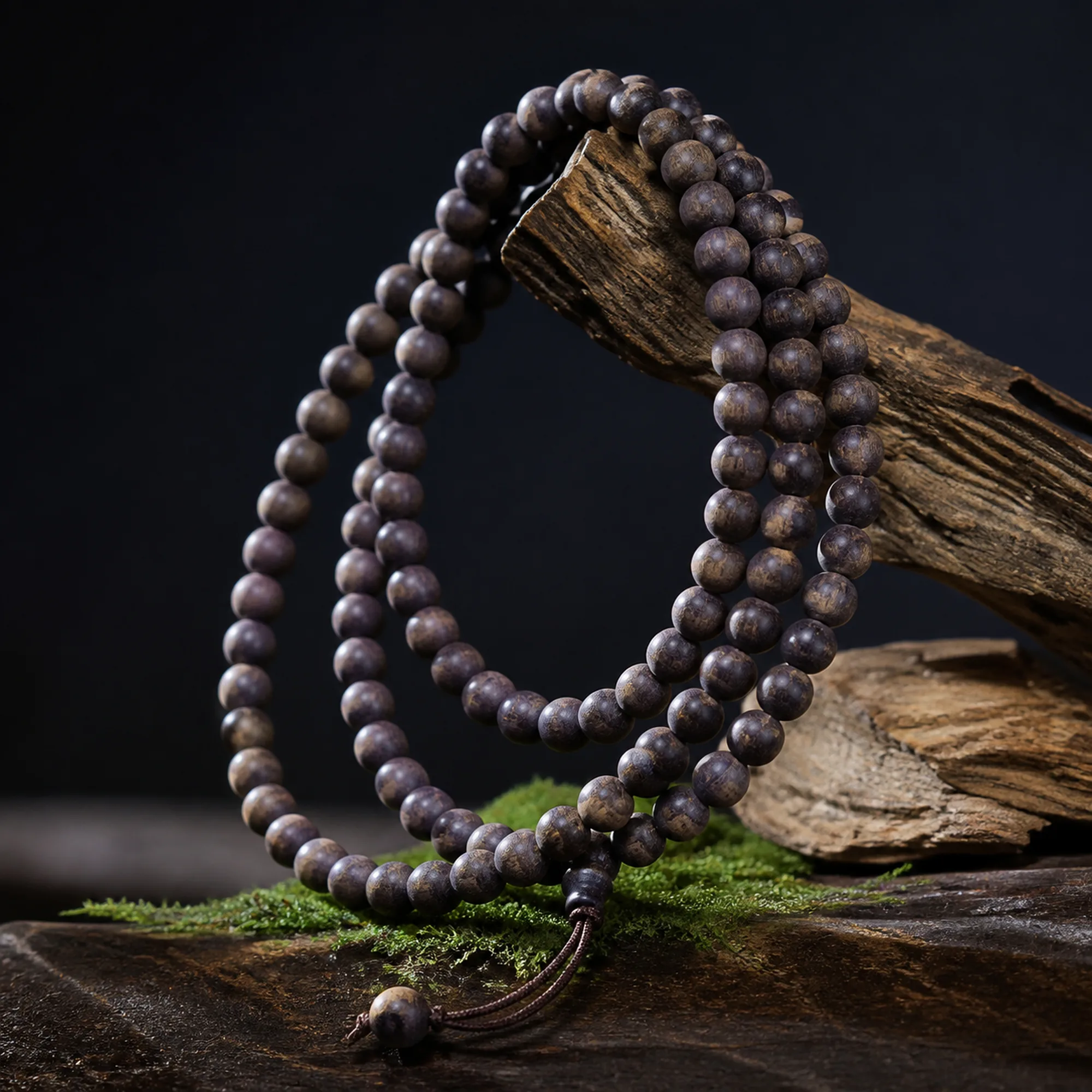
Types of Prayer Beads: Rosary, Tasbih, Mala and Juzu
The main types of prayer beads are the rosary, the tasbih, the mala and the juzu. This guide compares their traditions, bead counts and short wrist forms, then explains how to choose a strand by bead size and material.

Written by
Founder & Chief Sourcing Officer, AgarwoodTown
Wang Jianyu is the founder of AgarwoodTown, the agarwood business behind Oudbracelet, trading since 2014. 15+ years grading plantation agarwood and advising buyers on grade selection and CITES paperwork. These guides draw on the same bead geometry our wrist fitter uses and on the questions buyers ask before they approve a weighing video.
In this article
- What are the main types of prayer beads?
- How do the types of prayer beads compare?
- Part 1 — How do the types of prayer beads differ by tradition?
- Part 2 — How do you choose among the types of prayer beads?
- Long or short: which form of prayer beads suits you?
- How do you order the types of prayer beads from us?
- Prayer bead strands, on film
- More strands, on film
- Which types of prayer beads matter most, in short?
- Frequently asked questions
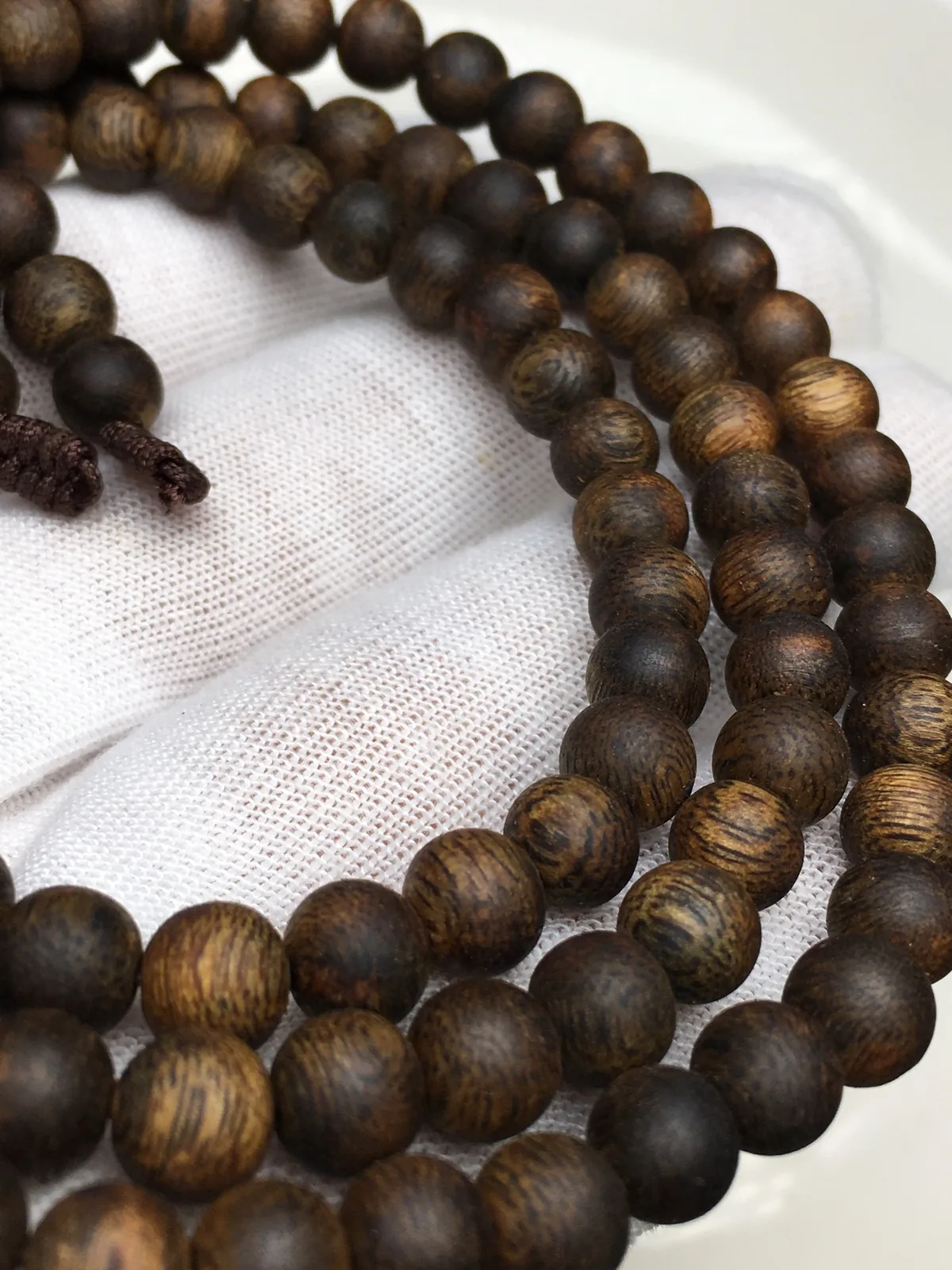 Long strand
 Wrist loop
Almost every tradition has both: a long strand for prayer, and a short loop to carry through the day.
What are the main types of prayer beads?
The main types of prayer beads are the Catholic rosary, the Muslim tasbih, the Hindu and Buddhist mala, the Japanese juzu, and the Anglican rosary. Each one counts prayers, so the number of beads follows the prayers of that tradition.
So the types of prayer beads differ mainly in count and form. A rosary has 59 beads,(USCCB) a tasbih often 99 or 33,(Britannica) and a mala usually 108.(Britannica 2026) A formal juzu also counts 108, arranged in a form set by each sect.(Myogyoji)
According to Britannica, Muslim prayer beads come in units of 100, 25 or 33, while a japa mala typically has 108. According to the USCCB, the rosary has five decades. First pick the tradition, then the count. Finally, choose 6 to 10 mm beads, the range that suits most hands.
How do the types of prayer beads compare?
This table is a 6-row summary. First read the type column, then compare the tradition, usual count, read more across each row. For example, the first row covers “Rosary”.
| Type | Tradition | Usual count | Read more |
|---|---|---|---|
| Rosary | Catholic | 59 (five decades) | How many beads in a rosary |
| Tasbih (misbaha) | Muslim | 99 or 33 | Tasbih meaning |
| Mala | Hindu and Buddhist | 108 | Mala beads |
| Juzu | Japanese Buddhist | 108 (sect forms) | Juzu |
| Anglican rosary | Anglican | Usually 33 | — |
| Komboloi | Greek (not religious) | Odd number, often 17–23 | Worry beads |
Counts vary within each tradition, according to Britannica and the USCCB. For example, a tasbih may hold 99 beads or a shorter 33. A mala usually holds 108, and a wrist mala holds a fraction such as 27. In practice, many people also carry shorter wrist strands for daily use. The komboloi row is the exception, since the Greek strand is a pastime rather than a prayer tool.
Part 1 — How do the types of prayer beads differ by tradition?
Each of the types of prayer beads is a counting tool shaped by one tradition’s prayers. First, the Catholic rosary counts five decades of ten Hail Marys, with an Our Father before each.(USCCB) Second, the Muslim tasbih counts phrases of praise, and Britannica describes strands of 100, 25 or 33 units.(Britannica) Third, the Hindu mala counts mantras on 108 beads, with a larger guru bead to mark the start.(Britannica 2026)
In Japan, people hold the juzu across both hands in a figure eight during chanting.(Myogyoji) By contrast, the Greek komboloi is not religious at all: people flip it through the fingers to pass the time. So not every string of beads is one of the types of prayer beads. For example, a komboloi has no fixed prayer count at all.
Part 2 — How do you choose among the types of prayer beads?
Choosing among the types of prayer beads is mostly a question of tradition, size and material. First, follow your own tradition: the count matters more than the material. Then choose the bead size. Round beads of 6 to 10 mm roll most easily under the thumb, whatever the type. Also, choose a material you like to hold. Wood is light and warm, while stone is heavier and cool. For example, a 108-bead mala in wood weighs far less than the same strand in stone.
Next, think about daily use. A long strand suits prayer at home, and a short loop suits the day. Finally, people have long prized agarwood for prayer beads, partly for its quiet scent. Our guide to agarwood prayer beads covers that material.
Long or short: which form of prayer beads suits you?
This comparison is a 4-point check of Long strand against Short loop. For example, the first row compares count. Finally, pick the column that matches what you need.
| Feature | Long strand | Short loop |
|---|---|---|
| Count | The full count in one round | Several rounds for the full count |
| Held | In the hand, at prayer | On the wrist, all day |
| Bead size | Usually 6–8 mm | Usually 8–12 mm |
| Example | Rosary, 99-bead tasbih, 108 mala | Rosary bracelet, 33 tasbih, wrist mala |
A short loop is a wrist-sized version of a full strand. In practice, a 27-bead wrist mala covers 108 counts in four rounds. Likewise, a 33-bead tasbih covers 99 counts in three rounds. The USCCB rosary has five decades, so a one-decade rosary ring works the same way. Finally, pick the long strand for set prayer times and the short loop for the rest of the day.
How do you order the types of prayer beads from us?
This process is a 4-step sequence, from “Tell us the type and count” to “Approve, then pay”. First follow step 1, then work down the 4 steps of “How do you order the types of prayer beads from us?” in order.
- 1
Step 1: Tell us the type and count
Name the count you need: 59, 99, 33, 108, or a wrist loop.
- 2
Step 2: Choose the bead size
Most people choose round beads of 6 to 10 mm.
- 3
Step 3: We string and film
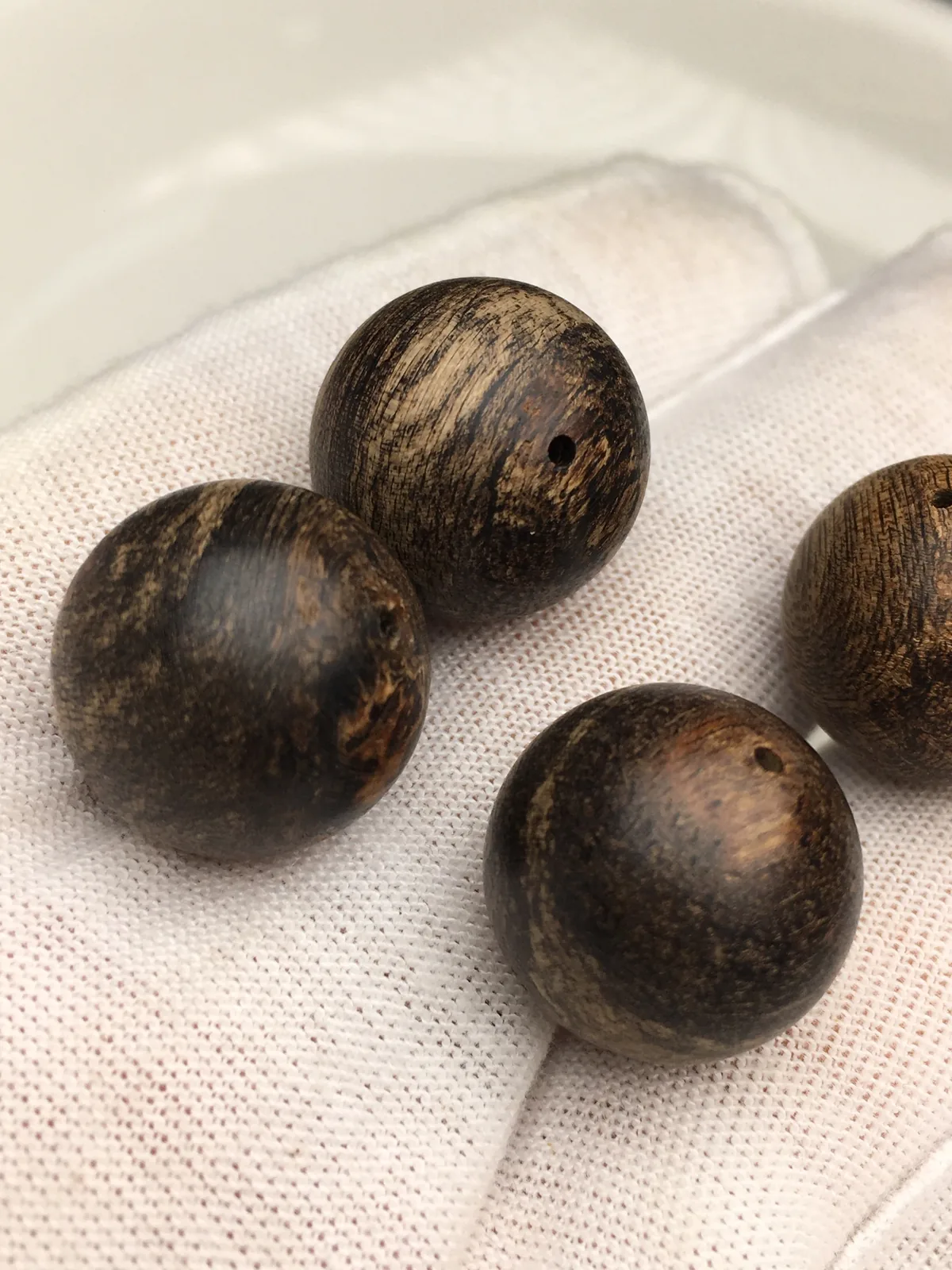
We string the wooden beads and weigh them on camera.
- 4
Step 4: Approve, then pay
You pay nothing until you have seen the film and approved the strand.

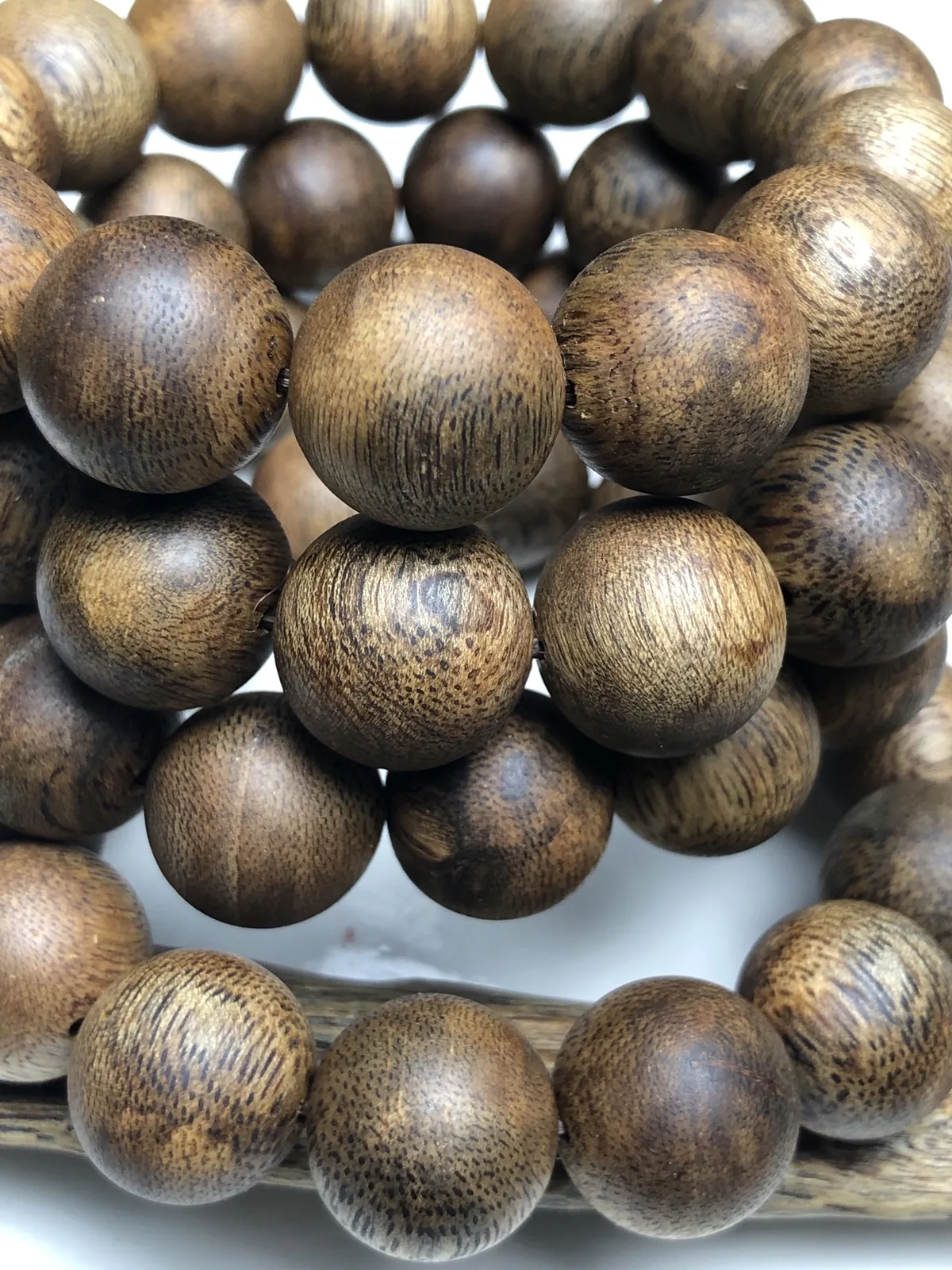
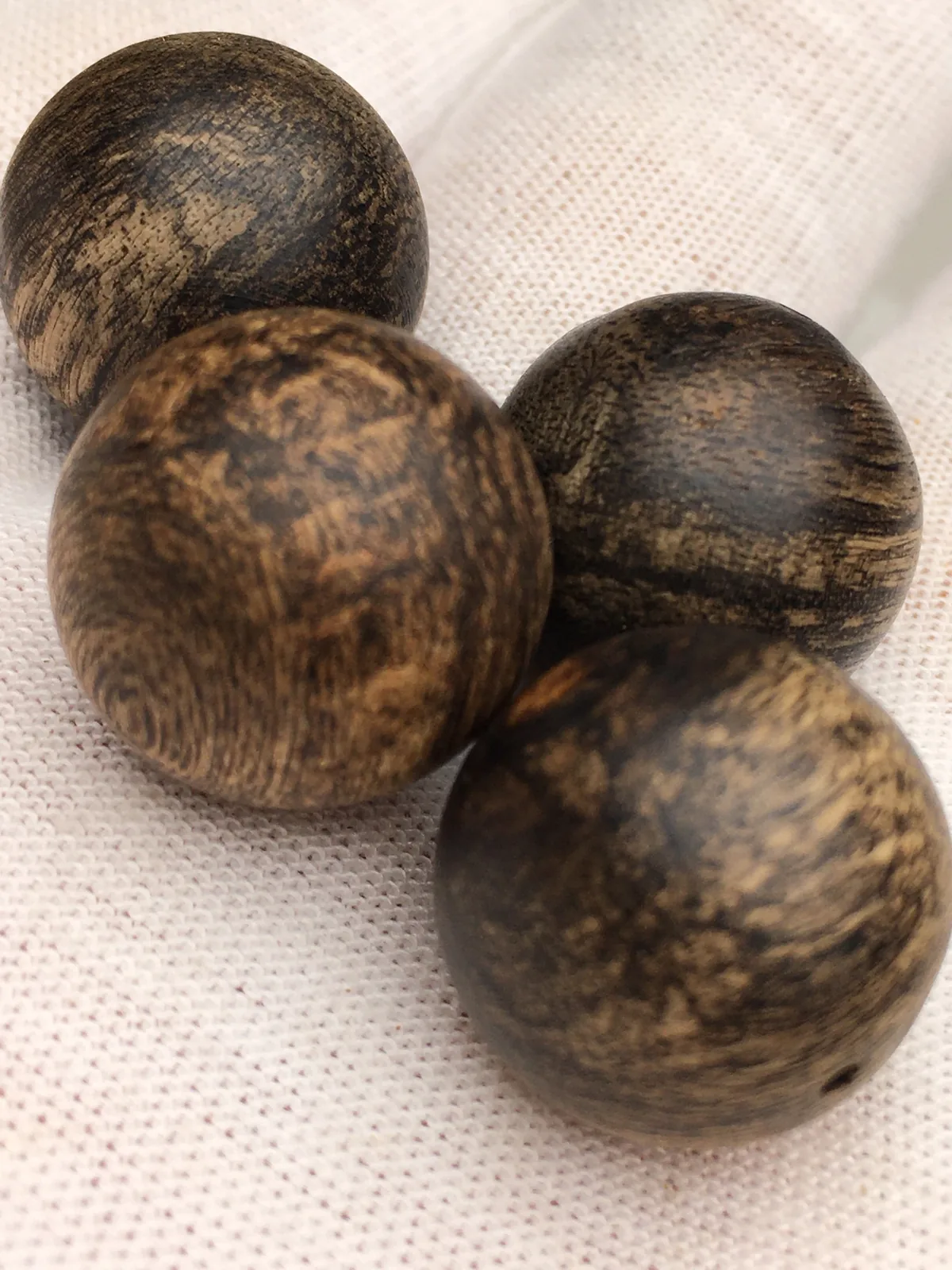
Prayer bead strands, on film
More strands, on film
Which types of prayer beads matter most, in short?
In short, the main types of prayer beads are the rosary, the tasbih, the mala and the juzu, each with its own count.(USCCB)(Britannica)(Britannica 2026) The rosary has 59 beads, and the mala and the formal juzu both have 108. So start from your tradition. Then choose the bead size and a material you like to hold. For example, a Catholic buyer might keep a 59-bead rosary at home and a rosary bracelet for the day. Finally, check the count with your own community, since forms vary between groups.
Our agarwood is plantation-grown and ships under CITES rules.(CITES) Browse our agarwood malas, agarwood tasbih and agarwood rosary beads.
Frequently asked questions
This FAQ is a set of 8 short answers about types of prayer beads. First find your question below. For example, many facts in these answers about types of prayer beads come from the 5 published sources in References, which we checked in September 2026.
What are the different types of prayer beads?
The best-known types are the Catholic rosary, the Muslim tasbih or misbaha, the Hindu and Buddhist mala, the Japanese juzu and the Anglican rosary. Each counts prayers in its own way, so the number of beads and the form of the strand differ between them.
How many beads do prayer beads have?
It depends on the type. A Catholic rosary has 59 beads, a tasbih often 99 or 33, a mala usually 108, and a formal juzu also 108. An Anglican rosary usually has 33. Short wrist versions have fewer beads, and you count round them several times.
What are Buddhist prayer beads called?
Most people call them a mala, from the Sanskrit for garland. In Japan the names are juzu or nenju, and the strands follow sect-specific forms. Most full strands count 108 beads, while shorter wrist malas of 18, 21 or 27 beads are also very common.
What are Muslim prayer beads called?
Their names are tasbih, misbaha or subha. The full form has 99 beads, usually in three groups of 33, and people count a shorter 33-bead strand three times. Britannica notes that people make them from wood, bone or precious stones.
Are worry beads prayer beads?
No. The Greek komboloi, or worry beads, has no religious role. People flip it through the fingers to relax or pass the time. It looks like a short strand of prayer beads, but it usually has an odd number of beads and no set count.
Can I use prayer beads from another tradition?
Many people keep a strand from another tradition out of respect or interest. If you use one to pray, follow that tradition’s count and customs, or ask someone who practises it. Treat any strand with care, and keep it off the floor.
What material is best for prayer beads?
Wood, seed, stone and glass are all traditional. Wood is light, warm and quiet in the hand, which is why it is so common. Agarwood adds dark resin lines and a soft scent. Choose a material you like to hold every day.
Do you make every type of prayer beads?
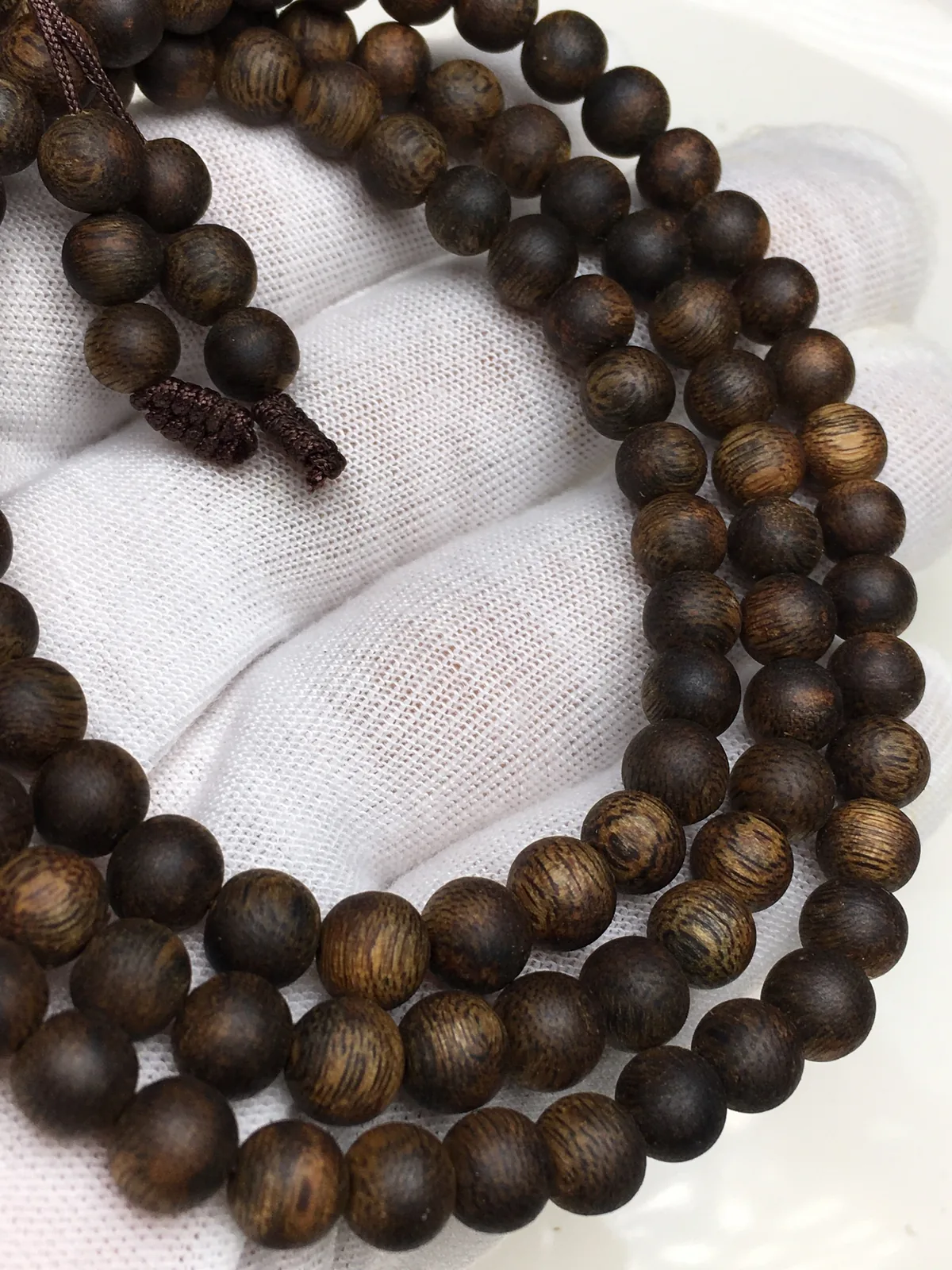
We string plain round agarwood beads to the count you need: 59, 99, 33, 108 or a wrist loop. We do not make crucifixes, tassels or sect-specific finishings. Before we quote, we say plainly what we can add, and we film the strand before you pay.
References
This reference list is the source record for “Types of Prayer Beads: Rosary, Tasbih, Mala and Juzu”, with 5 published sources. According to the citations in “Types of Prayer Beads: Rosary, Tasbih, Mala and Juzu”, such as (USCCB), each one links to one entry below. Finally, we checked all 5 links behind “Types of Prayer Beads: Rosary, Tasbih, Mala and Juzu” in September 2026.
- 1United States Conference of Catholic Bishops. How to Pray the Rosary. USCCB, current.View source
- 2Encyclopaedia Britannica. Subḥah. Britannica, current.View source
- 3Encyclopaedia Britannica. Japa mala. Britannica, 2026.View source
- 4Myogyoji Temple, Nichiren Shoshu. Buddhist Prayer Beads (Juzu). nstmyogyoji.org, current.View source
- 5CITES Secretariat. Appendices I, II and III. Convention on International Trade in Endangered Species of Wild Fauna and Flora, current.View source
References are listed for transparency. We summarise them for general reading; nothing here is medical advice, and no health effect is claimed.
In this article
Styles mentioned


Related articles
Weighed before you pay
Choose a style, get your strand weighed
Pick a bead and size, send your request, and we reply with a video of your piece on the scale — its exact weight and price. Nothing is charged until you approve.