Worry Beads and Komboloi: How to Use Them, and Why Agarwood Works
Worry beads, the Greek komboloi, are a short loop of beads on a deliberately slack cord, made to pass, swing and flick through the fingers. This guide covers the parts of worry beads, the common ways to use worry beads, and the lengths and weights worked out for agarwood. Finally, the guide compares agarwood with amber, the classic material.

Written by
Founder & Chief Sourcing Officer, AgarwoodTown
Wang Jianyu is the founder of AgarwoodTown, the agarwood business behind Oudbracelet, trading since 2014. 15+ years grading plantation agarwood and advising buyers on grade selection and CITES paperwork. These guides draw on the same bead geometry our wrist fitter uses and on the questions buyers ask before they approve a weighing video.
In this article
- What are worry beads?
- How do worry beads differ from prayer beads and fidget bracelets?
- Do you want worry beads or something else?
- Part 1 — Where do worry beads come from?
- Part 2 — What are the parts of worry beads?
- How long and heavy are worry beads in agarwood?
- Part 3 — How do you use worry beads?
- What should your first minutes look like?
- Part 4 — Which materials suit worry beads: amber, resin, wood or agarwood?
- Agarwood or amber worry beads?
- Part 5 — How do worry beads differ from a fidget bracelet?
- Which strand suits how you use it?
- Part 6 — How do you order agarwood worry beads from us?
- Round agarwood beads in motion
- Part 7 — How do you look after worry beads?
- What makes good worry beads in agarwood?
- Frequently asked questions
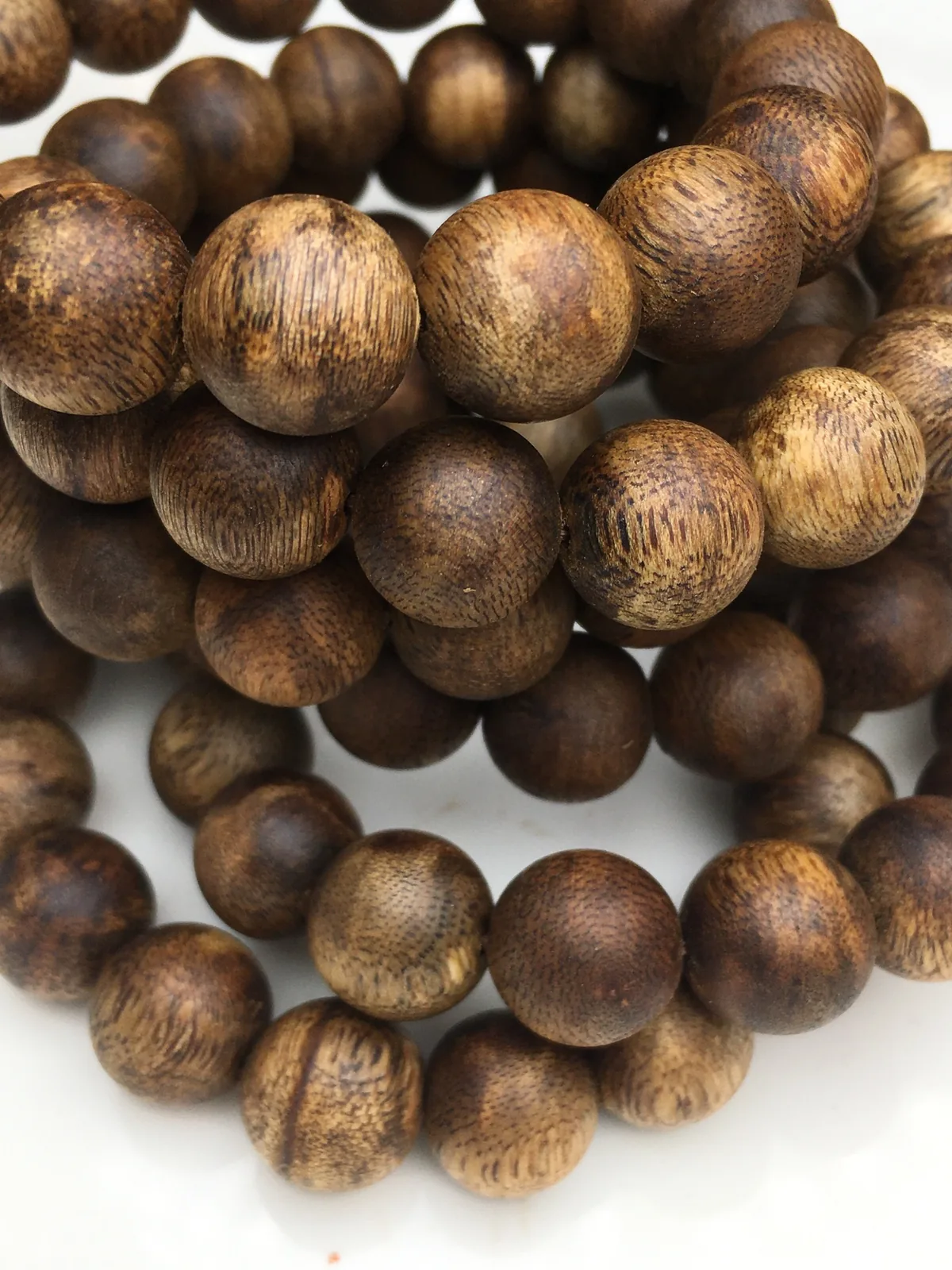 Held
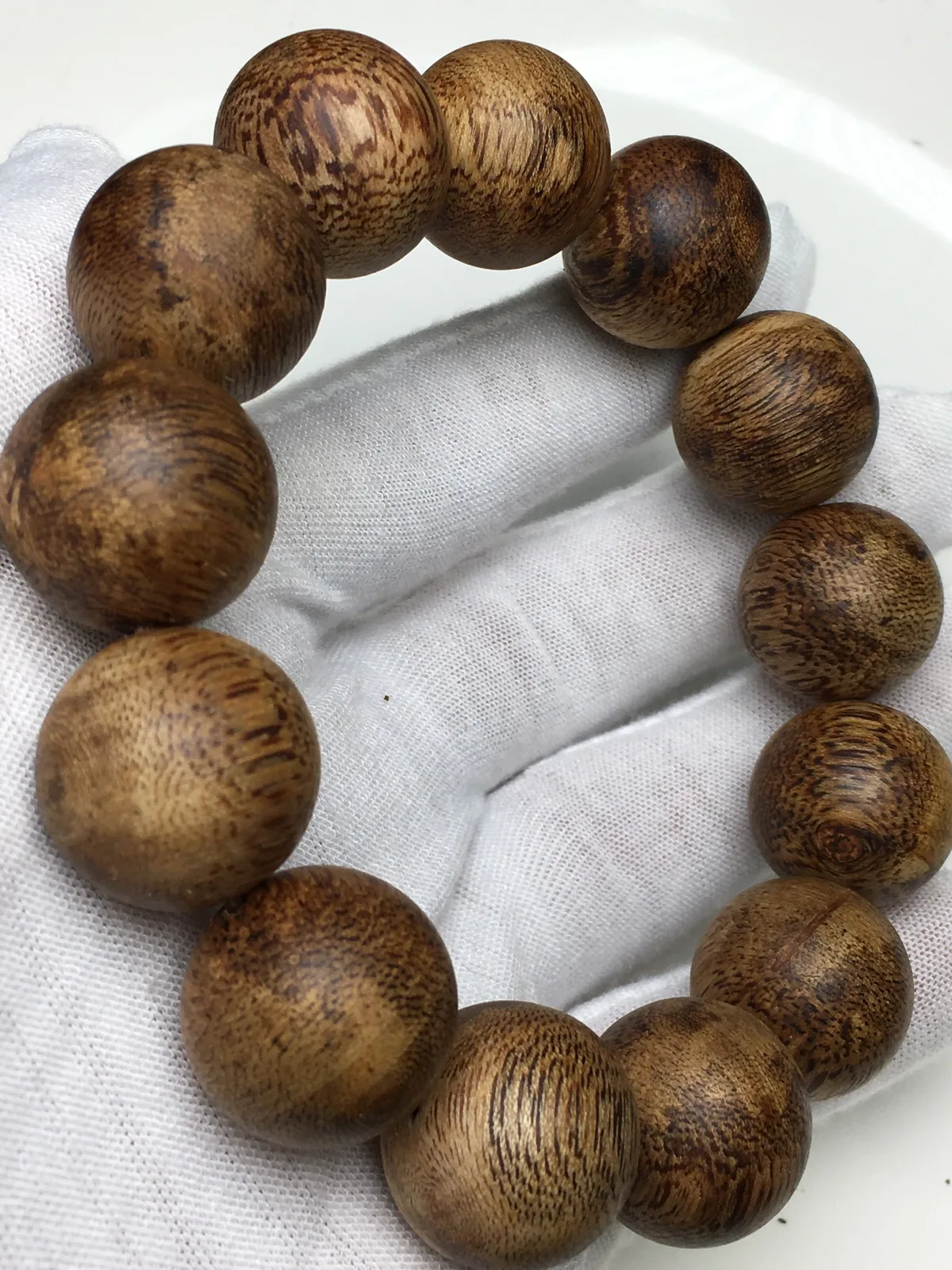 Worn
Left: large drilled agarwood beads, the kind you string worry beads from. Right: an agarwood bracelet, strung tight to sit on the wrist. The wood is the same. What changes is the slack on the cord, and that one difference is the whole story of worry beads.
What are worry beads?
Worry beads are a short loop of beads on a slack cord, made to pass, swing and flick through the fingers. The best-known worry beads are the Greek komboloi. However, the same object turns up under other names around the eastern Mediterranean and beyond.
Unlike prayer beads, worry beads have no religious use. Worry beads are simply something to do with your hands, at a café table, in a queue or in conversation.
What makes worry beads work is not the bead count or the material. Instead, the secret is the slack. A bracelet sits tight on the wrist. Worry beads, however, sit loose, with a gap on the cord, so the beads slide, fall and click. Get the slack right, and almost any bead works.
Oudbracelet is the retail shop of AgarwoodTown, whose agarwood trade began in 2014. Agarwood is not the traditional material for worry beads; amber is. Still, agarwood is an unusually good one: light, warm, quiet and naturally scented. Agarwood holds a wide range of scent compounds, according to Naef in 2011, and the scent rises as the beads warm.(Naef 2011) For example, a komboloi of 19 agarwood beads spends all day in the hand, so a quiet scent is a small bonus.
How do worry beads differ from prayer beads and fidget bracelets?
This table is a 5-row summary. First read the object column, then compare the usual beads, how it is used, worn or held, religious use across each row. For example, the first row covers “Greek komboloi”.
| Object | Usual beads | How it is used | Worn or held | Religious use |
|---|---|---|---|---|
| Greek komboloi | An odd number, commonly 17 to 23, larger beads | Passed, swung and flicked; the beads click | Held | None |
| Tasbih or misbaha | 33 or 99, with marker beads | Counted with the thumb, one bead per phrase | Held | Yes |
| Buddhist mala | 108, or 54, 27 or 18 | Counted, one bead per recitation | Held or worn | Yes |
| Bead bracelet | Whatever fits the wrist | Worn; rolled or turned on the wrist | Worn | None |
| Fidget bracelet | Spinners, rings or zips on a band | Spun or slid while worn | Worn | None |
Forms and counts vary by region and by maker. No rule fixes a count. The table describes common practice, not requirements. For example, a komboloi can run from 17 to 23 beads.
Do you want worry beads or something else?
This chooser is a 2-question guide with 8 possible answers. First answer “What do you want in your hand?”, then pick the option that fits, such as “A loop to flick”.
The chooser separates worry beads from the objects people often confuse with worry beads. First, decide what you want in your hand. For example, a loop to flick calls for big loose beads, while something to count calls for a tasbih of 33 or 99. Second, decide what you are checking: prayer counts, whether a bead is real agarwood, whether agarwood smells, or bead size and weight. In practice, a strand to wear points to larger-bead bracelets, and a long strand points to malas and multi-wraps.
Part 1 — Where do worry beads come from?
The Greek word komboloi comes from kombos, knot, which points back to the knotted prayer ropes of Orthodox monks. Somewhere along the way, however, the object left the monastery.
By the twentieth century, worry beads were an everyday thing in Greece. People carried a komboloi in a pocket, handled the beads at the kafeneio, and swung the loop while talking, with no prayer attached. Additionally, the English name, worry beads, describes the habit rather than any purpose: something for idle hands.
Related strands exist all around the region, and many are still counting objects. So the line is simple. If you count the beads, the strand is a set of prayer beads, whatever the strand looks like. If you only handle the beads, the strand is a set of worry beads.
For example, a misbaha and a set of worry beads can use identical beads and still be different objects. The difference matters when you order, because the count, the head piece and the slack all follow from the purpose.
Part 2 — What are the parts of worry beads?
Worry beads have four parts. First come the beads, usually an odd number: 17, 19, 21 and 23 are all common. The beads are also larger than on a bracelet, often 10 to 14 mm, because the hand, not the wrist, carries the loop.
Second, the shield or priest bead is a larger bead, sometimes with a short tube, which holds the two ends of the cord together. Third, a tassel hangs below the shield, or on some worry beads a short length of free cord. Fourth, there is the slack: a gap on the cord, typically two or three beads wide, so the beads can travel.
Bead size decides most of the feel. For example, small beads are fast and light. Large worry beads, however, swing with more momentum and make a deeper sound. Weight also matters more than on a bracelet, because flicked beads fall under their own weight.
The table below gives worked-out figures, not measured ones. The table lists the bead run for common counts and sizes, the cord length with about three beads of slack, and the estimated weight of the beads in agarwood.
How long and heavy are worry beads in agarwood?
This table is a 12-row summary. First read the count column, then compare the bead size, bead run, with about three beads of slack, estimated weight of the beads across each row. For example, the first row covers “17 beads”.
| Count | Bead size | Bead run | With about three beads of slack | Estimated weight of the beads |
|---|---|---|---|---|
| 17 beads | 10 mm | 17 cm | 20 cm | 5.0–7.9 g |
| 17 beads | 12 mm | 20 cm | 24 cm | 8.8–14 g |
| 17 beads | 14 mm | 24 cm | 28 cm | 14–22 g |
| 19 beads | 10 mm | 19 cm | 22 cm | 5.6–8.9 g |
| 19 beads | 12 mm | 23 cm | 26 cm | 9.9–16 g |
| 19 beads | 14 mm | 27 cm | 31 cm | 16–25 g |
| 21 beads | 10 mm | 21 cm | 24 cm | 6.2–9.8 g |
| 21 beads | 12 mm | 25 cm | 29 cm | 11–17 g |
| 21 beads | 14 mm | 29 cm | 34 cm | 18–28 g |
| 23 beads | 10 mm | 23 cm | 26 cm | 6.8–11 g |
| 23 beads | 12 mm | 28 cm | 31 cm | 12–19 g |
| 23 beads | 14 mm | 32 cm | 36 cm | 19–30 g |
We calculated each row with the same geometry as our wrist fitter: round beads with a 2 mm hole and an estimating density of 0.6–0.95 g/cm³. The figures leave out the shield bead, tassel and cord. For example, a loop of 19 beads at 12 mm needs a longer cord than the bead run alone. Each figure is an estimate for planning. Your quote uses the real weight, read off the scale on camera.
Part 3 — How do you use worry beads?
Worry beads have no correct method, only three common ones, and most people settle on one without thinking. The simplest is passing. Hold the loop by the shield, and slide the worry beads one at a time over your thumb. Each bead then drops to join the others, much like counting, but without a number.
The second way is swinging. Let the loop hang from one finger, swing the strand round, and catch the beads again. The third, and the move that gives worry beads a sound, is flicking. Gather the beads at the top of the slack, and flip the beads over your fingers so the beads fall and click together.
Flicking is where material and slack matter. The beads have to fall far enough to click, which explains the gap on the cord. The beads also have to be heavy enough to fall briskly. For example, people who handle worry beads all day often move to larger beads. The tricks you see, such as the full-loop flip, the wrist swing and the double flick, are all variations on the three moves.
What should your first minutes look like?
This process is a 4-step sequence, from “Hold the loop by the shield” to “Try a flick”. First follow step 1, then work down the 4 steps of “What should your first minutes look like?” in order.

- 1
Step 1: Hold the loop by the shield
Take the loop by the shield bead between thumb and forefinger. Let the beads hang below and the tassel fall behind your hand.
- 2
Step 2: Pass the beads
Slide the beads one by one over your thumb, and let each drop to the bottom of the loop. Keep the rhythm slow until the movement is automatic.
- 3
Step 3: Try a swing
Let the loop hang from one finger, then swing the loop gently in a circle and catch the loop on the way back. Keep the swing low, over a table or your lap.
- 4
Step 4: Try a flick
Gather the beads at the top of the slack, then flip the beads over your fingers so the beads drop and click. More slack gives a longer fall and a clearer sound.
Part 4 — Which materials suit worry beads: amber, resin, wood or agarwood?
The classic material for worry beads is amber, prized for a warm colour and a bright, glassy click. Older worry beads often use faturan, an early phenolic resin that darkens and polishes with age. Cheaper modern sets, by contrast, are plastic or acrylic. Makers also use bone, horn, glass, stone and many woods, and each material gives a different weight, sound and feel.
Agarwood behaves differently from every other material. Agarwood is wood, so a bead weighs less than amber of the same size. Most agarwood floats, and amber only just sinks. The sound is also a softer, lower clack rather than a bright click.
Agarwood warms quickly in the hand. Then the resin gives off a quiet scent, the property behind centuries of agarwood incense, according to Naef.(Naef 2011)
The trade-offs are the ones you would expect from wood. Agarwood is softer than stone or resin, so beads knocked hard against a marble table can dent. Also, repeated flicking wears the cord faster than on a bracelet.(USDA 2010) Resin-rich agarwood, however, is denser and heavier for the same size, which helps a flick. The extra density comes from resin laid down after a wound, as a 2019 review by Tan and colleagues explains.(Tan 2019)
Agarwood or amber worry beads?
This comparison is a 6-point check of Agarwood against Amber. For example, the first row compares weight for the same size. Finally, pick the column that matches what you need.
| Feature | Agarwood | Amber |
|---|---|---|
| Weight for the same size | Lighter — most agarwood floats | A little heavier — amber only just sinks |
| Sound | A soft, low wooden clack | A brighter, glassy click |
| In a warm hand | Warms fast; its own resin scent rises | Warms fast; a faint resinous smell when rubbed |
| Surface over time | Deepens and polishes with handling | Polishes; can craze with heat and solvents |
| Knocks and drops | Can dent on stone or tile | Can chip or crack on stone or tile |
| Every bead | Different grain on each bead | Different colour and clarity on each bead |
Agarwood and amber are both warm, light handling materials, and the choice comes down to sound and weight. Amber gives the brighter click associated with Greek komboloi. Agarwood, by contrast, gives a quieter clack and a resin scent when warm. For example, a buyer who flicks worry beads in a quiet office may prefer agarwood, while a buyer who loves the classic click may prefer amber. Additionally, both materials need a soft surface: agarwood can dent on stone, and amber can chip.
Part 5 — How do worry beads differ from a fidget bracelet?
A fidget bracelet is usually a wristband with something that spins, slides or clicks: rings on a bar, a zip or a spinner. You handle a fidget bracelet while you wear the band. Worry beads are the opposite, however: a loose loop that lives in your hand or your pocket, never on the wrist.
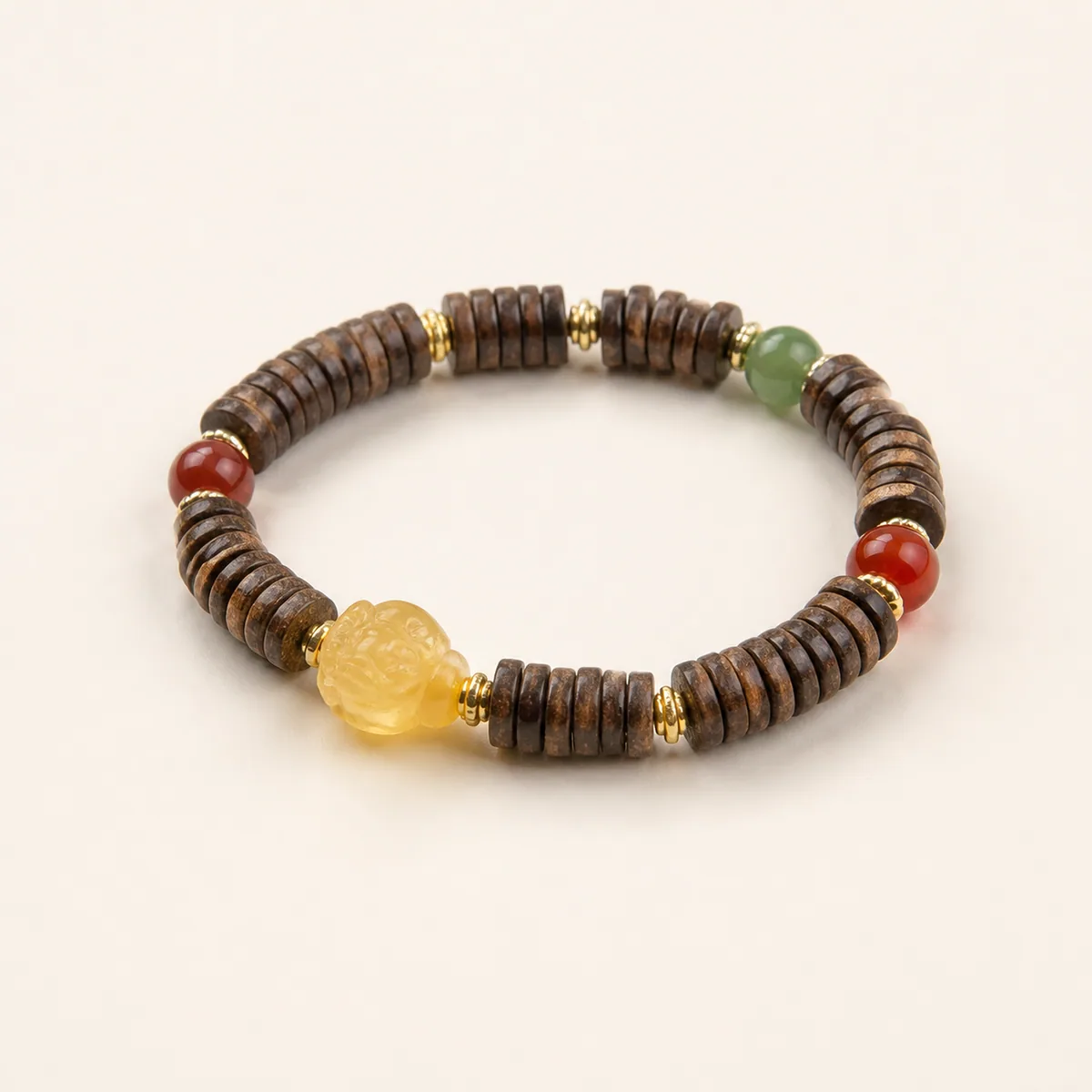
A plain bead bracelet sits between the two. Many people who wear agarwood end up turning the strand on the wrist, or taking the strand off and passing the beads through the fingers. For example, a bracelet in larger beads suits the habit. Still, a bracelet will not flick like worry beads, because a bracelet has no slack.
If you want both, the honest answer is two objects. Wear a bracelet in larger beads on the wrist, and keep worry beads for the hand. Additionally, the weight difference is modest. By our estimate, a 17-bead bracelet of 12 mm beads for a 16 cm wrist comes to about 8.8–14 g. Similarly, 19 worry beads of the same size come to about 9.9–16 g before the shield and tassel.
Which strand suits how you use it?
This section is a set of 4 short notes, from “You want to flick and click” to “You want your own fittings”. First scan the 4 titles under “Which strand suits how you use it?”, then read the note that matches your case.
You want to flick and click
Choose a loop of 19 or 21 beads at 12 mm or larger, with about three beads of slack. For example, resin-rich wood gives a brisker fall. We confirm the shield and tassel, which depend on stock, with your quote.
You mostly pass the beads
Choose smaller beads, 10 mm, because small beads feel quicker under the thumb and weigh less in a pocket. A count of 17 or 19 also keeps the loop short enough to hold in one hand.
You would rather wear a strand
Choose a single bracelet in 12 to 16 mm beads, strung to your wrist. A bracelet will not flick like worry beads. However, a bracelet turns on the wrist and comes off easily to pass through the fingers.
You want your own fittings
Choose loose beads in your size, and let your own bead worker add the shield, tube and tassel. We weigh the lot and quote by the weight.
Part 6 — How do you order agarwood worry beads from us?
Ordering worry beads is simple: we string worry beads the way we string everything else. We use plain round agarwood beads, in the count and bead size you give us, with the slack you ask for. However, we add a shield bead and a tassel only when suitable fittings are in stock on the day. So we tell you before you pay rather than send a surprise.
If the fittings matter to you, the better route is loose beads from us and a bead worker at your end. For example, a local bead worker can add the exact shield and tassel you want.
We weigh every piece on camera. For worry beads, the weight matters more than it sounds, because weight is most of the feel in the hand. So the video shows the bead size, the grain and the slack before you approve, and we charge nothing until approval. Finally, if the strand is going abroad, tell us where. CITES Appendix II lists agarwood, so we confirm what applies with your quote.(CITES)
Round agarwood beads in motion
Part 7 — How do you look after worry beads?
This timeline is a 6-stage sequence, from “Handle the beads” to “Expect patina”. First read “Part 7 — How do you look after worry beads?” from top to bottom, since each stage follows the one before.
- Every dayHandle the beadsHandling gives agarwood its polish, so use dry, clean hands. Then the surface slowly deepens in colour and sheen.
- Every dayFlick over a soft surfaceFor example, flick over your lap or a wooden table rather than stone or tile, because a dropped bead can dent there.
- Before waterKeep the beads dryKeep worry beads out of the shower, the sea and the washing-up. If the beads get wet, dry the wood slowly at room temperature.
- After usePocket or pouchKeep the loop away from keys and coins, which scratch, and away from perfume and hand cream, which sit on the wood.
- Every few monthsCheck the cordFlicking wears a cord faster than wearing does. So look for fraying near the shield, and restring before the cord gives way.
- Over the yearsExpect patinaColour deepens, and the surface polishes with handling. Patina is normal and, for most owners of worry beads, the point.
What makes good worry beads in agarwood?
Worry beads are one of the simplest objects there is: a few beads, a loose cord and a habit. Good worry beads come down to feel: the weight, the sound and the way the beads fall. Bead size, material and slack decide all three. Amber is the classic. Agarwood, however, is the quiet alternative: lighter, softer in sound, warm in the hand, and carrying a scent of its own.
If you want agarwood worry beads, tell us the count and the size, and say the words worry beads. For example, ask for 19 beads at 12 mm with about three beads of slack. Then we string the loop with slack, weigh the strand on camera, and send you the video before you decide. Finally, if you would rather build your own, our loose agarwood beads come drilled and ready.
Frequently asked questions
This FAQ is a set of 8 short answers about worry beads and komboloi. First find your question below. For example, many facts in these answers about worry beads and komboloi come from the 4 published sources in References, which we checked in September 2026.
What are worry beads?
Worry beads are a short loop of beads on a slack cord that you handle rather than wear. The best-known worry beads are the Greek komboloi, usually with an odd number of beads, a larger shield bead and a tassel. Unlike prayer beads, they have no religious use. So they are simply something to pass and flick through the fingers.
How many worry beads does a komboloi have?
Usually an odd number, and 17, 19, 21 and 23 are all common. No rule fixes the count, so people choose it for how the loop feels in the hand. A shorter loop is quicker and fits in one hand. A longer one, however, swings with more momentum. So tell us the count you want.
How do you use worry beads?
Three movements cover most of it. First, passing: slide the worry beads one by one over your thumb. Second, swinging: let the loop hang from a finger and swing it round. Third, flicking: gather the beads at the top of the slack and flip them over your fingers so they fall and click.
Are worry beads religious?
No. The komboloi descends from the knotted prayer rope, but worry beads have long been a secular object in Greece. People handle them in conversation or while waiting. So if you count beads with a prayer, as with a tasbih or a mala, they are prayer beads. If you only handle them, they are worry beads.
Is agarwood a good material for worry beads?
It is an unusual but good one. Agarwood is lighter than amber for the same size, and it gives a softer, lower clack. It also warms quickly in the hand and releases a quiet scent from its own resin. However, it is softer than stone or resin, so flick it over a soft surface and check the cord now and then.
What is the difference between agarwood and amber worry beads?
Amber is the classic material for worry beads. It is slightly heavier for its size, with a brighter, glassy click. Agarwood, by contrast, is wood: lighter, quieter, with grain that differs on every bead and a scent that rises when warm. Also, amber can chip on a hard surface, while agarwood can dent.
Can I wear worry beads as a bracelet?
Not really, because we string worry beads with slack so the beads can move, which makes them loose on the wrist. If you want something to wear and handle, a bracelet in larger beads turns on the wrist and comes off easily. It will not flick like worry beads. Still, it will travel with you.
Can you make worry beads from agarwood?
Yes. We string plain round agarwood beads to the count and bead size you give us, with the slack you ask for. However, the shield bead and tassel depend on what we have in stock, so we confirm them with your quote. We also weigh and film every strand of worry beads before you pay.
References
This reference list is the source record for “Worry Beads and Komboloi: How to Use Them, and Why Agarwood Works”, with 4 published sources. According to the citations in “Worry Beads and Komboloi: How to Use Them, and Why Agarwood Works”, such as (Naef 2011), each one links to one entry below. Finally, we checked all 4 links behind “Worry Beads and Komboloi: How to Use Them, and Why Agarwood Works” in September 2026.
- 1Naef R.. The volatile and semi-volatile constituents of agarwood, the infected heartwood of Aquilaria species: a review. Flavour and Fragrance Journal 26(2): 73–87, 2011.doi:10.1002/ffj.2034
- 2Forest Products Laboratory. Wood Handbook — Wood as an Engineering Material (General Technical Report FPL-GTR-190). USDA Forest Service, 2010.View source
- 3Tan C.S., Isa N.M., Ismail I., Zainal Z.. Agarwood induction: current developments and future perspectives. Frontiers in Plant Science 10: 122, 2019.doi:10.3389/fpls.2019.00122
- 4CITES Secretariat. Appendices I, II and III. Convention on International Trade in Endangered Species of Wild Fauna and Flora, current.View source
References are listed for transparency. We summarise them for general reading; nothing here is medical advice, and no health effect is claimed.
In this article
Styles mentioned
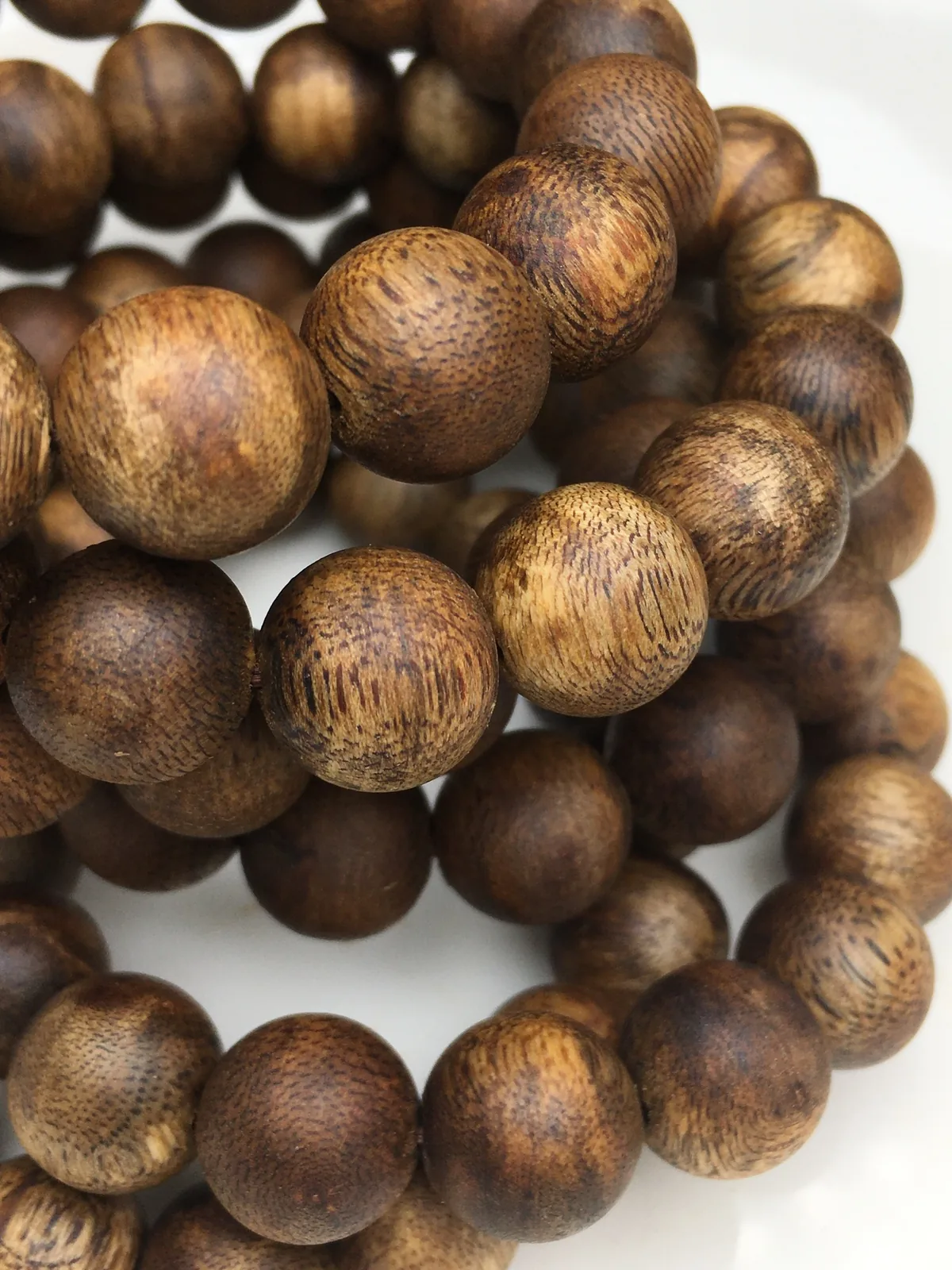
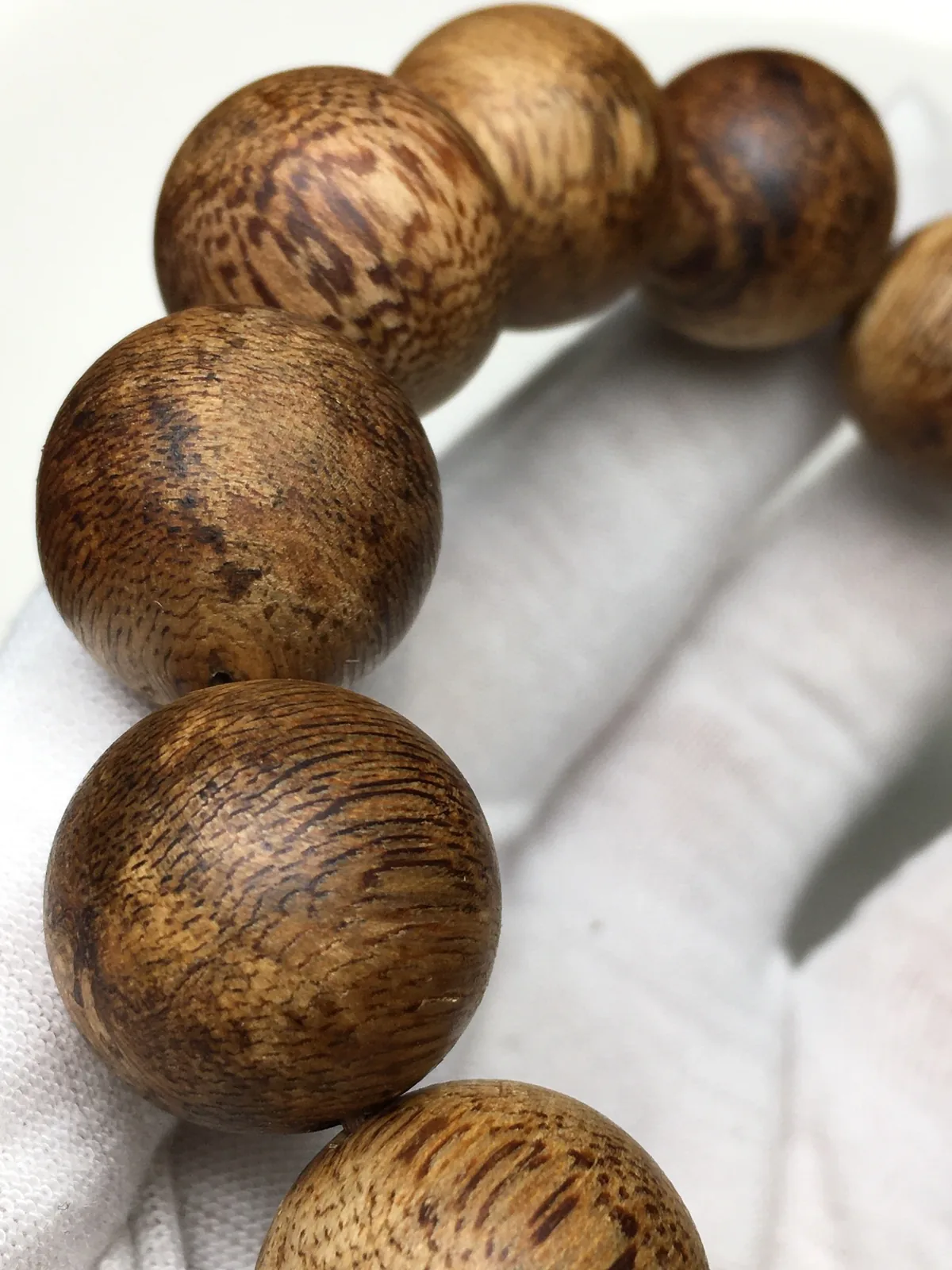
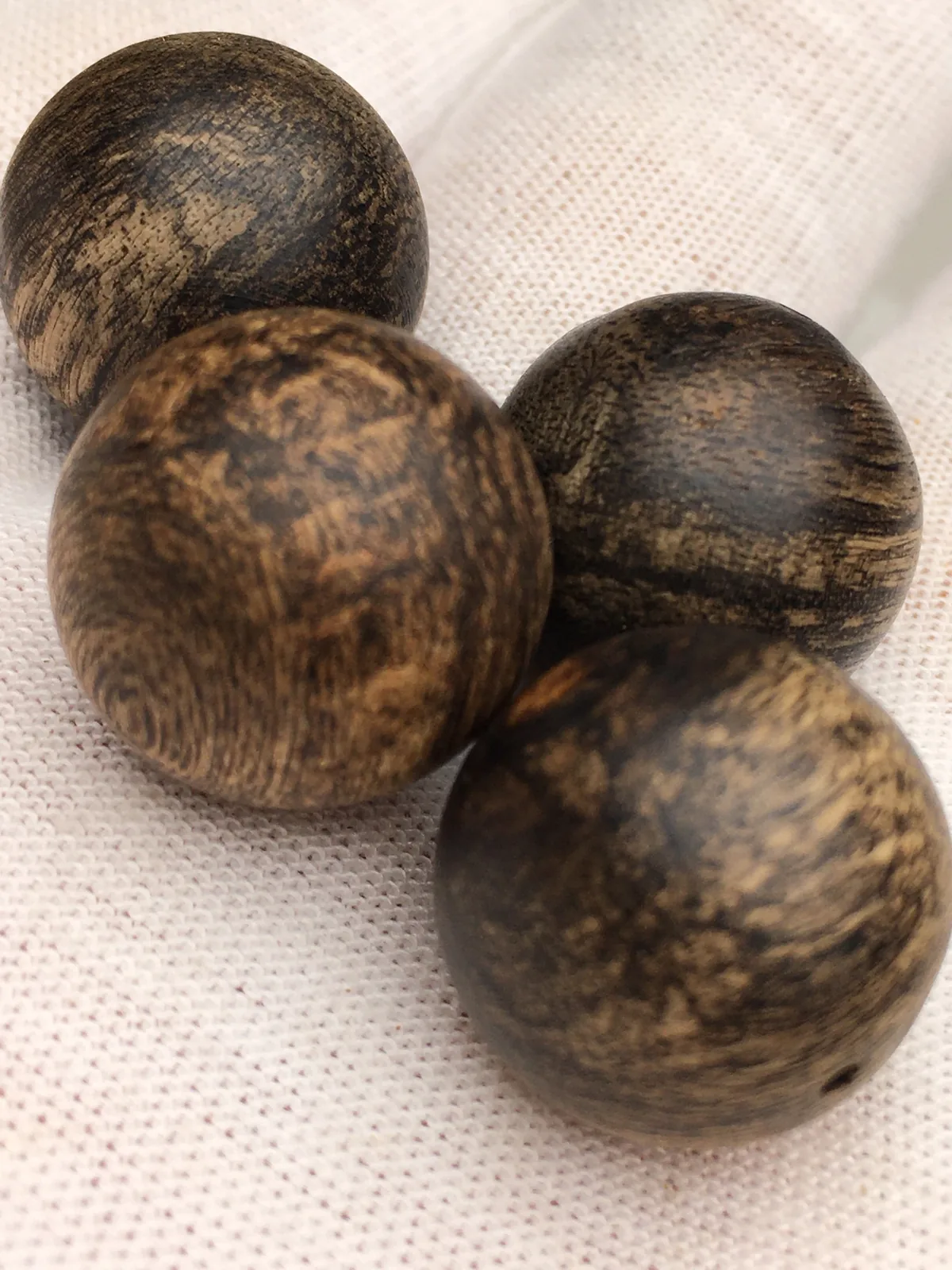
Browse more: Agarwood Loose Beads · Agarwood Bracelets
Related articles
Weighed before you pay
Choose a style, get your strand weighed
Pick a bead and size, send your request, and we reply with a video of your piece on the scale — its exact weight and price. Nothing is charged until you approve.