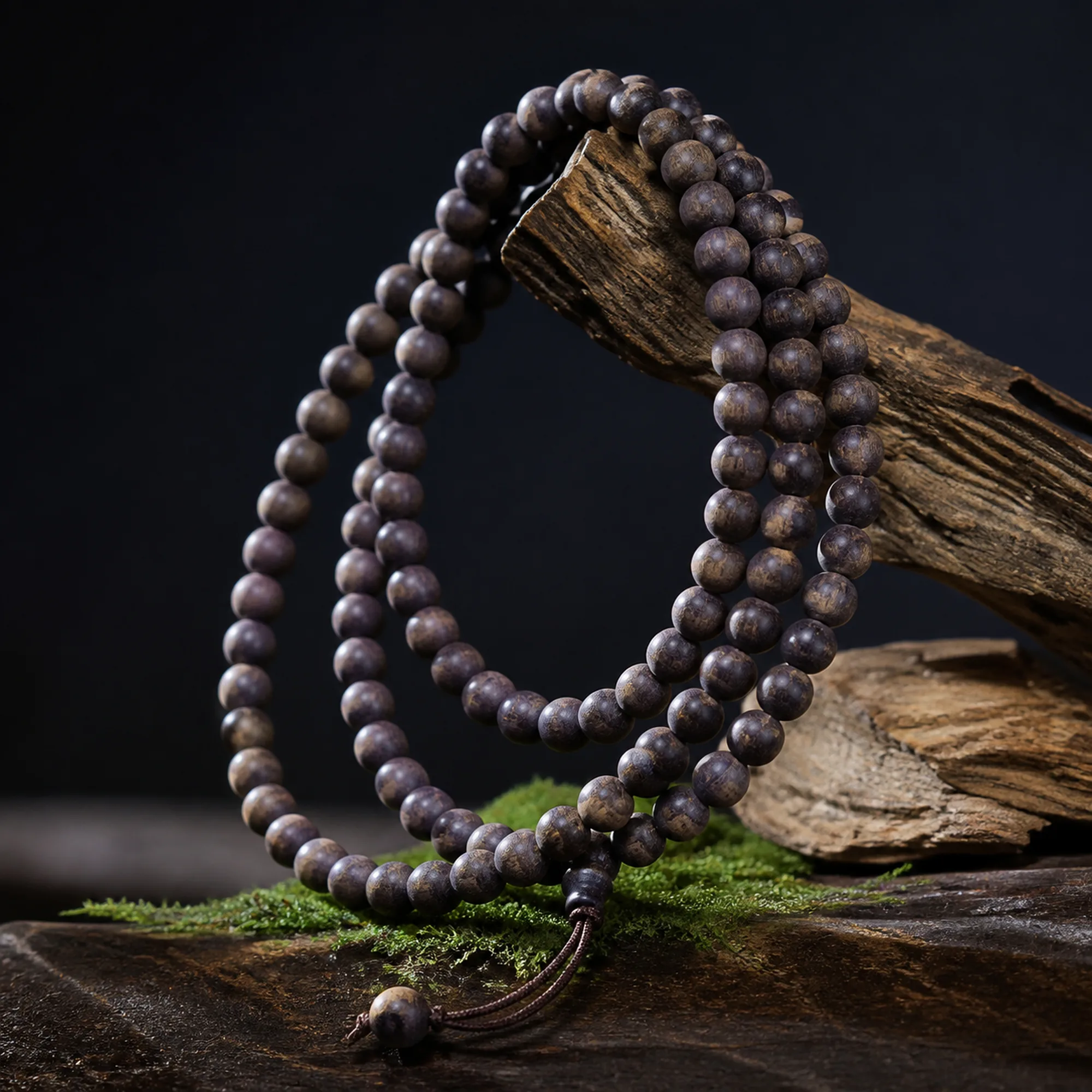
Wooden Beads: Woods, Sizes, Finishes and Care
Wooden beads are turned or carved from many woods, and each wood gives beads a different look, feel and weight. This guide compares five woods, then shows how to choose wooden beads by size, cut and finish, and how to keep them looking good for years. In our data, 45% of the 182 styles on this site are plain agarwood pieces. For example, the tables set that wood beside Sandalwood, Rosewood, Ebony and Olive wood.

Written by
Founder & Chief Sourcing Officer, AgarwoodTown
Wang Jianyu is the founder of AgarwoodTown, the agarwood business behind Oudbracelet, trading since 2014. 15+ years grading plantation agarwood and advising buyers on grade selection and CITES paperwork. These guides draw on the same bead geometry our wrist fitter uses and on the questions buyers ask before they approve a weighing video.
In this article
- What are wooden beads made from?
- Which wooden beads suit a bracelet? Five woods compared
- Part 1 — How do you choose wooden beads for a bracelet?
- Part 2 — How should you care for wooden beads?
- Natural or dyed wooden beads?
- How do you order wooden beads from us?
- Agarwood beads, on film
- Five bead cuts, on film
- Finally: which wooden beads are worth keeping?
- Frequently asked questions
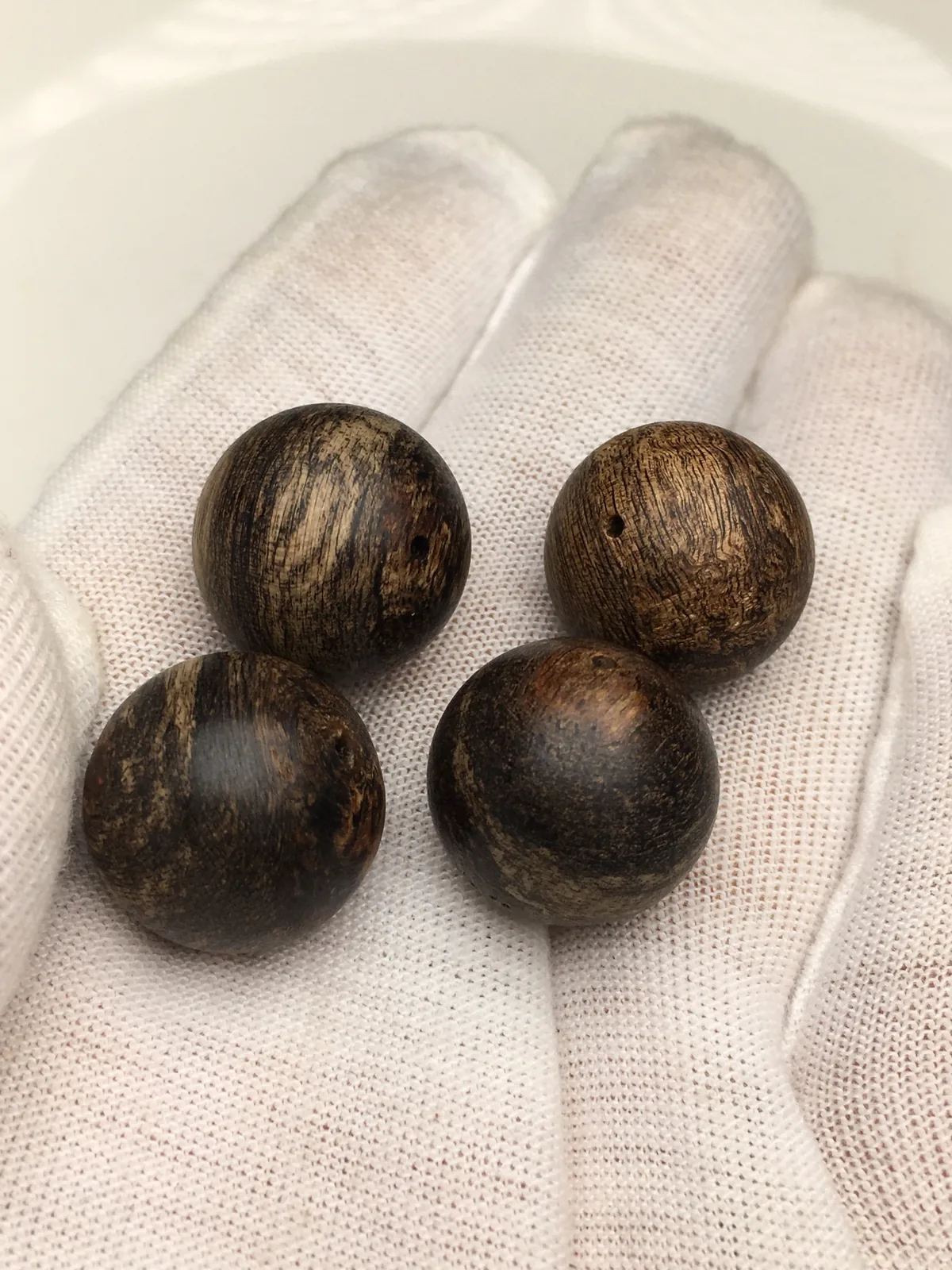 Round
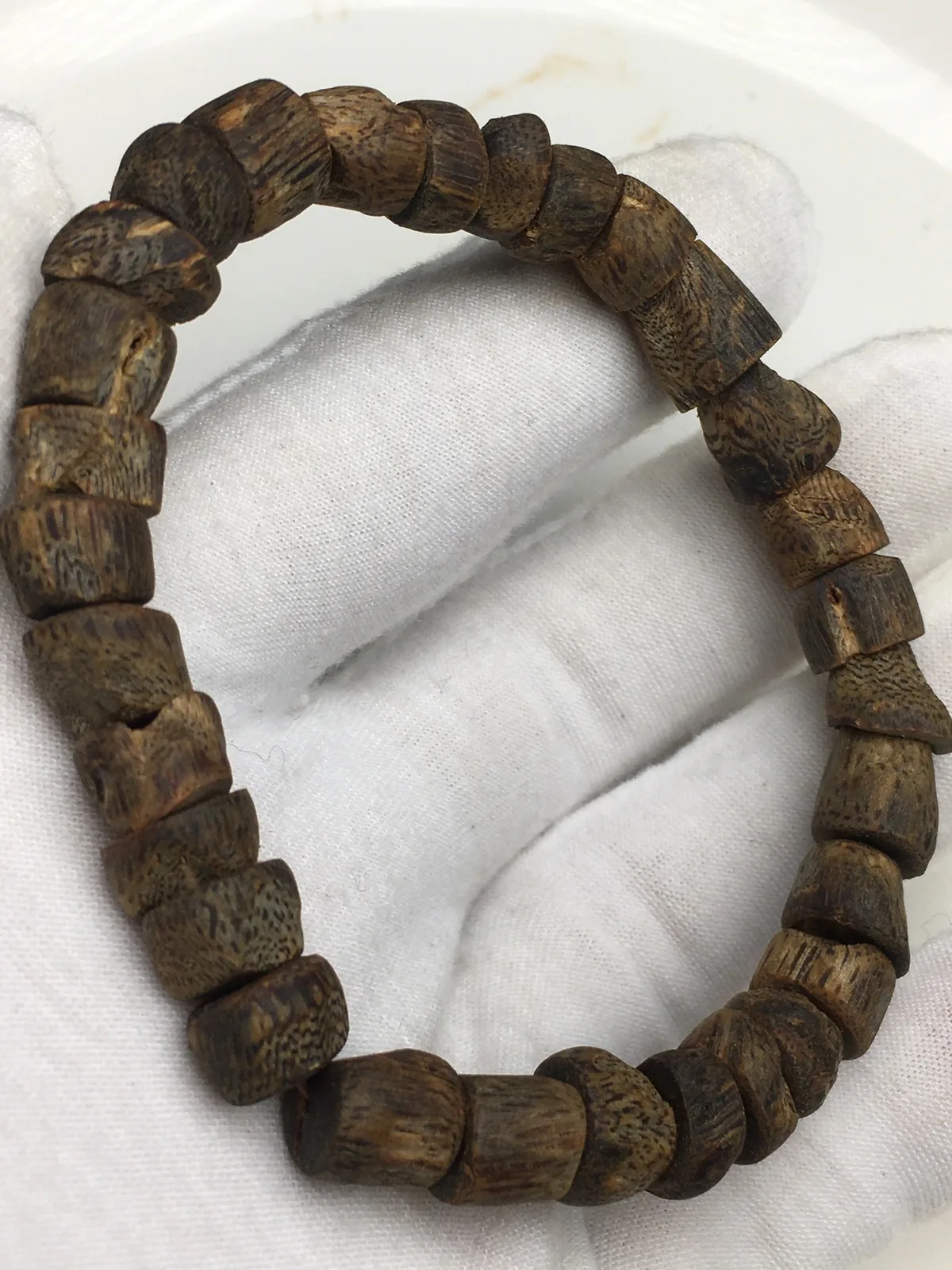 Cube
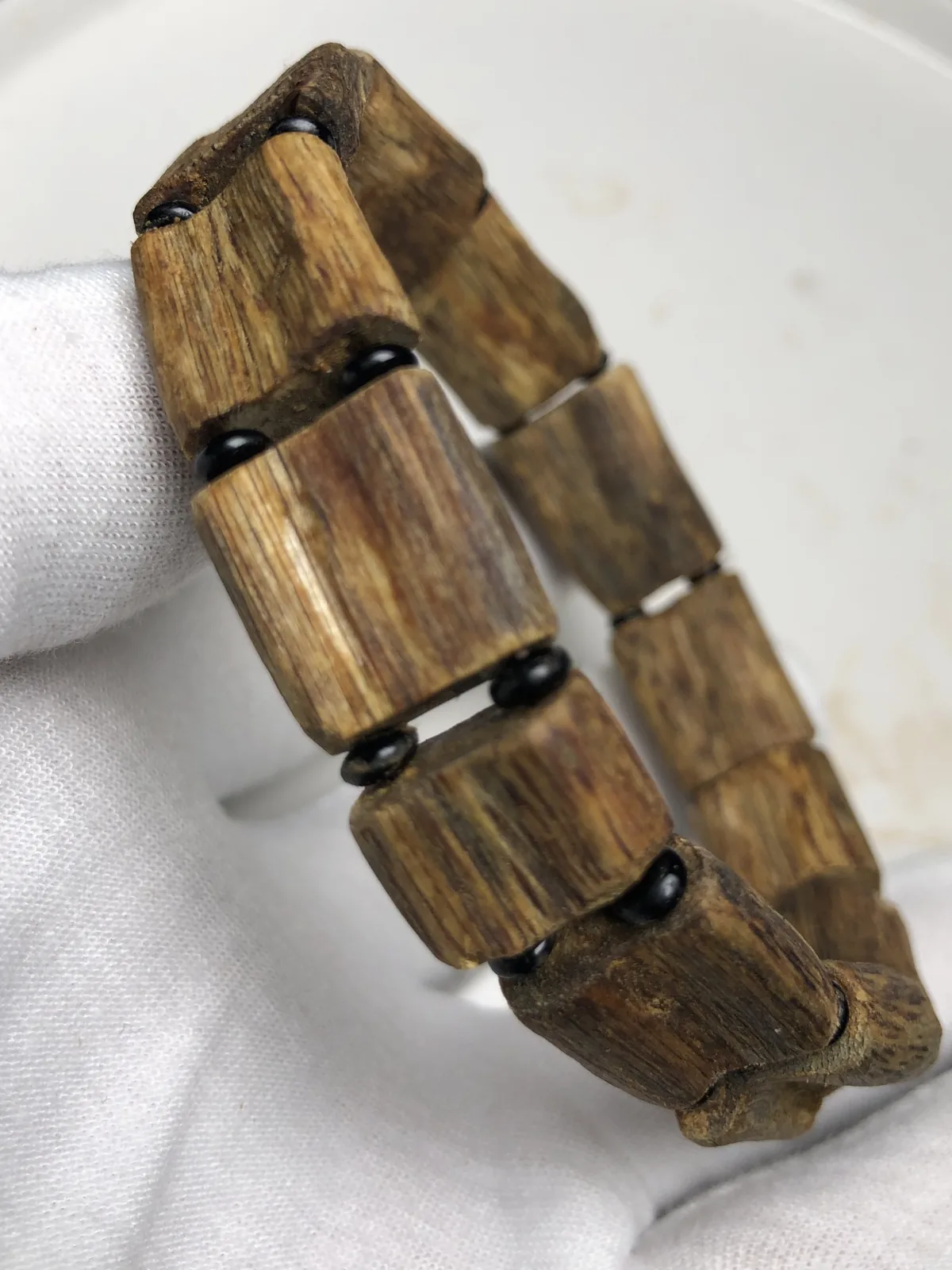
The same wood in two cuts. Round wooden beads show the grain as rings; cube beads show it as flat panels.
What are wooden beads made from?
Makers turn or carve wooden beads from many woods, and each one looks, feels and weighs different. Density alone varies hugely between species, from very light woods to woods that sink in water.(USDA 2010) So two beads of the same size can feel nothing alike in the hand.
That is why the wood matters more than the shape. Light woods make easy, everyday strands, while dense, oily woods take a deeper polish. Agarwood is a special case: its value comes from the resin that forms inside the tree.(Tan 2019)
According to the USDA Wood Handbook, specific gravity differs widely between wood species. First, that explains why wooden beads of one size can weigh very different amounts. Then resin adds weight in agarwood. Finally, we estimate agarwood at 0.60 to 0.95 g/cm³, a spread of about 58%, and weigh the real beads. For example, our data puts one 10 mm agarwood bead at 0.30–0.47 g.
Which wooden beads suit a bracelet? Five woods compared
This table is a 5-row summary. First read the wood column, then compare the colour, scent, feel across each row. For example, the first row covers “Agarwood”.
| Wood | Colour | Scent | Feel |
|---|---|---|---|
| Agarwood | Tan to dark brown, resin streaks | Quiet, warm, woody | Light to fairly dense, varies |
| Sandalwood | Pale yellow-brown | Sweet, clear | Fine, even |
| Rosewood | Red-brown with dark lines | Faint | Dense, smooth |
| Ebony | Near black | None | Very dense, cool |
| Olive wood | Cream with brown swirls | None | Medium |
Woods vary within a species too. For agarwood, we estimate density at 0.6–0.95 g/cm³ for weight estimates only; your quote uses the real weight on the scale.
Agarwood is the most variable wood in the table, because resin builds up unevenly inside the tree.(Tan 2019) Sandalwood is the classic sweet-scented alternative. Rosewood and Ebony suit wearers who want dense, smooth beads, and Olive wood is a plain, medium-weight choice for everyday strands. For example, a strand of Ebony reads almost black from across a room, while Olive wood shows cream and brown swirls up close.
Wood density differs widely between species, according to the USDA Wood Handbook, so two wooden beads of one size can weigh very different amounts. Weigh the beads, or ask the maker for the weight, before you judge a wood by eye. In our data, 168 of the 182 styles on this site are agarwood, or 92%.
Part 1 — How do you choose wooden beads for a bracelet?
Choosing wooden beads is a matter of four checks: size, cut, drilling and finish. First, pick the size. Wooden beads of 8 to 10 mm suit most wrists, while 12 mm and up read bold, and 6 mm suits a fine look or a slim wrist. Second, pick the cut: round wooden beads roll smoothly, and cube or barrel beads sit flat. In our data, round beads make up 35% of the 82 plain styles, and cube or square beads 29%. Third, look at the drilling. A clean, centred hole keeps the strand even.
Finally, think about the finish. Makers often dye, lacquer or wax wooden beads, and each finish changes how the beads age. For example, dye and lacquer can chip or fade, while bare wood darkens gently with wear. By contrast, we simply polish natural Agarwood, so the resin lines show. Our agarwood bead size chart shows each size on the wrist. Our wooden bead bracelets use plain, unlacquered agarwood.
Part 2 — How should you care for wooden beads?
Caring for wooden beads is mostly a matter of keeping water, sun and wear in check. Wood minds water more than anything else: soaking makes wood swell and can crack a bead, and water weakens the cord. Wood keeps swelling until it reaches the fibre saturation point, about 30% moisture content on average.(USDA 2010) So take the strand off for the shower, the pool and the gym. Then wipe the beads with a dry, soft cloth now and then. Additionally, keep wooden beads out of strong sun, which can fade the colour over time.
Unsealed wood also darkens slowly with wear, as the beads pick up a little oil from the skin. Many people like the change, because the beads look richer each year. In practice, the cord wears out long before the wood does. Our data puts 20 beads of 10 mm, enough for a 16 cm wrist, at 5.9–9.4 g. Finally, have the cord restrung every year or two with daily wear, and let wet beads dry flat.
Natural or dyed wooden beads?
This comparison is a 4-point check of Natural wooden beads against Dyed or lacquered beads. For example, the first row compares look. Finally, pick the column that matches what you need.
| Feature | Natural wooden beads | Dyed or lacquered beads |
|---|---|---|
| Look | True grain and colour | Even, uniform colour |
| Ageing | Darkens gently with wear | Can chip or fade |
| Scent | Some woods keep their scent | Coating hides it |
| Care | Keep dry, wipe clean | Keep dry, avoid knocks |
Natural wooden beads are the better pick for anyone who wants the grain, the scent and a colour that deepens with wear. Dyed or lacquered beads suit a wearer who needs one exact, even colour across a whole strand. Aromatic woods such as Agarwood and Sandalwood lose most of their character under a coating, because the finish seals the wood.
A quick way to spot dye is the colour itself. Very bright shades, or a perfectly even brown on every bead, usually point to dye or lacquer, while natural wood varies from bead to bead. Pale agarwood alone covers 14 styles in our data, or 8% of the catalogue. Our plain Agarwood gets only a polish, so the resin streaks that formed inside the tree stay visible.(Tan 2019) Pure agarwood, with no stone or metal, makes up 55% of our agarwood pieces.
How do you order wooden beads from us?
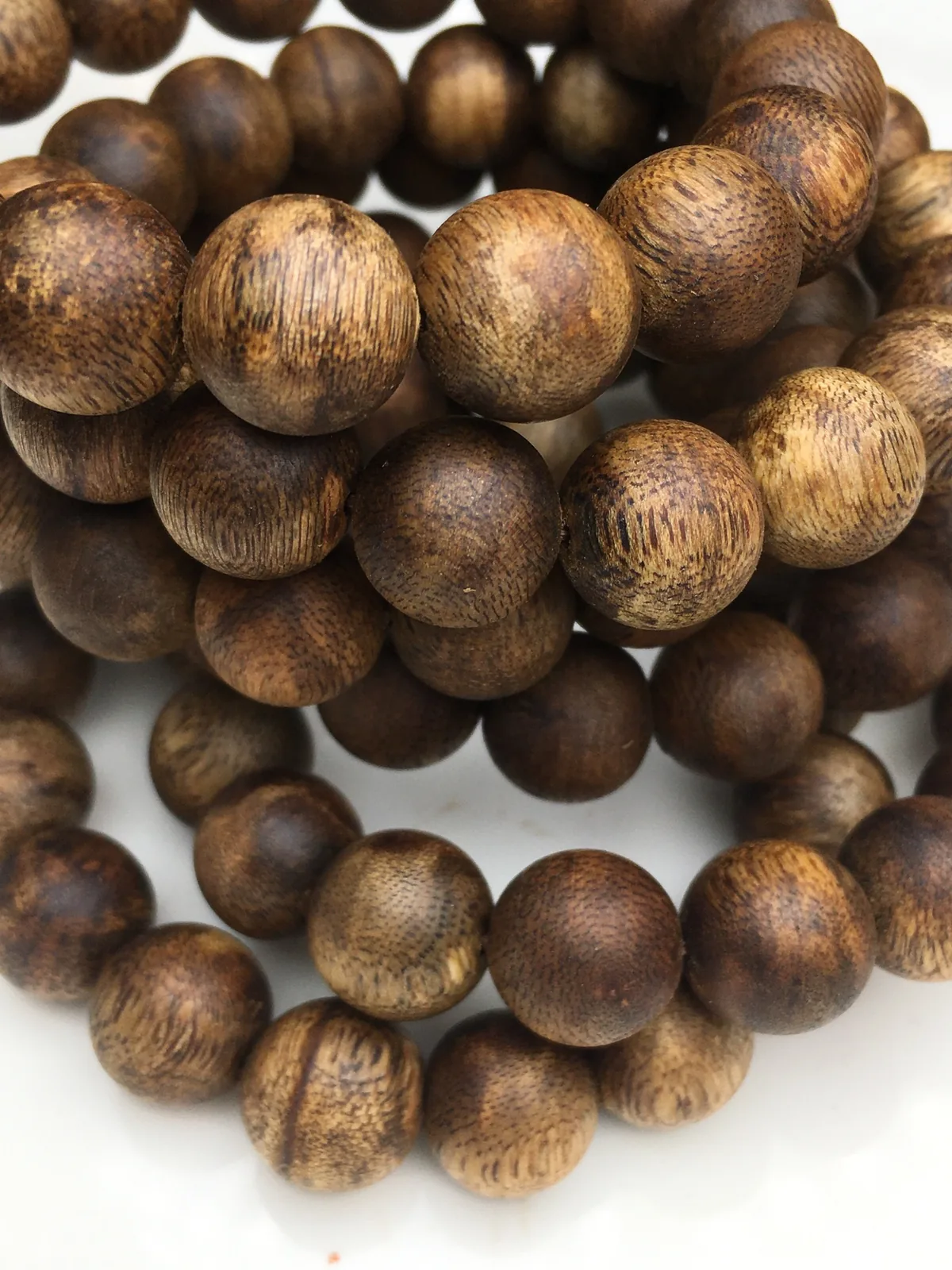
This process is a 4-step sequence, from “Choose loose or strung” to “Approve, then pay”. First follow step 1, then work down the 4 steps of “How do you order wooden beads from us?” in order.
- 1
Step 1: Choose loose or strung
Loose beads for your own designs, or a finished strand.
- 2
Step 2: Choose size and cut
From 3 mm to 20 mm, round and other cuts.
- 3
Step 3: We weigh and film
We sell beads by weight, so you see the scale.
- 4
Step 4: Approve, then pay
We charge nothing before you approve.
Ordering wooden beads from us is a four-step exchange. In step 1, you choose loose beads for your own designs or a finished strand. In step 2, you choose a size from 3 to 20 mm and a cut. Next, we weigh the beads on camera, because agarwood sells by weight and one bead size can vary a lot. Finally, you approve the filmed weight before you pay anything. For example, our data puts one 20 mm bead at about 8.4 times the wood of a 10 mm bead. Beads of 16 mm or more appear in 19% of the styles that list sizes.
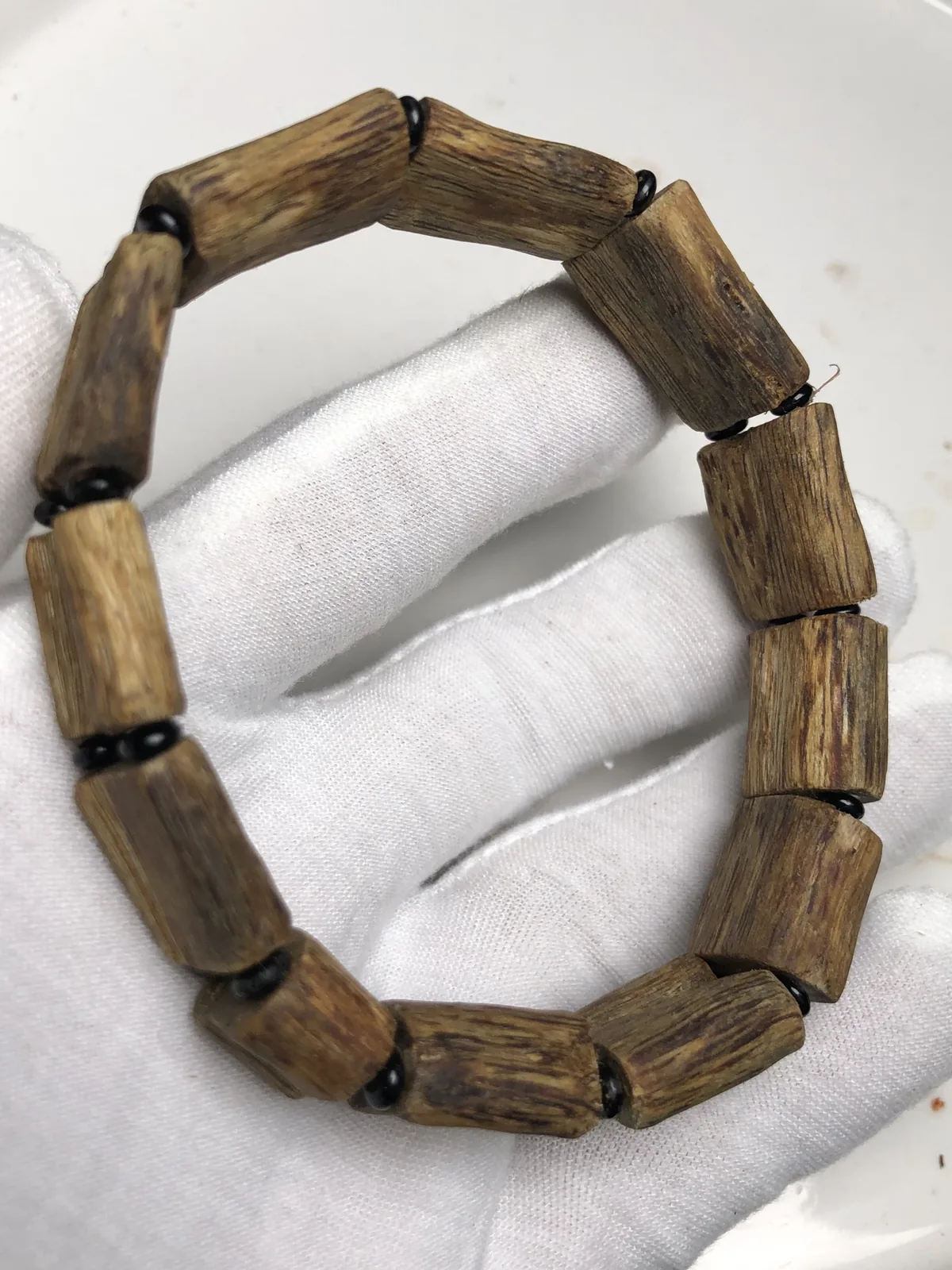
Agarwood beads, on film
Five bead cuts, on film
Finally: which wooden beads are worth keeping?
The wooden beads worth keeping are the ones whose wood you enjoy holding. So choose a species you like, a size that suits you, and a natural finish if you want the grain to show and age. For most wrists, 8 to 10 mm beads in Agarwood or Sandalwood make a balanced everyday strand. Our data agrees: 73% of the styles that list bead sizes offer 8 to 10 mm. Fine beads of 6 mm or less appear in 74%, often on multi-wrap strands.
Our agarwood is plantation-grown and ships under CITES rules.(CITES) Agarwood comes from Aquilaria trees, and the whole genus has sat in CITES Appendix II since 2004. In practice, an Appendix II listing means international shipments need export permits. Browse loose agarwood beads for your own designs, or finished wooden bead bracelets.
Frequently asked questions
This FAQ is a set of 8 short answers about wooden beads. First find your question below. For example, many facts in these answers about wooden beads come from the 4 published sources in References, which we checked in September 2026.
What are the best wooden beads for a bracelet?
It depends on what you want. Light woods make easy, everyday wooden beads, dense woods take a deeper polish, and aromatic woods such as agarwood and sandalwood add a quiet scent. For most wrists, 8 to 10 mm beads with a clean, centred hole work best.
Are wooden beads durable?
Yes, if you keep them dry. The wood itself lasts for many years; the cord usually wears out first. Take wooden beads off for showers, swimming and the gym, wipe them with a soft cloth, and have the strand restrung every year or two.
Why do some wooden beads smell?
Some woods hold aromatic compounds. Agarwood resin, for example, contains a wide range of them, so the beads give off a soft, warm scent as they warm in the hand. Most coated or dyed wooden beads smell of little, because the finish seals the wood.
Can wooden beads get wet?
Occasional splashes are fine if you dry the beads straight away. However, soaking makes wood swell, up to about 30% moisture content, and can crack it. So take wooden beads off before washing, swimming or exercise, and let them dry flat if they do get wet.
Are wooden beads dyed?
Many are, especially cheap beads in bright colours or very even brown. Dye and lacquer can chip or fade over time. Natural wooden beads, such as our plain agarwood, get only a polish, so the true grain shows and the colour deepens gently with wear.
What size wooden beads should I choose?
Beads of 8 to 10 mm suit most wrists and look balanced for daily wear. Choose 6 mm for a fine, delicate look or for slim wrists, and 12 to 14 mm for a bold strand. In our data, 73% of sized styles offer 8 to 10 mm.
Do wooden beads darken over time?
Unsealed wooden beads usually darken slowly as they pick up a little oil from the skin. Many people like this, because the beads look richer each year. Strong sun can do the opposite and fade the wood, so store wooden beads out of direct light.
Do you sell loose wooden beads?
Yes. We sell loose agarwood beads from 3 to 20 mm, sold by weight like our strands. We weigh your beads on camera and send you the video with the exact weight and price, so you approve before you pay anything.
References
This reference list is the source record for “Wooden Beads: Woods, Sizes, Finishes and Care”, with 4 published sources. According to the citations in “Wooden Beads: Woods, Sizes, Finishes and Care”, such as (USDA 2010), each one links to one entry below. Finally, we checked all 4 links behind “Wooden Beads: Woods, Sizes, Finishes and Care” in September 2026.
- 1Forest Products Laboratory. Wood Handbook — Wood as an Engineering Material (General Technical Report FPL-GTR-190). USDA Forest Service, 2010.View source
- 2Tan C.S., Isa N.M., Ismail I., Zainal Z.. Agarwood induction: current developments and future perspectives. Frontiers in Plant Science 10: 122, 2019.doi:10.3389/fpls.2019.00122
- 3Naef R.. The volatile and semi-volatile constituents of agarwood, the infected heartwood of Aquilaria species: a review. Flavour and Fragrance Journal 26(2): 73–87, 2011.doi:10.1002/ffj.2034
- 4CITES Secretariat. Appendices I, II and III. Convention on International Trade in Endangered Species of Wild Fauna and Flora, current.View source
References are listed for transparency. We summarise them for general reading; nothing here is medical advice, and no health effect is claimed.
In this article
Styles mentioned

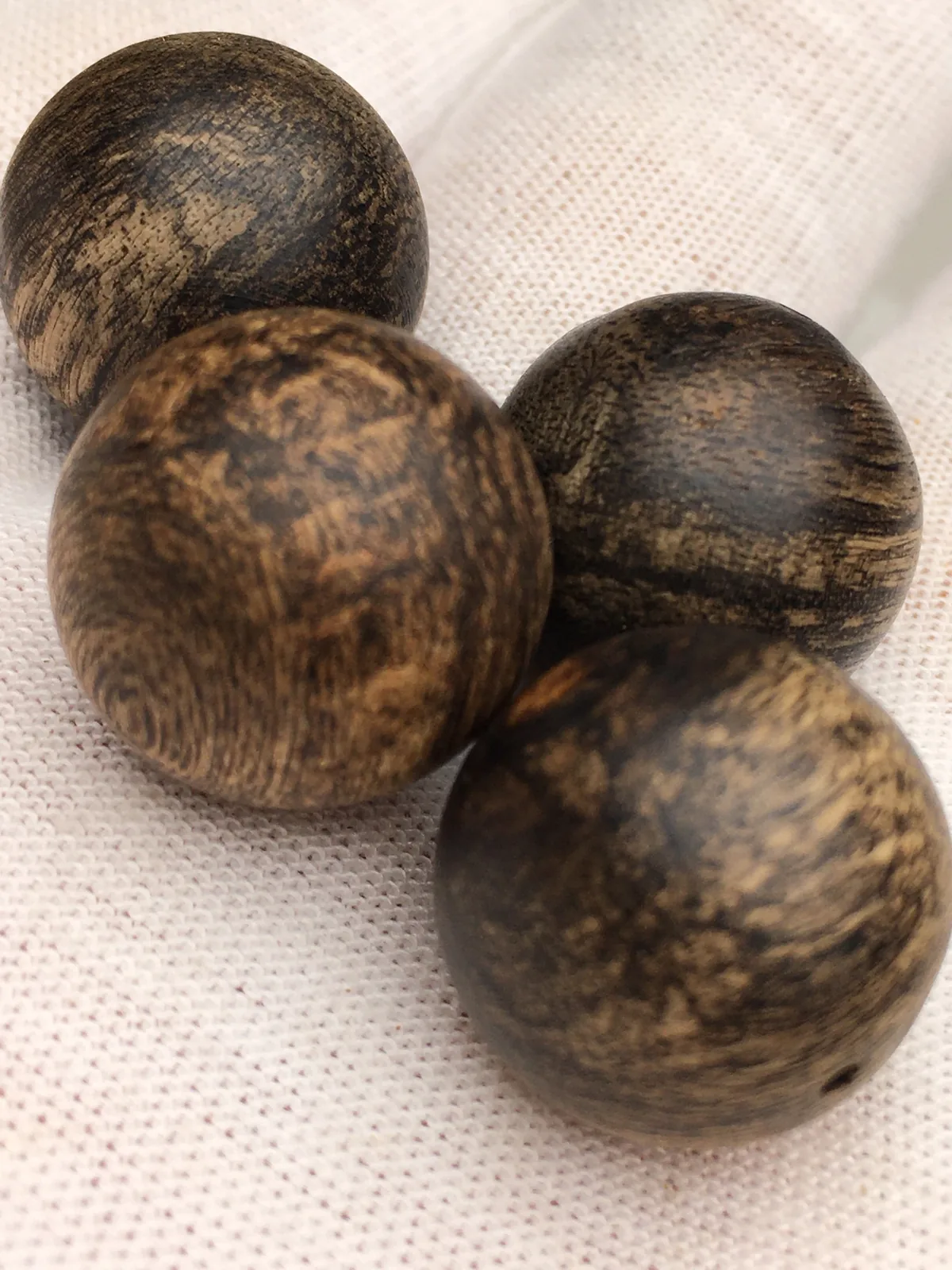
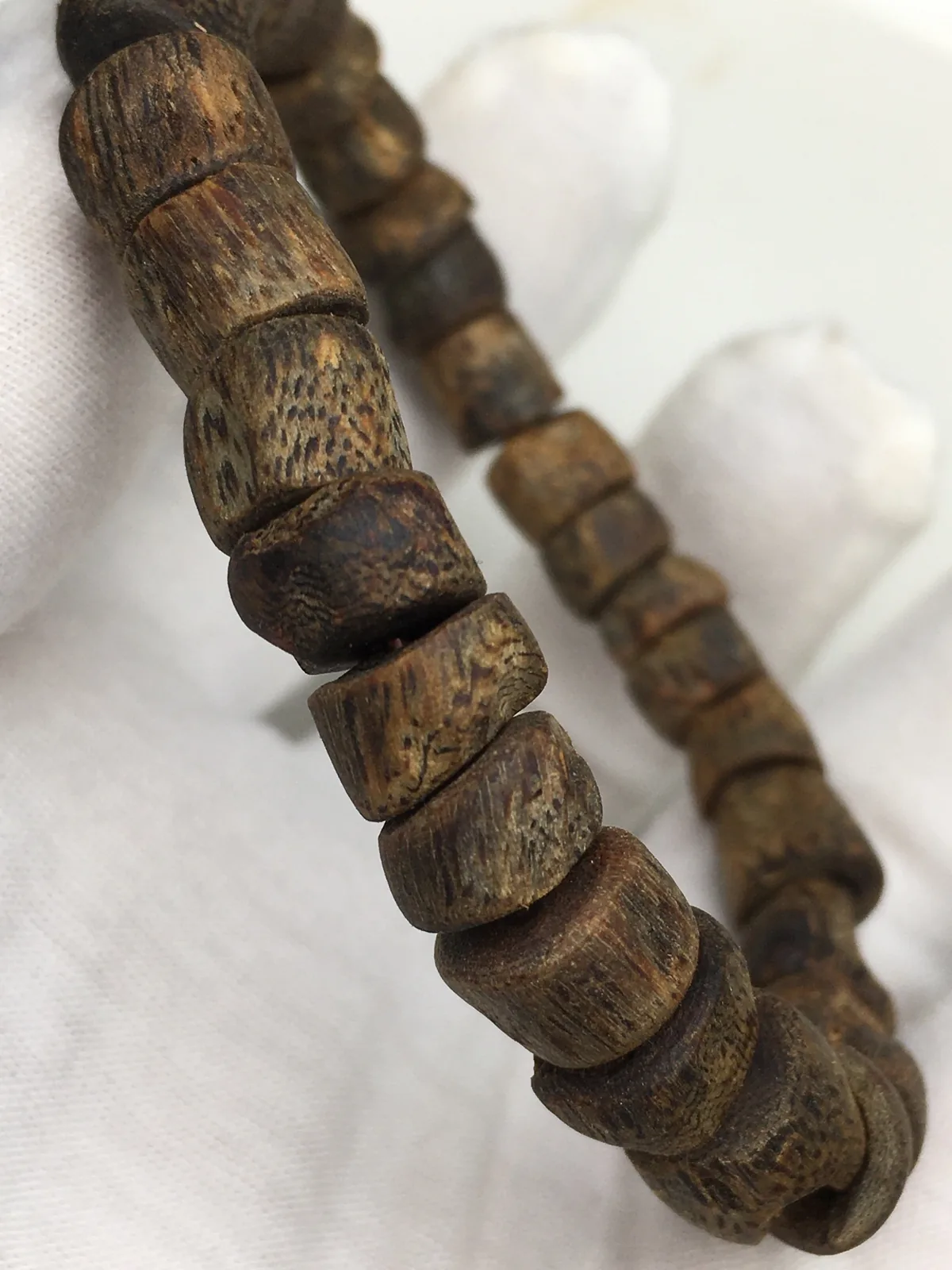
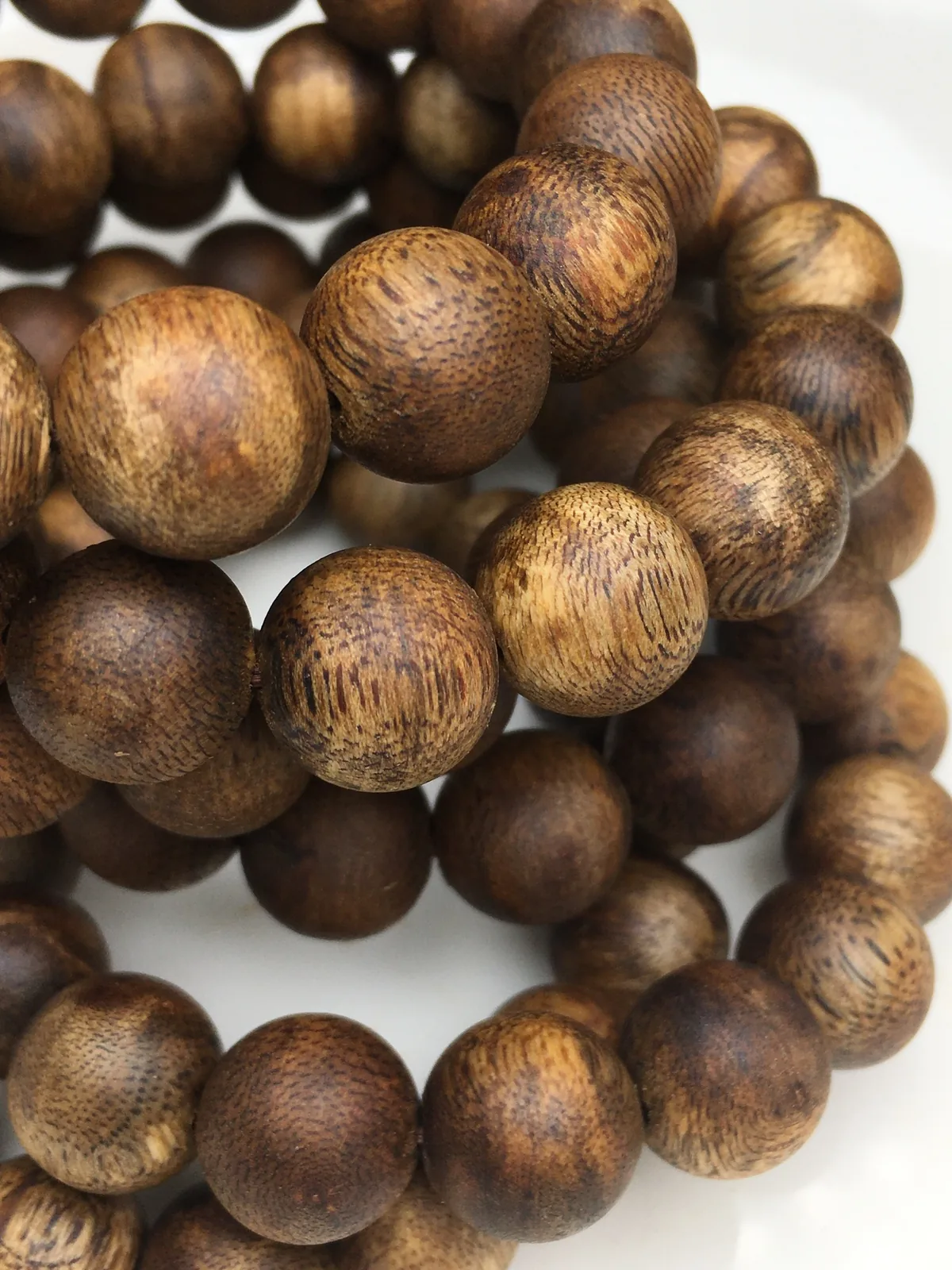
Browse more: Agarwood Loose Beads · Agarwood Bracelets
Related articles
Weighed before you pay
Choose a style, get your strand weighed
Pick a bead and size, send your request, and we reply with a video of your piece on the scale — its exact weight and price. Nothing is charged until you approve.