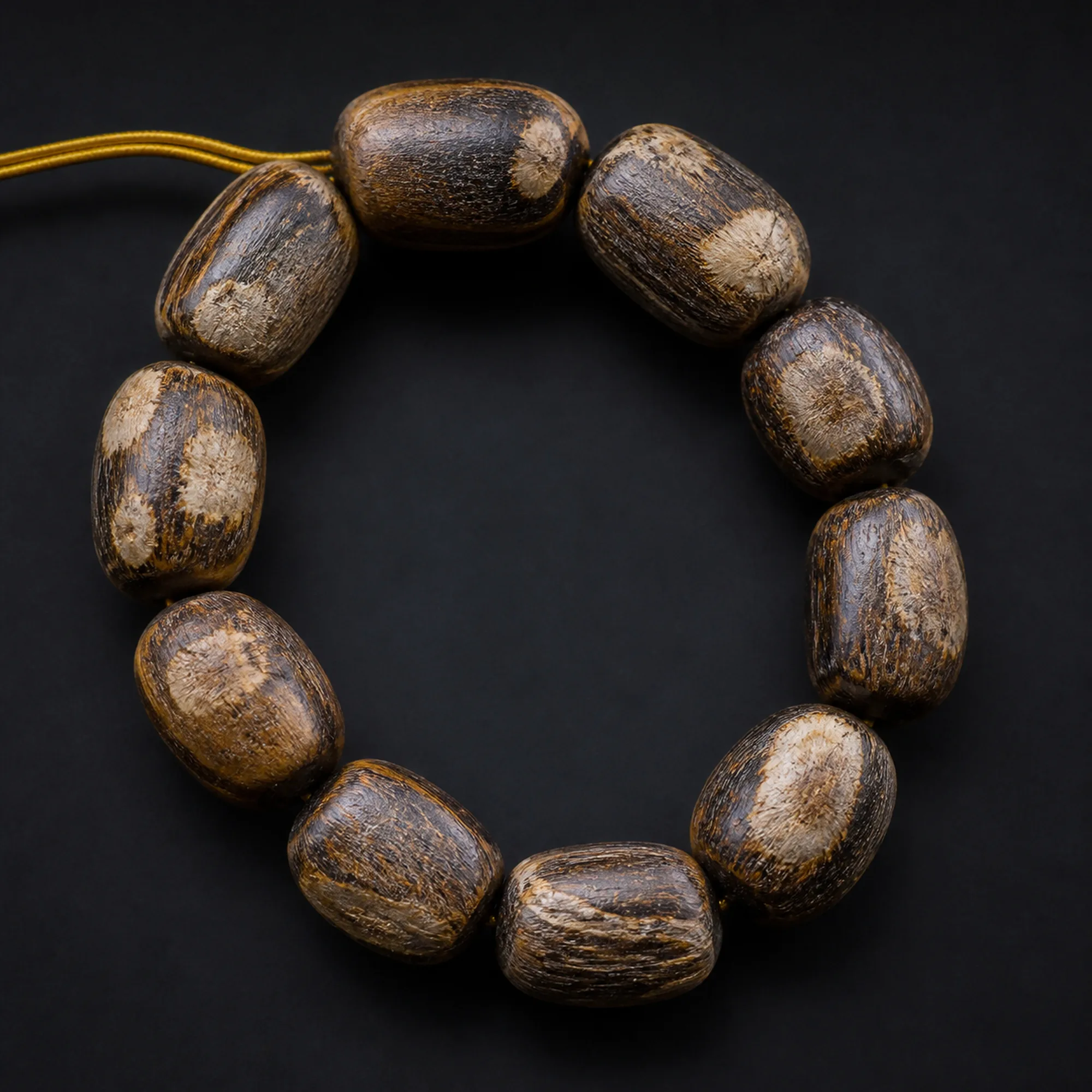
Amber Bracelet Guide: Clear, Beeswax and Baltic Amber
An amber bracelet holds tree resin that fossilised long ago. This guide explains clear and beeswax amber, copal and pressed amber, and Baltic amber, and why an amber bracelet pairs so well with agarwood. In our data, 9 of our 182 styles hold amber, or 5%, and 8 pair amber with agarwood.

Written by
Founder & Chief Sourcing Officer, AgarwoodTown
Wang Jianyu is the founder of AgarwoodTown, the agarwood business behind Oudbracelet, trading since 2014. 15+ years grading plantation agarwood and advising buyers on grade selection and CITES paperwork. These guides draw on the same bead geometry our wrist fitter uses and on the questions buyers ask before they approve a weighing video.
In this article
- What is an amber bracelet?
- Which amber bracelet types will you meet?
- Part 1 — How do you choose an amber bracelet?
- Part 2 — Why does amber suit agarwood?
- A clear or a beeswax amber bracelet?
- How do you order an amber bracelet from us?
- Amber bracelet styles, on film
- More strands from our studio, on film
- Finally: what makes a good amber bracelet?
- Frequently asked questions
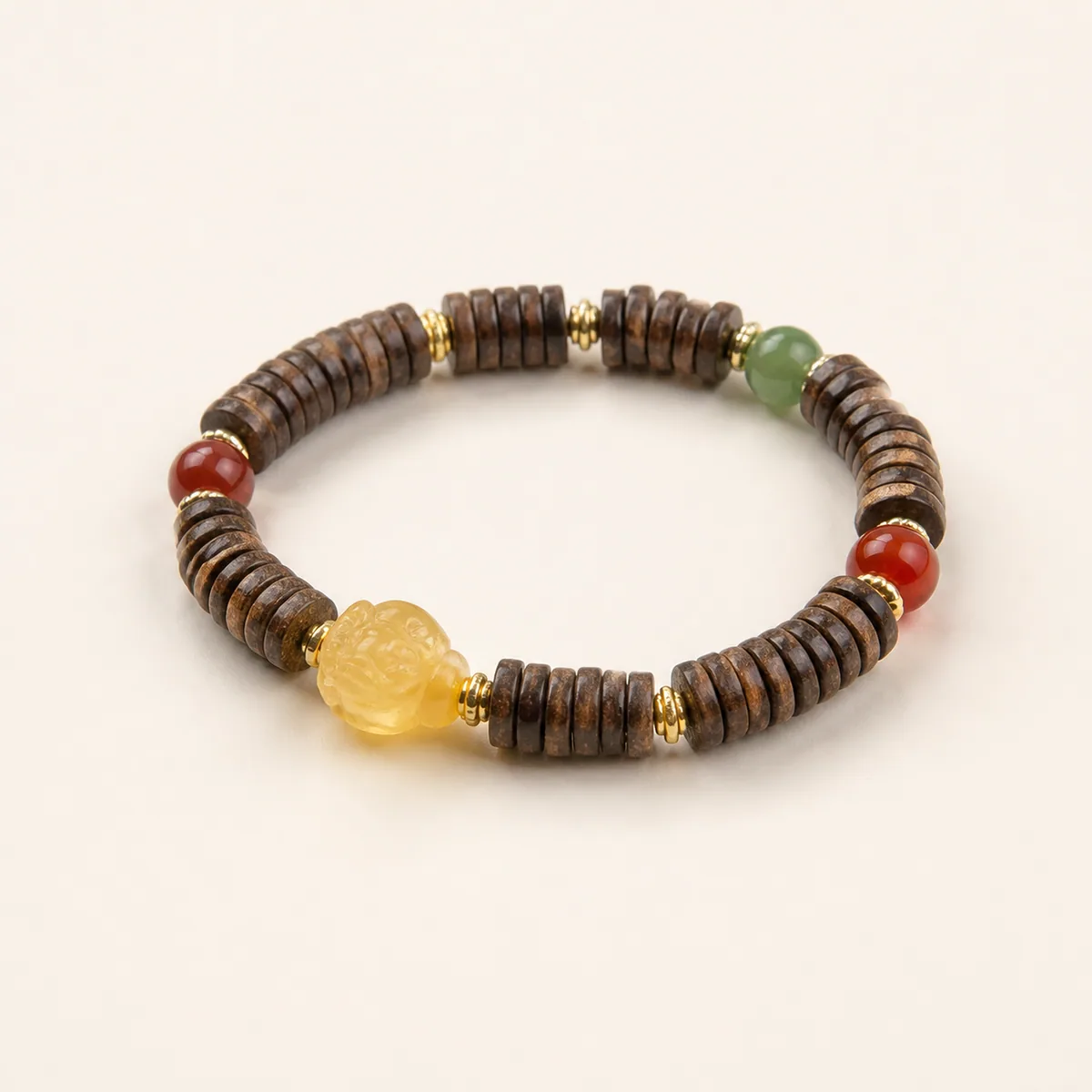
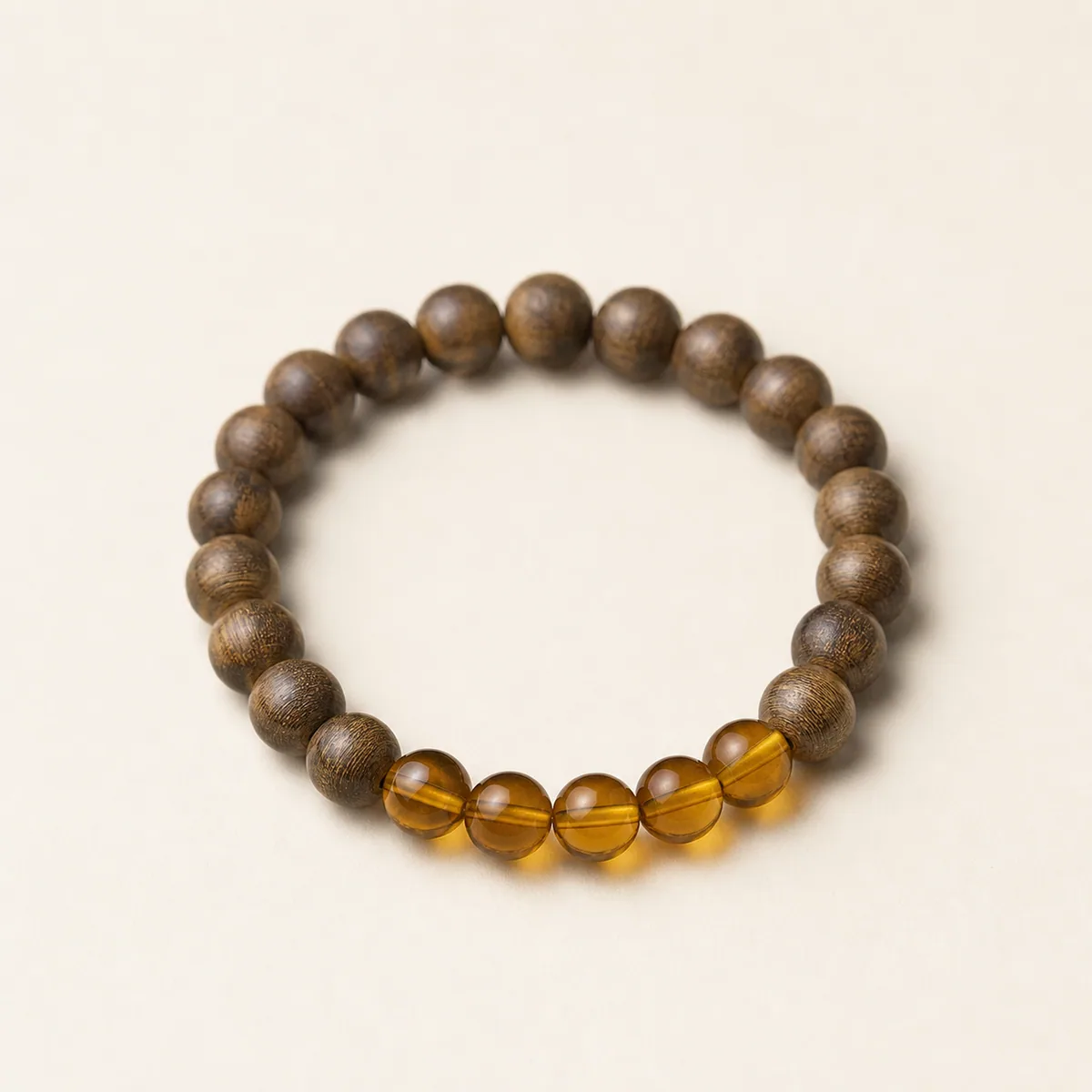 Amber with wood
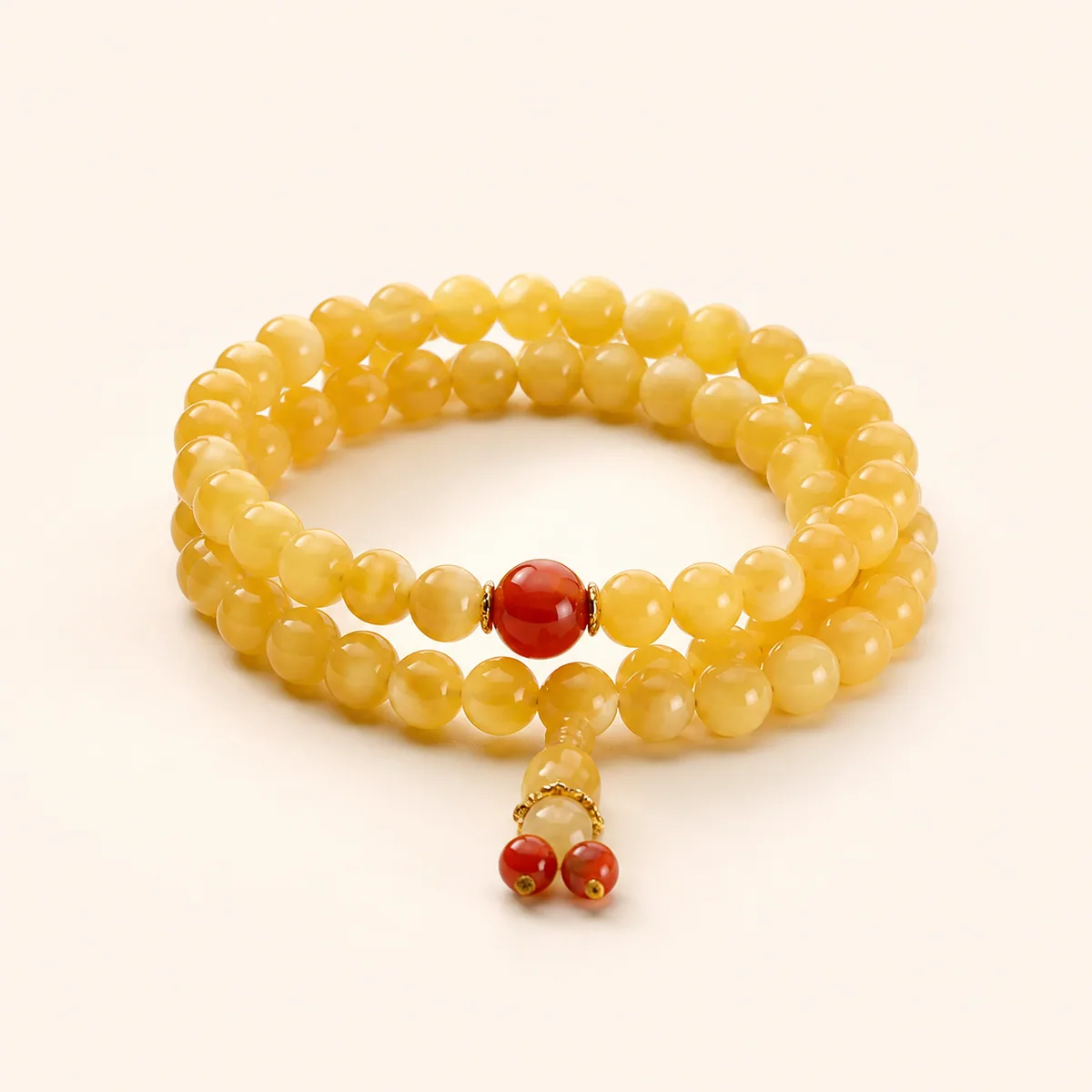 Beeswax amber
Amber ranges from clear and glowing to opaque and creamy. The opaque kind is often called beeswax amber.
What is an amber bracelet?
An amber bracelet is a strand of amber beads, or a strand where amber sits beside another material. Amber is an organic gem: tree resin that hardened and fossilised over more than a million years.(GIA) So an amber bracelet is very light, warm to the touch and soft in lustre. In our data, amber appears in 5% of the styles on Oudbracelet: 9 of 182.
Amber must be old. GIA notes that true amber is over a million years old, while copal, a younger resin, is often around a hundred thousand.(GIA) That is why an amber bracelet and a copal bracelet can look alike but age differently.
The Baltic coast bordering Germany, Poland and Russia is still an important source of amber, according to GIA. First, that is where the name Baltic amber comes from. Then, for example, a buyer still judges each piece on its own, clear or cloudy. Finally, true amber must be over a million years old, or it counts as copal.
Which amber bracelet types will you meet?
This table is a 4-row summary. First read the type column, then compare the look, weight in hand, notes across each row. For example, the first row covers “Clear amber”.
| Type | Look | Weight in hand | Notes |
|---|---|---|---|
| Clear amber | Transparent, golden to cognac | Very light | Shows inclusions and flow lines clearly |
| Beeswax amber | Opaque, creamy yellow | Very light | Many tiny gas bubbles cloud the resin |
| Copal | Clear, pale yellow | Very light | Younger resin with a softer surface |
| Pressed amber | Even colour, uniform | Very light | Small pieces of amber fused together |
True amber is more than a million years old, according to GIA. Copal is younger resin, often around a hundred thousand years old. Clouding comes from many small gas bubbles inside the resin. For example, beeswax amber holds so many bubbles that little light passes through. All four types feel very light in the hand, so weight will not tell them apart. In our data, beeswax amber makes up 67% of the amber styles on this site: 6 of 9. Ask the seller which type you are buying.
Part 1 — How do you choose an amber bracelet?
Choosing an amber bracelet comes down to three decisions: look, form and size. First, choose the look: clear and glowing, or opaque and creamy. Beeswax amber is the opaque kind, clouded by many tiny bubbles.(GIA) Second, choose the form. A full amber strand is warm and bright, while a few amber beads on dark wood read as a soft accent.
Third, think about size. Amber is so light that larger beads stay comfortable. Its density is only about 1.1 g/cm³, barely above water at 1.0. Quartz-family stones such as agate sit near 2.65 g/cm³. For example, a 12 mm amber bead weighs less than half as much as a 12 mm agate bead. Finally, ask whether the amber is natural or pressed. Pressed amber is a different product, and the price should reflect the difference.
The catalogue also shows how amber is strung here: 5 of our 9 amber bracelet styles, or 56%, are double-wraps or multi-wraps.
Part 2 — Why does amber suit agarwood?
An amber and agarwood bracelet is a pairing of two resins, one fresh and one ancient. Agarwood forms its resin inside the living Aquilaria tree after an injury.(Tan 2019) Amber, by contrast, is tree resin that hardened and fossilised over more than a million years.(GIA) So the two materials share an origin, even though deep time separates them. In our data, 8 of the 9 amber styles here pair amber with agarwood, or 89%.
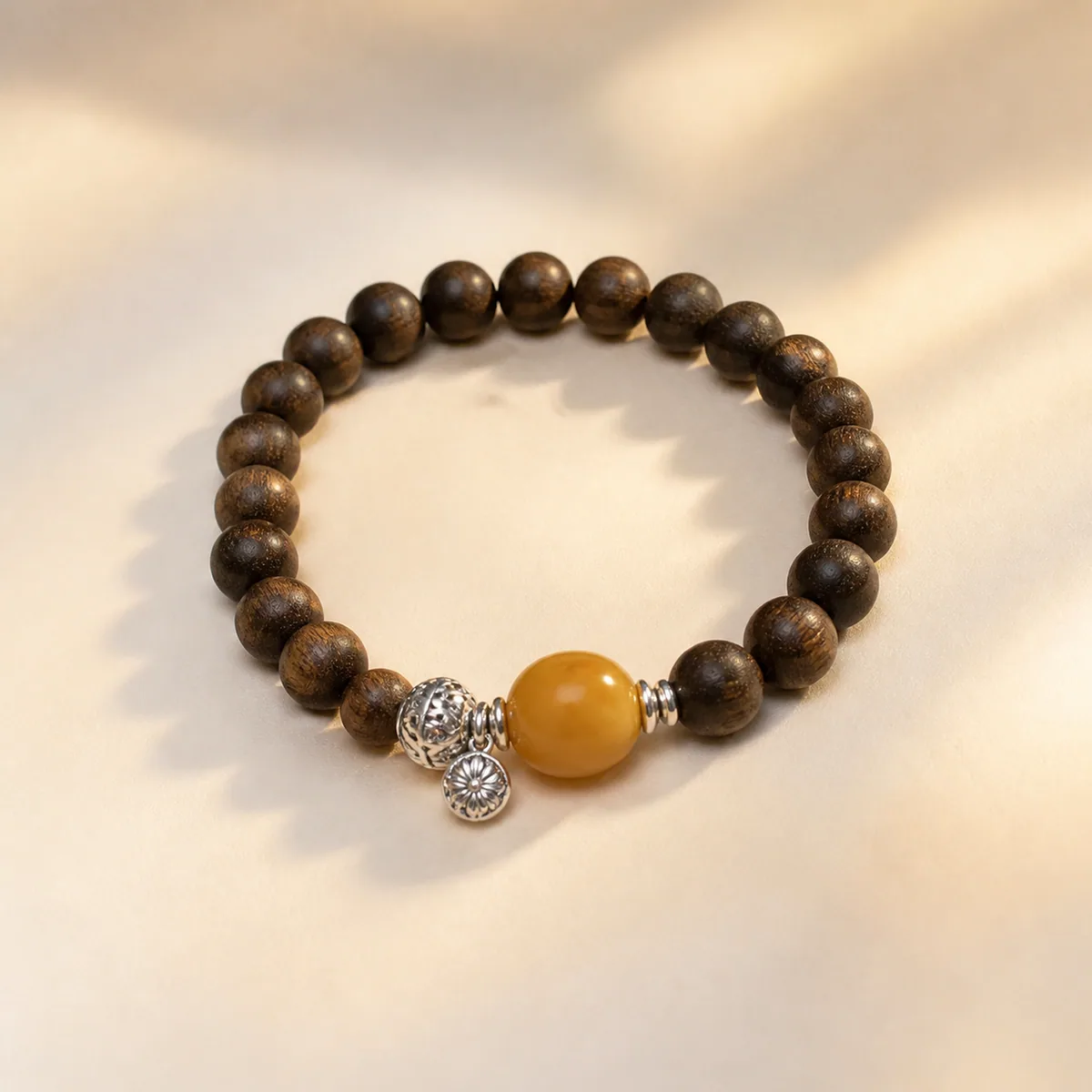
The colours work as well. For example, the honey yellow of beeswax amber lifts the dark brown of plantation agarwood. However, the two need slightly different care. Amber is soft and can scratch, while the wood minds water. So keep the strand dry and away from perfume. Then wipe the beads with a soft cloth after wear. See our agarwood and amber pieces.
A clear or a beeswax amber bracelet?
This comparison is a 4-point check of Clear amber against Beeswax amber. For example, the first row compares look. Finally, pick the column that matches what you need.
| Feature | Clear amber | Beeswax amber |
|---|---|---|
| Look | Transparent and glowing in the light | Opaque, creamy and soft in lustre |
| Why | Few gas bubbles inside the resin | Many tiny gas bubbles inside the resin |
| Pairs with | Both light and dark wood beads | Dark wood beads and gold accents |
| Feel | Very light and warm to the touch | Very light and warm to the touch |
The difference between clear and beeswax amber is a matter of bubbles, not of age or origin. According to GIA, a great many gas bubbles make amber cloudy and nearly opaque.(GIA) So both kinds are true amber. In practice, clear amber suits buyers who like to look into a bead and spot inclusions. Beeswax amber, on the other hand, suits buyers who prefer a calm, waxy surface. Our data leans creamy: 67% of our amber bracelet styles carry beeswax amber, from a total of 9.
How do you order an amber bracelet from us?
This process is a 4-step sequence, from “Pick a style” to “Approve, then pay”. First follow step 1, then work down the 4 steps of “How do you order an amber bracelet from us?” in order.
- 1
Step 1: Pick a style
Choose amber accents on agarwood, or a stronger strand with more amber beads.
- 2
Step 2: Send your wrist size
Measure your wrist with a soft tape. We then set the bead count to fit.
- 3
Step 3: We weigh and film
Next, the finished strand goes on the scale, and our camera films every bead. AgarwoodTown, our parent company, has traded agarwood since 2014.
- 4
Step 4: Approve, then pay
You pay nothing until you watch the film and approve the quote.
Amber bracelet styles, on film
More strands from our studio, on film
Finally: what makes a good amber bracelet?
A good amber bracelet is one whose look you love and whose type you know. First, decide between clear amber and creamy beeswax amber. Second, ask whether the beads are amber, copal or pressed amber. GIA notes that amber must be over a million years old, so copal is simply a younger, softer resin.(GIA) Third, plan for care. Amber is soft, so store an amber bracelet apart from harder stones and metal. Finally, see the exact strand before you pay.
Our agarwood is plantation-grown and ships under the CITES Appendix II rules for Aquilaria.(CITES) In practice, those rules cover the agarwood beads, not the amber. Our data puts agarwood in 89% of our amber styles, 8 of 9. So the paperwork applies to nearly every amber bracelet here. Browse agarwood and amber, and we film your strand first.
Frequently asked questions
This FAQ is a set of 8 short answers about amber bracelet guide. First find your question below. For example, many facts in these answers about amber bracelet guide come from the 3 published sources in References, which we checked in September 2026.
What is an amber bracelet made of?
Amber is fossilised tree resin, an organic gem that set hard over millions of years. An amber bracelet may be all amber, or amber beads set beside wood or stone. It is very light and warm to the touch, so it stays comfortable all day.
What is beeswax amber?
Beeswax amber is the trade name for opaque, creamy amber. On this site, 67% of the amber styles use beeswax amber. A great many tiny gas bubbles cloud the resin, so light does not pass through it. It is still amber, and many buyers prize its soft, waxy look above clear amber.
What is the difference between amber and copal?
Age. GIA notes that amber must be over a million years old, while copal is younger resin, often around a hundred thousand years. Copal can look similar but tends to have a softer surface. Ask the seller which one you are buying.
What is Baltic amber?
Baltic amber is simply amber from the Baltic coast region, which GIA describes as still an important source. Good amber also comes from other places. The name tells you the source, while the quality depends on the piece, so judge the beads.
Is an amber bracelet heavy?
No. Amber is one of the lightest gem materials, so even large beads stay comfortable. A 12 mm amber bead weighs far less than a stone bead of the same size, so amber strands with big beads stay easy to wear.
How do I care for an amber bracelet?
Amber is soft and can scratch, so store it apart from harder stones and metal. Keep it away from perfume, alcohol and cleaning sprays, and wipe it with a soft, dry cloth. If the strand also holds wood, keep it all dry.
Does amber go well with agarwood?
Yes. Both come from resin: agarwood forms resin inside the living tree, while amber is resin that fossilised long ago. In our data, 89% of our amber styles pair the two. The warm yellow of amber also lifts the dark brown of the wood, so the two make a natural, balanced pair on the wrist.
Can I see the amber before I pay?
Yes. We film the exact strand you will receive, so you see the colour of the amber and the grain of the wood. If the amber is not the shade you hoped for, ask for another strand before you approve the quote.
References
This reference list is the source record for “Amber Bracelet Guide: Clear, Beeswax and Baltic Amber”, with 3 published sources. According to the citations in “Amber Bracelet Guide: Clear, Beeswax and Baltic Amber”, such as (GIA), each one links to one entry below. Finally, we checked all 3 links behind “Amber Bracelet Guide: Clear, Beeswax and Baltic Amber” in September 2026.
- 1Gemological Institute of America. Amber Description. GIA, current.View source
- 2Tan C.S., Isa N.M., Ismail I., Zainal Z.. Agarwood induction: current developments and future perspectives. Frontiers in Plant Science 10: 122, 2019.doi:10.3389/fpls.2019.00122
- 3CITES Secretariat. Appendices I, II and III. Convention on International Trade in Endangered Species of Wild Fauna and Flora, current.View source
References are listed for transparency. We summarise them for general reading; nothing here is medical advice, and no health effect is claimed.
In this article
Styles mentioned
Related articles
Weighed before you pay
Choose a style, get your strand weighed
Pick a bead and size, send your request, and we reply with a video of your piece on the scale — its exact weight and price. Nothing is charged until you approve.