Aquilaria Tree: The Tree Behind Agarwood, Wild and Plantation
The Aquilaria tree is where every agarwood bead begins. However, the tree holds no agarwood until something wounds the trunk. The guide below explains what the tree is, how the tree makes resin, why wild trees are protected, and how plantations grow agarwood today, so you know what you are wearing. First, one number to keep in mind: according to Hishamuddin and colleagues (2020), 13 of 21 Aquilaria species, or 62%, rank as threatened in the wild.

Written by
Founder & Chief Sourcing Officer, AgarwoodTown
Wang Jianyu is the founder of AgarwoodTown, the agarwood business behind Oudbracelet, trading since 2014. 15+ years grading plantation agarwood and advising buyers on grade selection and CITES paperwork. These guides draw on the same bead geometry our wrist fitter uses and on the questions buyers ask before they approve a weighing video.
In this article
- What is an Aquilaria tree?
- The Aquilaria tree at a glance
- Part 1 — What does an Aquilaria tree look like before any resin?
- Part 2 — How does an Aquilaria tree make agarwood?
- Part 3 — Why does CITES regulate the wild Aquilaria tree?
- Part 4 — How does a plantation Aquilaria tree make agarwood?
- Wild or plantation Aquilaria tree: the differences
- From Aquilaria tree to bead, step by step
- What the resin looks like in a finished bead
- Part 5 — What does the Aquilaria tree mean for your bracelet?
- Finally: how does an Aquilaria tree turn a wound into scent?
- Frequently asked questions
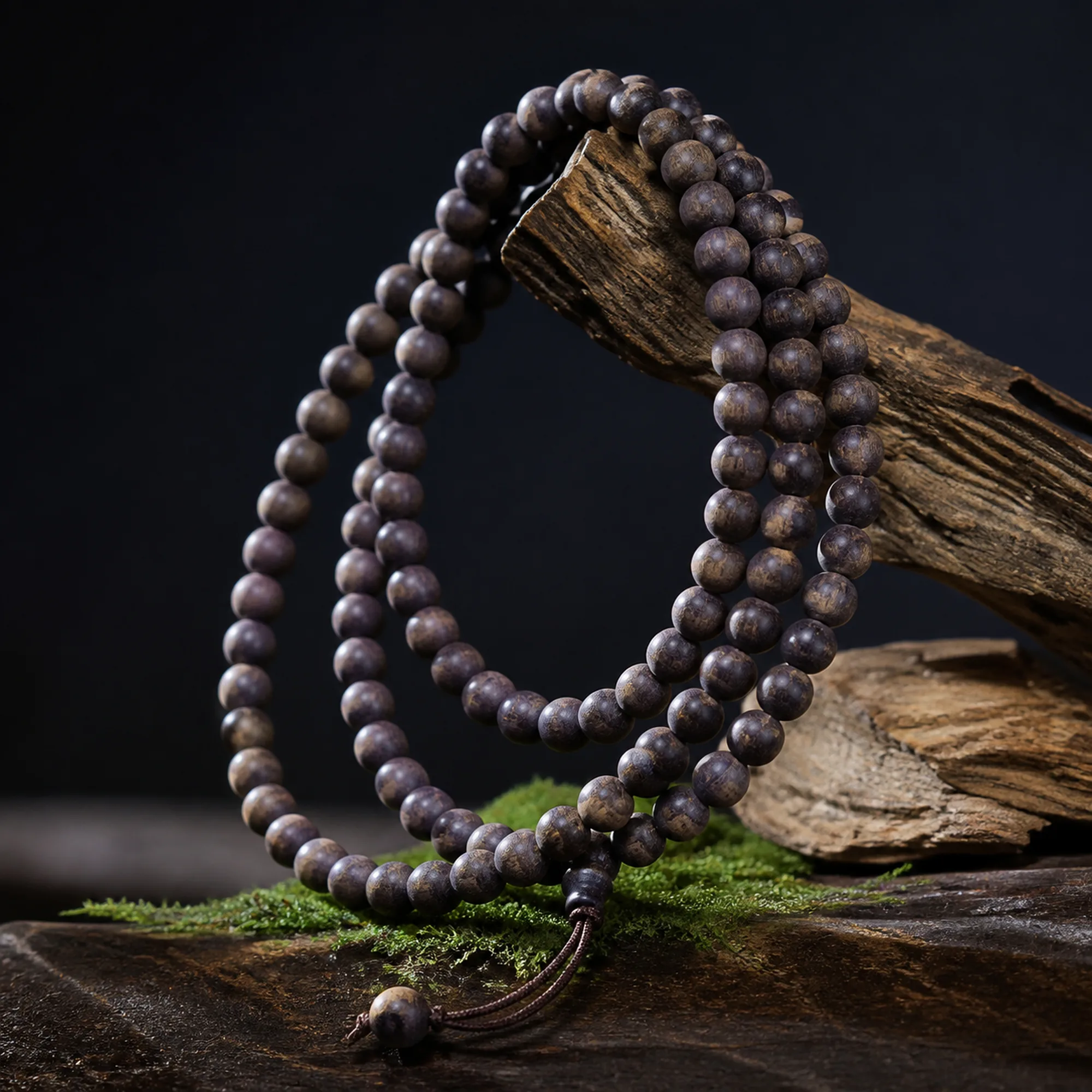
 Resin-rich
 Lighter resin
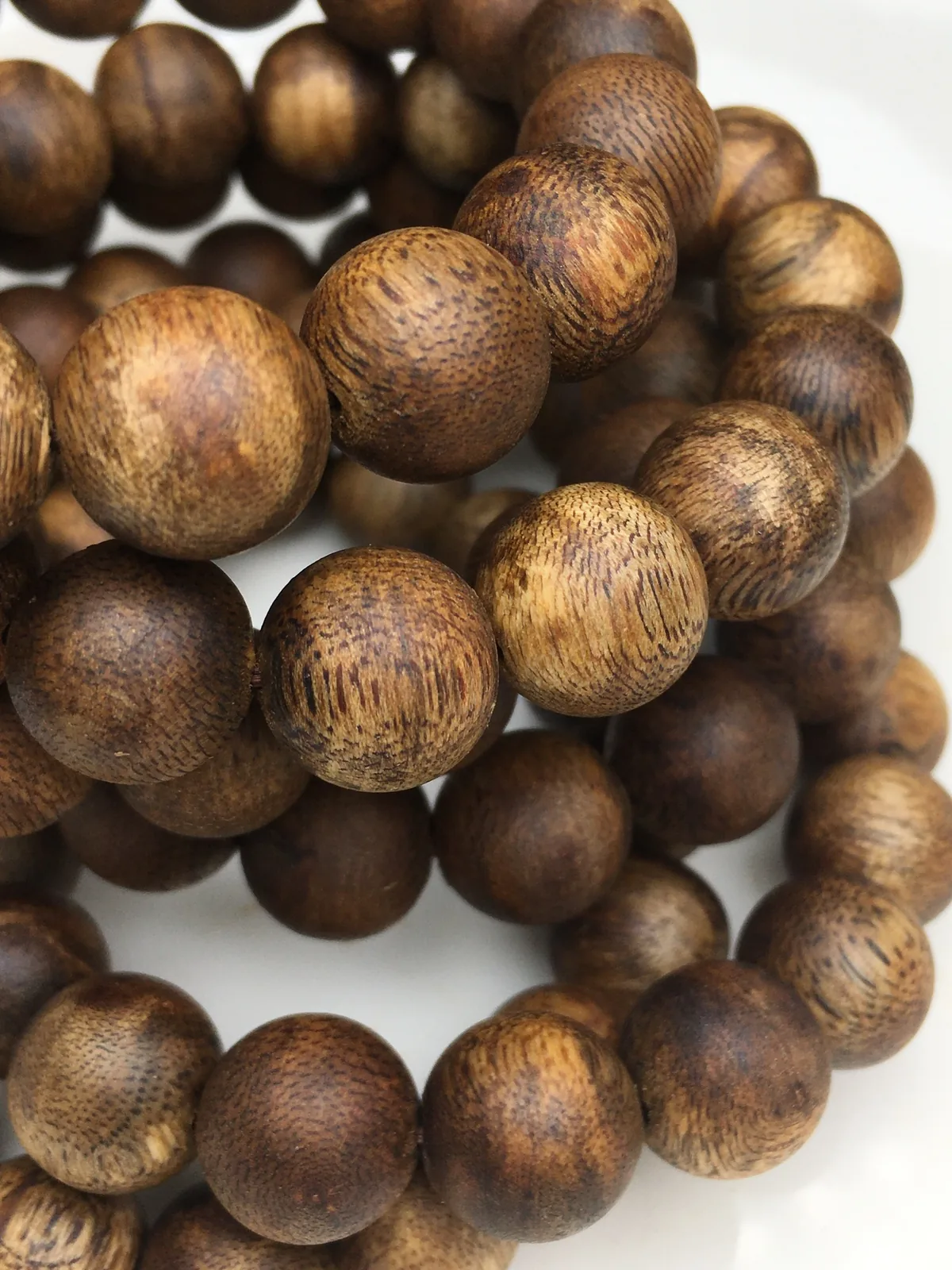
Both strands come from the same kind of tree. The difference is how much resin the wood took up before harvest. So the colour of a bead tells you about the tree’s history, not about a separate species. In our data, 4 of the 182 styles on this site are dark or purple-brown wood like the left strand, and 14, or 8%, are pale wood.
What is an Aquilaria tree?
An Aquilaria tree is an evergreen tree of the family Thymelaeaceae, and the main source of agarwood. Botanists recognise about twenty species in the genus. Wild trees grow across South and Southeast Asia, from the Himalayan foothills to New Guinea.(Hishamuddin 2020)
However, a healthy Aquilaria tree does not contain agarwood. Its wood is pale, soft and light, with almost no smell. Agarwood forms only after the tree takes a wound. Then the Aquilaria tree lays down a dark, fragrant resin around the damage as a defence.(Wang 2021) The resin-soaked wood is what the world calls agarwood, oud, aloeswood or gaharu.
So an agarwood bead is the part of an Aquilaria tree which fought back. Our parent company, AgarwoodTown, has sourced the wood since 2014, and Oudbracelet is its retail shop.
According to Hishamuddin et al. (2020), the genus Aquilaria has about 21 species.(Hishamuddin 2020) First, the IUCN lists 4 as critically endangered and 9 as vulnerable, so 62% of the genus faces some threat. Then CITES covers the whole genus in Appendix II. Finally, our data lists 168 agarwood styles, or 92% of the 182 on this site, and every one uses plantation-grown wood.
The Aquilaria tree at a glance
This table is a 8-row summary. First read the question column, then compare the short answer across each row. For example, the first row covers “Genus and family”.
| Question | Short answer |
|---|---|
| Genus and family | Aquilaria, in the family Thymelaeaceae |
| How many species | About twenty; one recent count gives 21(Hishamuddin 2020) |
| Where it grows wild | Tropical and subtropical South and Southeast Asia |
| Wood before resin | Pale, light, soft and nearly scentless |
| How agarwood forms | The tree lays down resin around a wound over months or years |
| Conservation status | Many species threatened; several critically endangered in the wild |
| Trade rules | Every species sits in CITES Appendix II |
| What we sell | Plantation agarwood only, weighed on camera before you pay |
Species counts differ between botanists, because a few names are still under review. So treat “about twenty” as the honest figure. Of the 21 species in the 2020 count, 13, or 62%, sit in a threatened IUCN category. In our data, 92 of the 182 styles on this site, or 51%, are pure agarwood with no stone or metal.
Part 1 — What does an Aquilaria tree look like before any resin?
An ordinary Aquilaria tree is a slim evergreen with smooth pale bark and glossy leaves. Nothing about the tree looks precious.
Cut a healthy Aquilaria tree, and the wood is pale yellow-white. The wood floats easily and smells of little more than fresh sap. So the value lies not in the trunk itself, but in what the trunk can become.
Also, not every Aquilaria tree becomes agarwood. In the wild, many trees never take the kind of wound which triggers resin. Others take a wound but produce only a thin dark streak. Agarwood forms only as a wound response, according to a 2021 review by Wang and colleagues.(Wang 2021) For example, a wild tree felled in the hope of agarwood may hold almost none. Finally, the uncertainty is the root of agarwood’s price, and of the damage wild harvest has done.
Part 2 — How does an Aquilaria tree make agarwood?
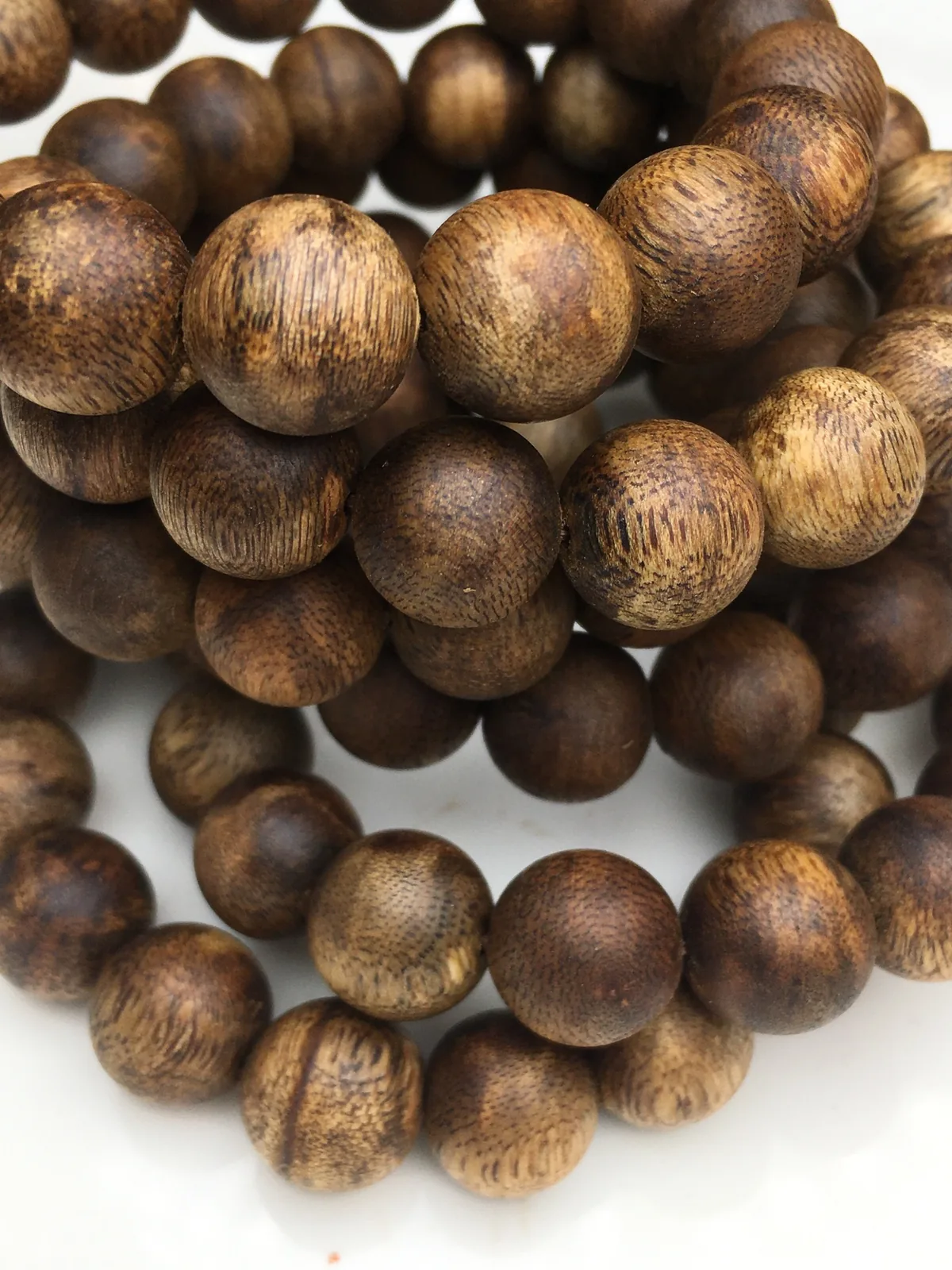
Agarwood is a defence response. When lightning, a broken branch, boring insects or a fungus opens the wood, the Aquilaria tree reacts. The tree produces aromatic compounds and packs the compounds into the wood around the injury, according to Wang and colleagues.(Wang 2021) Over time, that wood turns dark, heavy and fragrant.
The process is slow. Researchers describe resin building up over months to years, and the amount varies widely from tree to tree. So two pieces from the same Aquilaria tree can differ in colour, weight and scent. For example, our data uses a density band of 0.6–0.95 g/cm³, so the densest wood weighs 58% more than the lightest. A 10 mm strand of 20 beads can therefore weigh anywhere from 5.9 to 9.4 g.
Then comes the careful part. In step 4 of the process below, workers split the resinous wood from the pale wood around it, often with small hand tools. Only the dark, resin-rich part becomes agarwood. The rest of the Aquilaria tree has little value as agarwood at all.
Part 3 — Why does CITES regulate the wild Aquilaria tree?
Wild agarwood is scarce, because only some wild trees hold agarwood and collectors have long cut many to find a few. As a result, wild populations fell sharply. Of about 21 Aquilaria species, 4 are critically endangered and 9 are vulnerable on the IUCN Red List, according to Hishamuddin and colleagues.(Hishamuddin 2020) Thirteen of 21 species, or roughly 62%, now sit in a threatened category.
Every Aquilaria tree species therefore sits in CITES Appendix II.(CITES) Appendix II is a permit system, not a ban, so exports stay within limits the wild population can bear. The closely related genus Gyrinops, which also yields agarwood, has the same listing.
For a buyer, the lesson is simple. Wild agarwood is scarce, hard to trace and under pressure. So we do not sell wild wood. For example, all 168 agarwood styles in our data come from a plantation Aquilaria tree.
Part 4 — How does a plantation Aquilaria tree make agarwood?
A plantation Aquilaria tree is a cultivated tree which growers wound on purpose rather than waiting for chance. Methods include drilling or cutting the trunk, inserting chemicals which trigger a stress response, and inoculating the wood with fungi, according to a 2019 review by Tan and colleagues.(Tan 2019)
One published method treats the whole Aquilaria tree at once, through a transfusion into the trunk. In cultivated Aquilaria sinensis, Liu and colleagues reported resin spreading far more widely through the wood than with local wounding.(Liu 2013) In short, plantation agarwood is still real agarwood. The tree still makes the resin itself, only on a timetable people can plan.
Plantation wood also varies. For example, a young tree gives lighter, paler agarwood, and an older tree with a longer induction gives darker, denser wood. So “plantation” describes where the Aquilaria tree grew, not one fixed grade. In our data, 14 styles use pale wood and 4 use dark or purple-brown wood. We weigh each strand for the same reason, and show you the result.
Wild or plantation Aquilaria tree: the differences
This comparison is a 5-point check of Wild Aquilaria tree against Plantation Aquilaria tree. For example, the first row compares how resin starts. Finally, pick the column that matches what you need.
| Feature | Wild Aquilaria tree | Plantation Aquilaria tree |
|---|---|---|
| How resin starts | By chance: storm damage, insects, fungi | On purpose: wounding, chemicals or fungal inoculation |
| How long it takes | Unpredictable; often many years | Planned; months to years after induction |
| Effect on wild trees | Adds pressure on threatened species | Grown for harvest, so wild trees stay standing |
| Traceability | Hard to document | Farm records and CITES paperwork |
| What you can buy from us | Nothing; we do not sell wild agarwood | Every strand in the shop |
A plantation Aquilaria tree is the traceable choice, while a wild tree is the scarce one. In practice, the difference shows up in the paperwork more than in the bead. For example, a seller of plantation wood can say where the tree grew and supply CITES documents. A seller of wild wood often cannot. Wild stock is also thin: 4 of 21 species, or 19%, rank as critically endangered.(Hishamuddin 2020) In our data, all 168 agarwood styles sit in the right-hand column.
From Aquilaria tree to bead, step by step
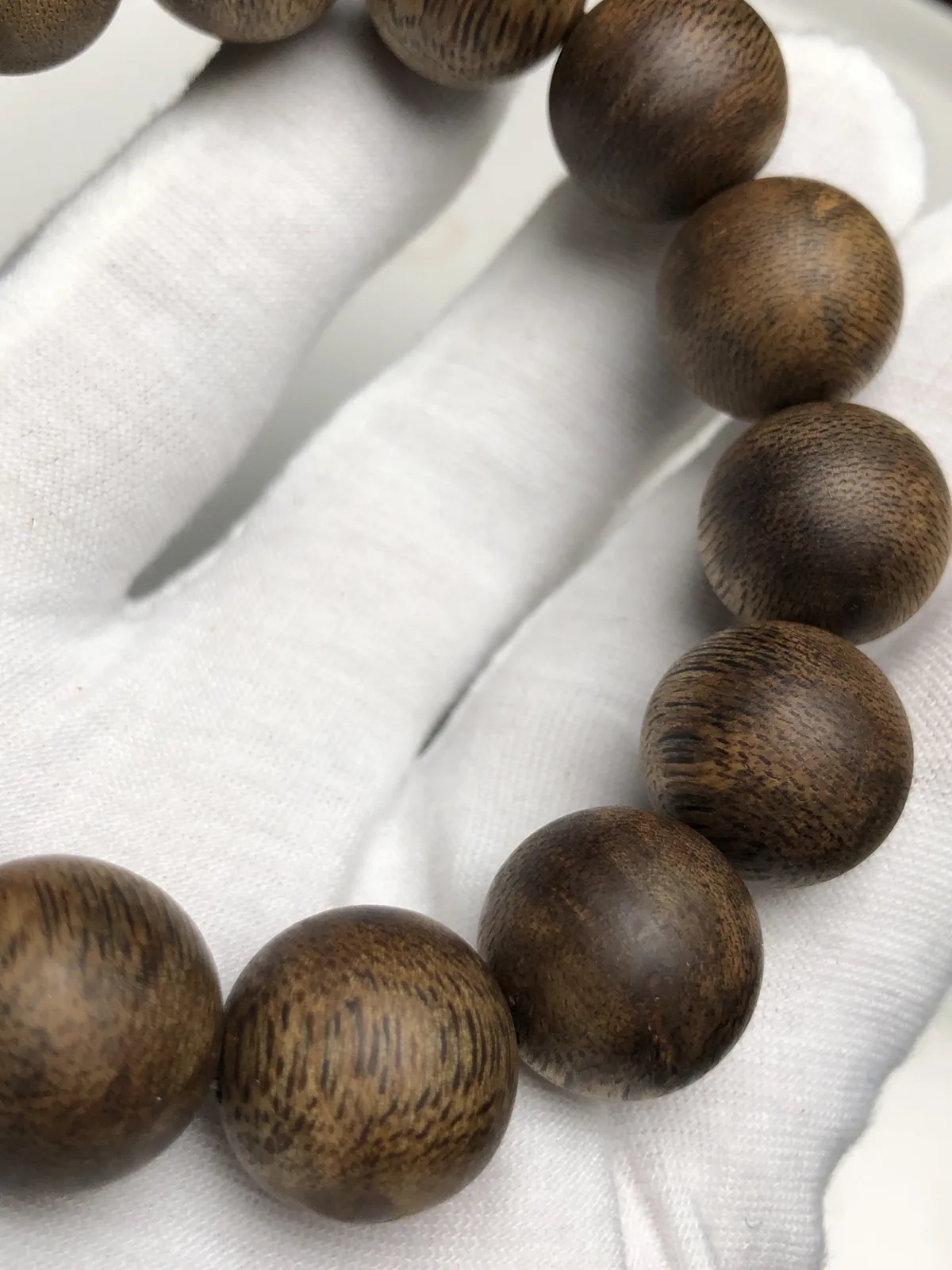
This process is a 6-step sequence, from “Grow” to “Weigh on camera”. First follow step 1, then work down the 6 steps of “From Aquilaria tree to bead, step by step” in order.
- 1
Step 1: Grow
Farmers raise the Aquilaria tree from seedlings for several years before any induction.
- 2
Step 2: Induce
Next, they wound or inoculate the trunk, and the tree starts to lay down resin.
- 3
Step 3: Wait
Then the resin builds up over months to years. Longer usually means darker wood.
- 4
Step 4: Harvest and sort
After felling, workers carve the dark resinous wood away from the pale wood.
- 5
Step 5: Dry, cut and polish
The wood dries slowly. Then a bead maker cuts, drills and polishes it into beads.
- 6
Step 6: Weigh on camera
Finally, we weigh your strand, film it and send you the video before you pay.
From seedling to finished bead, a plantation Aquilaria tree takes several years. In practice, step 3 is the longest wait, since resin builds for months to years after induction, according to Tan and colleagues.(Tan 2019) Step 6 is the quickest. In our data, a 10 mm strand for a 16 cm wrist takes 20 beads, and the scale then shows its real weight.
What the resin looks like in a finished bead
Part 5 — What does the Aquilaria tree mean for your bracelet?
The short answer is that the tree sets colour, weight, scent and price. Everything you notice in a strand starts in the tree. First, colour tracks resin: more resin, darker wood. Second, weight tracks resin too, because resin is denser than the plain wood. For example, a strand rich in resin can even sink, as our guide to sinking agarwood explains.
Third, scent comes from the resin, not from anything added. The main scent compounds are sesquiterpenes and chromones, according to Wang and colleagues.(Wang 2021) So a warm hand brings the scent up, and a real strand keeps the scent for years. Our guide on whether agarwood beads smell covers what to expect.
Finally, the tree explains the price model. No two pieces of an Aquilaria tree hold the same resin. So we price agarwood by weight, and we show the scale on camera. In our data, 92 styles, or 51%, are pure agarwood bracelets and strands with nothing but plantation wood on the cord.
 Cube cut
 Barrel cut
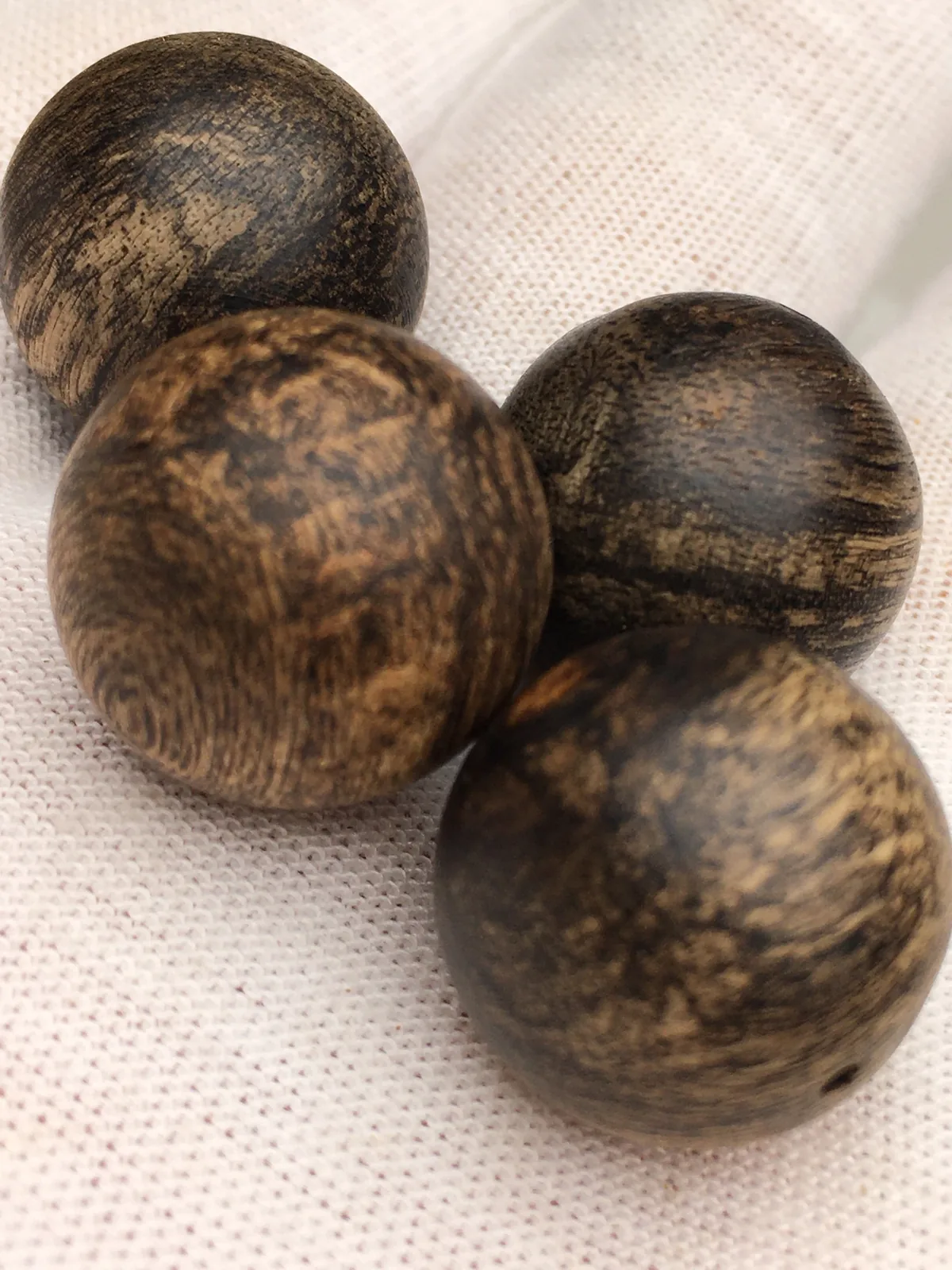
The cut decides how much of the tree’s pattern you see. Round beads soften it, while flat and long cuts show it plainly.
Finally: how does an Aquilaria tree turn a wound into scent?
The Aquilaria tree is plain until something hurts the trunk. Then, over years, the tree turns the damage into one of the most prized scented materials in the world. Agarwood is the result: resin-soaked wood laid down as a defence, according to Wang and colleagues.(Wang 2021) Wild trees paid a heavy price for agarwood, and plantations matter now for that reason.
So when you choose a strand, think of the tree behind the beads. First, ask where the tree grew. Second, ask to see the weight. Finally, ask to see the grain move in the light. For example, we answer all three for each of the 168 agarwood styles in our data, or 92% of the catalogue, because a plantation Aquilaria tree deserves an honest account.
Frequently asked questions
This FAQ is a set of 9 short answers about aquilaria tree. First find your question below. For example, many facts in these answers about aquilaria tree come from the 5 published sources in References, which we checked in September 2026.
Is agarwood the same as the Aquilaria tree?
Not quite. The Aquilaria tree is the plant, and agarwood is the dark resinous wood that forms inside it after a wound. A healthy tree has pale, light and almost scentless wood. So agarwood is a part of some trees, produced over months or years, not the whole trunk.
How long does an Aquilaria tree take to make agarwood?
It varies widely. In the wild, resin forms by chance and can take many years. On plantations, growers induce the tree on purpose, and resin builds up over months to years after that. In general, a longer wait gives darker and denser wood, but no two trees behave exactly alike.
Is the Aquilaria tree endangered?
Several species are. The IUCN Red List rates some Aquilaria species as critically endangered and many others as endangered or vulnerable, mainly because of harvest for agarwood. That is why every species sits in CITES Appendix II, and why we sell plantation agarwood only. For example, CITES listed Aquilaria malaccensis in Appendix II in 1995, nine years before the whole genus.
Is plantation agarwood real agarwood?
Yes. On a plantation, growers start the wound response on purpose, but the Aquilaria tree still makes the resin itself. So the material is the same kind of resinous wood. It varies with the age of the tree and the length of induction, which is why we weigh every strand and show you the result.
What does an Aquilaria tree look like?
It is a slim evergreen with smooth pale bark and simple, glossy leaves arranged along the twigs. Nothing on the outside shows whether a tree holds agarwood. Resin forms inside the trunk and branches, so growers and collectors can only confirm it by cutting into the wood.
What does the agarwood tree fruit look like?
The agarwood tree fruit is a small capsule, a few centimetres long, that splits open when ripe. Inside are one or two agarwood seeds, which growers sow to raise new agarwood plants. However, the fruit holds no agarwood itself. Resin forms only in wounded wood of the trunk and branches.
Why do agarwood beads from one tree look different?
Because resin follows the wound, not a pattern. One part of the trunk may be soaked with resin, while wood a few centimetres away is almost plain. So beads cut from the same Aquilaria tree still differ in colour, grain, weight and scent. That variation is normal for a natural material.
Can I grow an Aquilaria tree at home?
In a warm, humid climate you can grow one outdoors, and some people keep young trees in large pots. However, a garden tree will not produce agarwood on its own in any useful amount. Plantations induce mature trees and wait for years, so a home tree is a botanical interest rather than a source of beads.
Does the name Aquilaria prove a bracelet is genuine?
No. Any seller can print the word on a label. What matters is the bead itself: its weight for its size, a grain with dark resin lines, and a scent that grows in a warm hand. We weigh and film every strand on camera, so you can judge the real piece before you pay.
References
This reference list is the source record for “Aquilaria Tree: The Tree Behind Agarwood, Wild and Plantation”, with 5 published sources. According to the citations in “Aquilaria Tree: The Tree Behind Agarwood, Wild and Plantation”, such as (Hishamuddin 2020), each one links to one entry below. Finally, we checked all 5 links behind “Aquilaria Tree: The Tree Behind Agarwood, Wild and Plantation” in September 2026.
- 1Hishamuddin M.S., Lee S.Y., Ng W.L., Ramlee S.I., Lamasudin D.U., Mohamed R.. Comparison of eight complete chloroplast genomes of the endangered Aquilaria tree species (Thymelaeaceae) and their phylogenetic relationships. Scientific Reports 10: 13034, 2020.doi:10.1038/s41598-020-70030-0
- 2Wang Y., Hussain M., Jiang Z., et al.. Aquilaria species (Thymelaeaceae) distribution, volatile and non-volatile phytochemicals, pharmacological uses, agarwood grading system, and induction methods. Molecules 26(24): 7708, 2021.doi:10.3390/molecules26247708
- 3Tan C.S., Isa N.M., Ismail I., Zainal Z.. Agarwood induction: current developments and future perspectives. Frontiers in Plant Science 10: 122, 2019.doi:10.3389/fpls.2019.00122
- 4Liu Y., Chen H., Yang Y., et al.. Whole-tree agarwood-inducing technique: an efficient novel technique for producing high-quality agarwood in cultivated Aquilaria sinensis trees. Molecules 18(3): 3086–3106, 2013.doi:10.3390/molecules18033086
- 5CITES Secretariat. Appendices I, II and III. Convention on International Trade in Endangered Species of Wild Fauna and Flora, current.View source
References are listed for transparency. We summarise them for general reading; nothing here is medical advice, and no health effect is claimed.
In this article
Styles mentioned


Related articles
Weighed before you pay
Choose a style, get your strand weighed
Pick a bead and size, send your request, and we reply with a video of your piece on the scale — its exact weight and price. Nothing is charged until you approve.