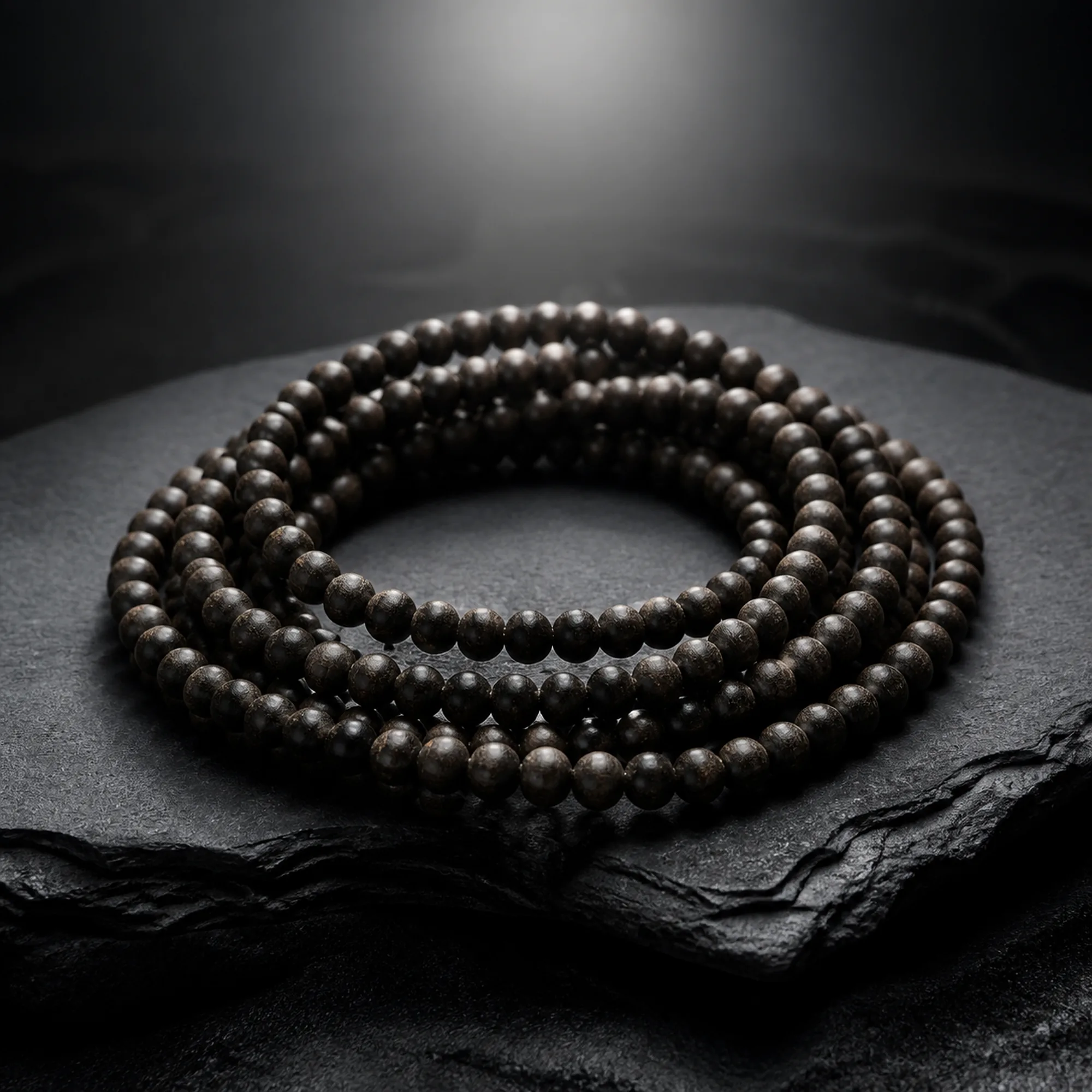
Red Agate Bracelet Guide: Nanhong, Carnelian and Dyed Agate
A red agate bracelet can be natural Nanhong, carnelian or dyed stone. This guide explains the types of red agate, how to spot dye, and which bead size to choose, and why red agate pairs so well with agarwood. In our data, red agate is the stone in 13 of our 182 styles, or 7%.

Written by
Founder & Chief Sourcing Officer, AgarwoodTown
Wang Jianyu is the founder of AgarwoodTown, the agarwood business behind Oudbracelet, trading since 2014. 15+ years grading plantation agarwood and advising buyers on grade selection and CITES paperwork. These guides draw on the same bead geometry our wrist fitter uses and on the questions buyers ask before they approve a weighing video.
In this article
- What is a red agate bracelet?
- Which types of red agate go into a red agate bracelet?
- Part 1 — How do you choose a red agate bracelet?
- Part 2 — Why does red agate suit agarwood?
- Natural Nanhong or a dyed red agate bracelet?
- How do you order a red agate bracelet from us?
- A red agate bracelet style, on film
- More strands from our studio, on film
- Finally: which red agate bracelet can you trust?
- Frequently asked questions
 Round accents
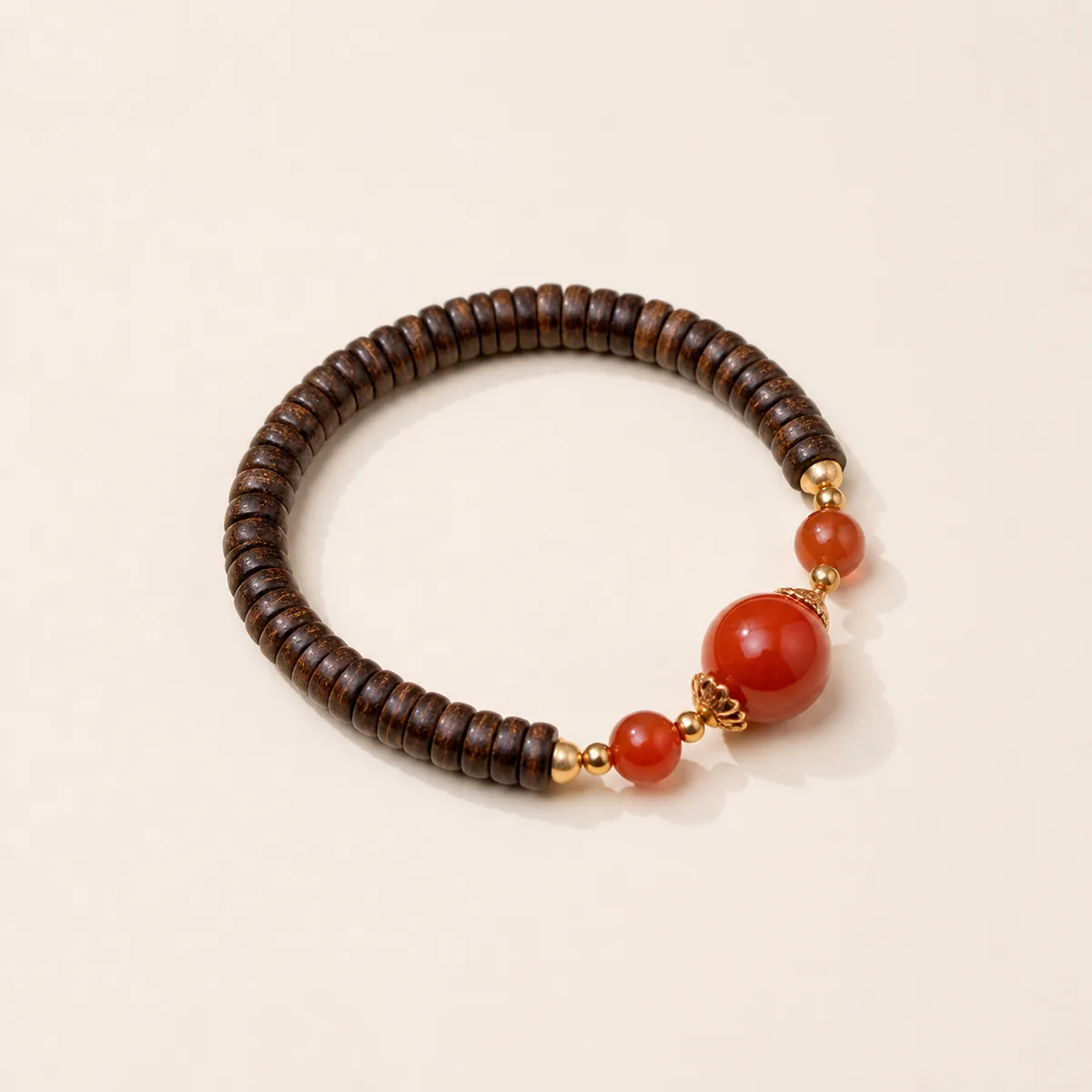 Disc strand
Red agate pairs naturally with dark wood: the warm red lifts the brown of the agarwood.
What is a red agate bracelet?
A red agate bracelet is a strand of beads in red agate, or a strand with red agate accents. Agate is a banded variety of chalcedony, made of quartz crystals too small to see with the eye.(Bohannon) So it is hard, takes a good polish, and comes in many colours.
Nanhong, or south red agate, is the name for a warm, opaque red agate prized in Chinese jewellery. Its colour runs from orange-red to deep persimmon red. That is why a red agate bracelet in Nanhong looks soft and waxy rather than glassy. Our data shows Nanhong in 92% of the red agate styles on Oudbracelet: 12 of 13.
Agate is a porous material that lends itself well to colour enhancement, according to GIA. First, that is why so much red agate on the market is dyed. Then natural Nanhong stands out by its uneven, waxy red. Finally, ask in writing whether your red agate bracelet has natural colour.
Which types of red agate go into a red agate bracelet?
This table is a 4-row summary. First read the type column, then compare the look, common treatment, what to ask across each row. For example, the first row covers “Nanhong (south red)”.
| Type | Look | Common treatment | What to ask |
|---|---|---|---|
| Nanhong (south red) | Opaque, waxy, orange to deep red | Usually untreated | Is the red colour fully natural? |
| Carnelian | Translucent orange-red | Often heated | Was the stone heated, or is it natural? |
| Dyed agate | Bright, even red | Dyed | Has the agate been dyed red? |
| Banded red agate | Red with white or grey bands | Sometimes dyed | Are the bands natural or dyed? |
Agate is porous, so dyeing it is common and easy, according to GIA. For example, a very bright, even red at a low price is usually dyed. Carnelian is the translucent orange-red member of the chalcedony family. Nanhong, by contrast, is opaque and waxy. In our data, 100% of the red agate styles here pair the stone with agarwood: 13 of 13. In practice, the last column matters most: put each question to the seller in writing before you pay.
Part 1 — How do you choose a red agate bracelet?
Choosing a red agate bracelet is mostly about form, colour, treatment and size. First, decide on a full stone strand or a red agate bracelet with accents. A full strand is bold, while a few red beads on dark wood read as a quiet detail. Then look at the colour. Natural Nanhong often varies a little from bead to bead, and that variation is a good sign.
Next, ask about treatment. Agate is porous, so many red beads on the market are dyed.(Bohannon) Also, check the bead size. For example, 8 to 10 mm accents suit a slim wrist, while 12 mm stones make a stronger statement. Finally, remember weight. Agate is a quartz stone at about 2.6 g/cm³, so a full 12 mm strand feels much heavier than wood.
Our data adds one more point. 10 of our 13 red agate styles, or 77%, are bracelets, double-wraps or multi-wraps rather than rings or earrings.
Part 2 — Why does red agate suit agarwood?
Agarwood and red agate are a classic pairing of wood and stone. Agarwood is resin-filled heartwood that forms after an Aquilaria tree is wounded.(Tan 2019) Red agate, on the other hand, is a microcrystalline quartz, so the pair joins a living material with a mineral one. The dark wood makes the red look warmer. Meanwhile, the stone gives a dark strand a clear focal point. Our data shows the pairing on Oudbracelet: 13 red agate styles combine the stone with agarwood.
However, the two age differently. Agarwood darkens slowly with wear, while agate stays the same. For example, a strand worn daily for a year shows richer wood beside an unchanged red bead. So keep a red agate bracelet dry and away from perfume, because the wood and the cord mind moisture more than the stone does. Then wipe the beads with a soft cloth after wearing. Finally, see our agarwood and Nanhong agate pieces for pairs we string.
Natural Nanhong or a dyed red agate bracelet?
This comparison is a 4-point check of Natural Nanhong against Dyed red agate. For example, the first row compares colour. Finally, pick the column that matches what you need.
| Feature | Natural Nanhong | Dyed red agate |
|---|---|---|
| Colour | Warm red, slightly uneven between beads | Bright red, very even across beads |
| Surface | Opaque, with a soft waxy lustre | Often glassy, sometimes with dye in cracks |
| Over time | Stable colour through normal wear | Dye can fade over the years |
| Value | Higher | Lower |
Dyed red agate is ordinary agate that took up colour through its fine pores. According to GIA, agate is porous and lends itself well to colour enhancement.(Bohannon) So dye on its own is no fraud, as long as the seller says so. In practice, natural Nanhong shows small shifts of tone from bead to bead. A dyed strand, however, often looks almost printed. Ask which kind you are buying, and get the answer in writing. Our data counts Nanhong in 92% of our red agate styles, 12 of 13. Each red agate bracelet listing names the stone plainly.
How do you order a red agate bracelet from us?
This process is a 4-step sequence, from “Pick a style” to “Approve, then pay”. First follow step 1, then work down the 4 steps of “How do you order a red agate bracelet from us?” in order.

- 1
Step 1: Pick a style
Pick red Nanhong accents on agarwood, or a stronger strand with more red stones.
- 2
Step 2: Send your wrist size
Tell us your wrist measurement, and we set the bead count to fit.
- 3
Step 3: We weigh and film
Next, you see the colour of every stone on video, beside the scale reading. AgarwoodTown, our parent company, has traded agarwood since 2014.
- 4
Step 4: Approve, then pay
Ask for another strand if the red is not right, before you pay anything. Additionally, our data lists 13 red agate bracelet and jewellery styles, 7% of the range.
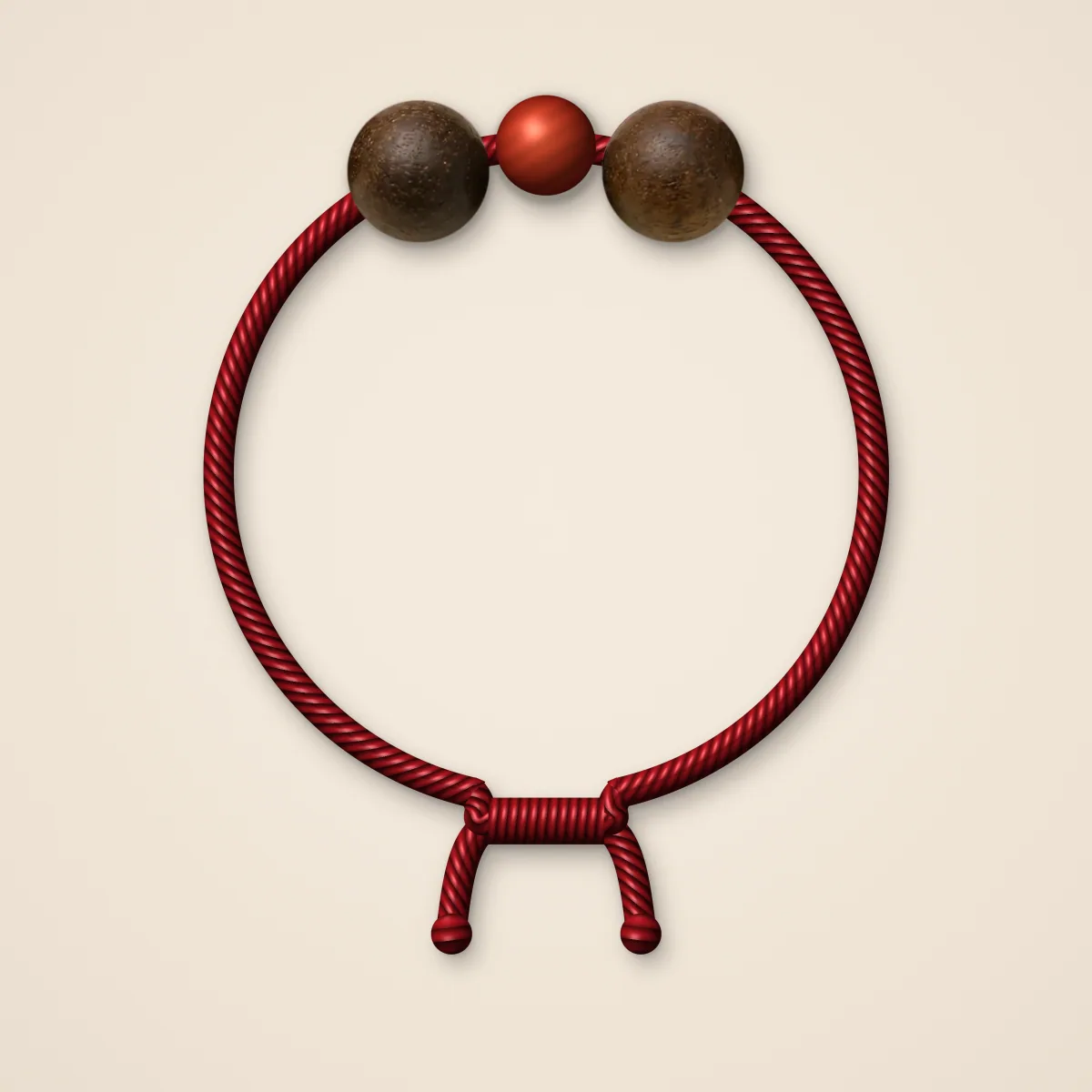
A red agate bracelet style, on film
More strands from our studio, on film
Finally: which red agate bracelet can you trust?
A trustworthy red agate bracelet is one with a colour you love and a treatment you know. First, ask whether the red is natural or dyed. Second, choose a bead size for your wrist, from slim 8 mm accents to bold 12 mm stones. Third, decide between a full stone strand and red accents on dark wood. Finally, see the exact strand before you pay.
Our agarwood is plantation-grown and ships under CITES rules.(CITES) Its dark tone comes from resin that forms after the tree is injured,(Tan 2019) which is why every strand differs. In our data, 3 red agate styles also add jadeite or Hetian jade, or 23% of 13. Browse agarwood and Nanhong agate.
Frequently asked questions
This FAQ is a set of 8 short answers about red agate bracelet guide. First find your question below. For example, many facts in these answers about red agate bracelet guide come from the 3 published sources in References, which we checked in September 2026.
What is a red agate bracelet made of?
Red agate is a variety of chalcedony, a form of quartz made of crystals too small to see. A red agate bracelet may be all stone, or dark wood with red agate accents. Nanhong, carnelian and dyed agate are the three common kinds.
What is Nanhong agate?
Nanhong, or south red agate, is a warm, opaque red agate prized in Chinese jewellery. In our data, 92% of our red agate styles use Nanhong. Its colour runs from orange-red to deep red, with a soft, waxy lustre. Natural Nanhong often varies slightly from bead to bead, which many buyers see as a good sign.
How can I tell if red agate is dyed?
Dyed agate is often a very bright, very even red, sometimes with colour gathered in fine cracks. Natural red agate usually varies a little. Because agate is porous, dyeing is common, so ask the seller whether the colour is natural.
What does a red agate bracelet mean?
In Chinese custom, red is the colour of celebration, weddings and the New Year, so a red agate bracelet is a popular festive gift. We pass this on as culture only. We do not claim any effect from wearing red agate.
Which hand should I wear a red agate bracelet on?
There is no fixed rule. Many people wear it on the left wrist, away from the writing hand, so the stone knocks against less. Wear it where it feels natural, and move it to the other wrist if it catches on a watch strap.
Does red agate go well with wood?
Yes. Our data puts agarwood in 100% of our red agate styles. Red agate and dark agarwood are a classic pairing, because the wood makes the red look warmer and the stone gives the strand a focal point. The two age differently, though: the wood darkens slowly, while the stone stays the same.
How do I care for a red agate bracelet?
Agate itself is hard and stable, so the cord and any wood beads need the most care. Keep the bracelet dry, away from perfume and sprays, and wipe it with a soft cloth. Have the cord restrung every year or two with daily wear.
Can I see the stones before I pay?
Yes. We film the exact strand you will receive, so you see the red of every stone and the grain of every wood bead. If the colour is not what you hoped for, ask for a different strand before you approve and pay.
References
This reference list is the source record for “Red Agate Bracelet Guide: Nanhong, Carnelian and Dyed Agate”, with 3 published sources. According to the citations in “Red Agate Bracelet Guide: Nanhong, Carnelian and Dyed Agate”, such as (Bohannon), each one links to one entry below. Finally, we checked all 3 links behind “Red Agate Bracelet Guide: Nanhong, Carnelian and Dyed Agate” in September 2026.
- 1Bohannon S.. Gem Cutters Reveal the Beauty of Chalcedony. GIA News & Research, current.View source
- 2CITES Secretariat. Appendices I, II and III. Convention on International Trade in Endangered Species of Wild Fauna and Flora, current.View source
- 3Tan C.S., Isa N.M., Ismail I., Zainal Z.. Agarwood induction: current developments and future perspectives. Frontiers in Plant Science 10: 122, 2019.doi:10.3389/fpls.2019.00122
References are listed for transparency. We summarise them for general reading; nothing here is medical advice, and no health effect is claimed.
In this article
Styles mentioned
Related articles
Weighed before you pay
Choose a style, get your strand weighed
Pick a bead and size, send your request, and we reply with a video of your piece on the scale — its exact weight and price. Nothing is charged until you approve.