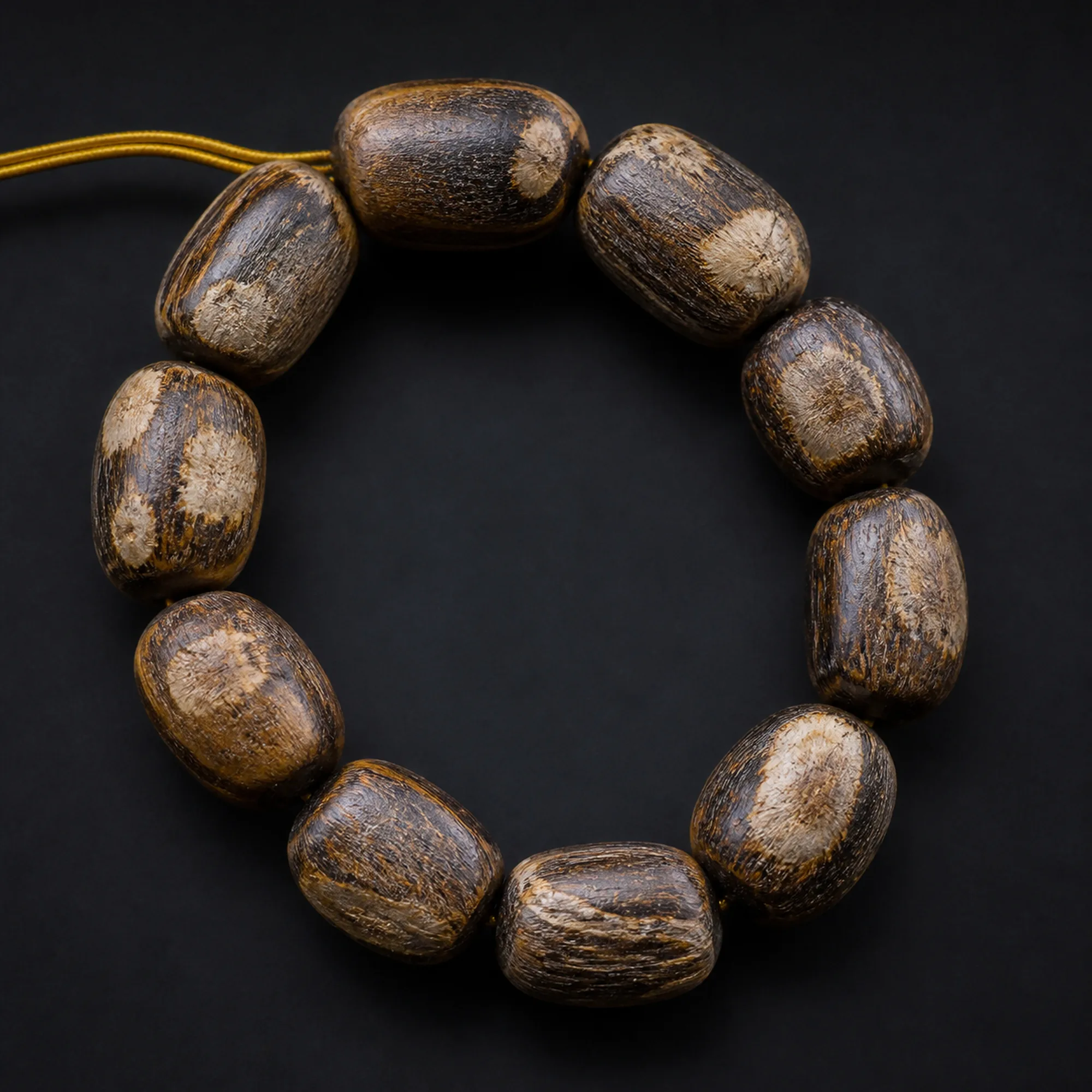
Real Jade Bracelet: How to Tell A-Grade From Treated Jade
A real jade bracelet is jadeite or nephrite, but real is not the same as untreated. This guide explains the A, B and C grades, the checks that help, the home tests that do not, and when a lab report is worth asking for.

Written by
Founder & Chief Sourcing Officer, AgarwoodTown
Wang Jianyu is the founder of AgarwoodTown, the agarwood business behind Oudbracelet, trading since 2014. 15+ years grading plantation agarwood and advising buyers on grade selection and CITES paperwork. These guides draw on the same bead geometry our wrist fitter uses and on the questions buyers ask before they approve a weighing video.
In this article
- What counts as a real jade bracelet?
- What do A, B and C grades mean on a real jade bracelet?
- Part 1 — Which checks can you do on a real jade bracelet?
- Part 2 — How should you buy a real jade bracelet online?
- Jadeite or nephrite: which real jade is in your bracelet?
- How do you check a real jade bracelet before you pay?
- Stone and wood, on film
- More strands from our studio, on film
- Finally: how do you know a real jade bracelet is the real thing?
- Frequently asked questions
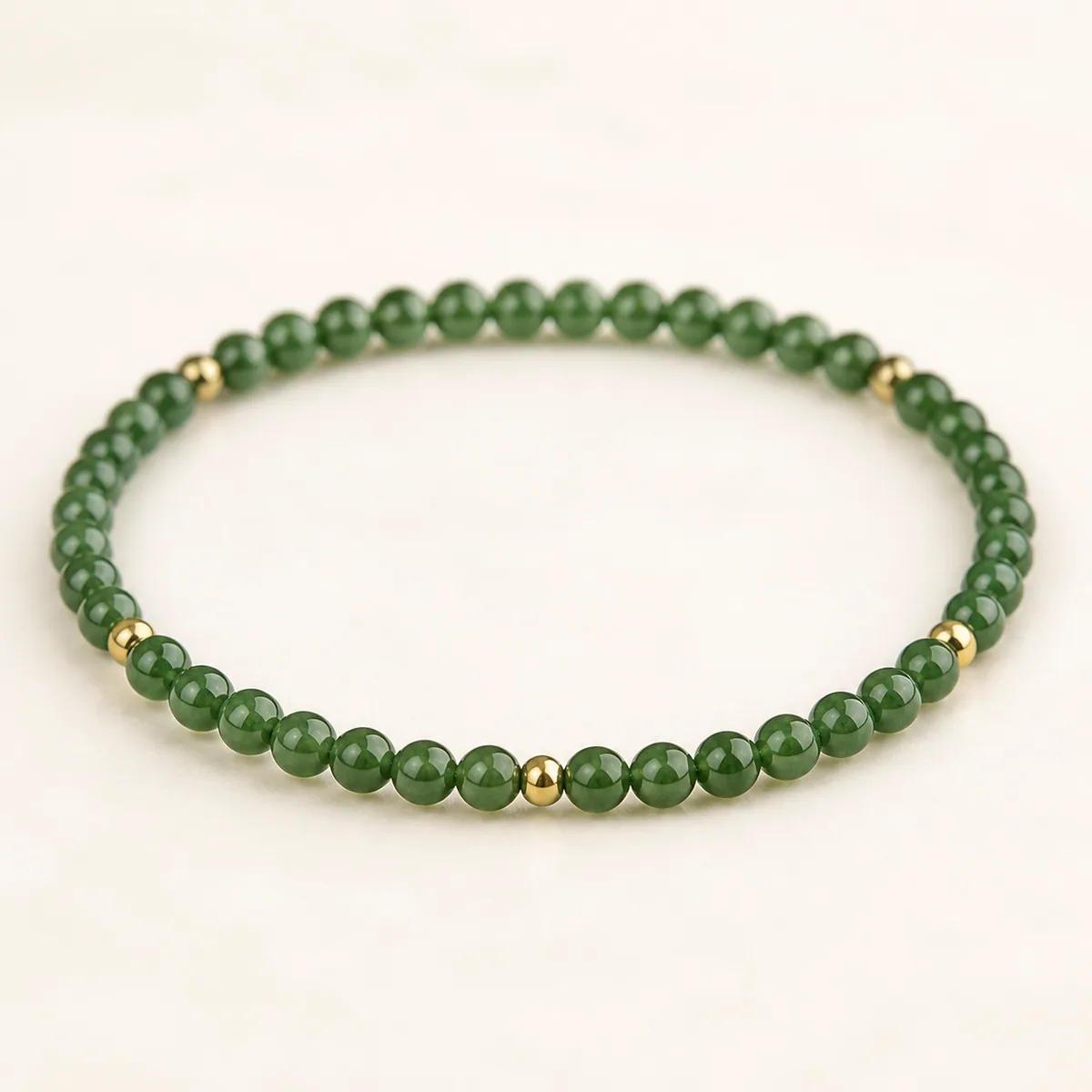 Jadeite
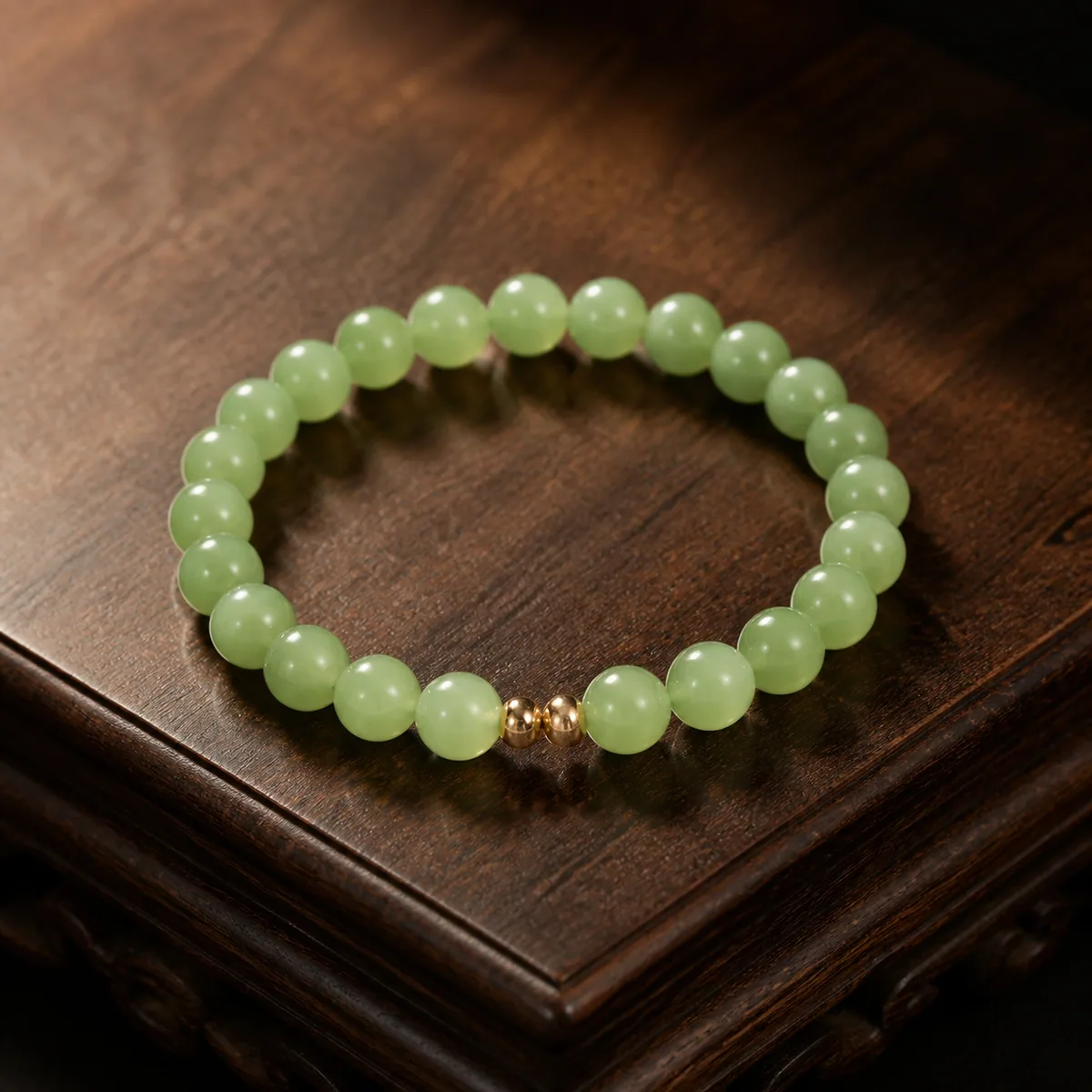 Nephrite
Both are real jade: jadeite on the left, Hetian nephrite on the right. The tests and the grades differ between them.
What counts as a real jade bracelet?
A real jade bracelet is jadeite or nephrite, the two minerals sold as jade.(GIA) However, real is not the same as untreated. Many makers bleach jadeite and fill it with resin, or dye it, and it is still jadeite underneath.
So for jadeite, buyers use three grades. A-grade is natural colour and untreated. B-grade has gone through acid bleaching and a polymer resin fill. C-grade carries dye as well as resin.(GIA 2016) When people ask for a real jade bracelet, they usually mean A-grade.
According to GIA, A-grade jadeite is natural in colour and untreated, B-grade is bleached and filled with polymer resin, and C-grade is dyed and filled. First ask which grade you are buying. Then ask for a report from an independent gem laboratory. Finally, keep that report with the bracelet.
What do A, B and C grades mean on a real jade bracelet?
This table is a 4-row summary. First read the grade column, then compare the what it is, how it ages, what to ask across each row. For example, the first row covers “A”.
| Grade | What it is | How it ages | What to ask |
|---|---|---|---|
| A | Natural colour, untreated jadeite | Stable for generations | Ask for A-grade in writing |
| B | Acid-bleached, resin-filled | Resin can yellow or weaken | Ask whether it is filled |
| C | Dyed and resin-filled | Colour can fade | Ask whether it is dyed |
| Imitation | Glass, quartzite, other stones | — | Ask what mineral it is |
A, B and C describe jadeite. Most nephrite, such as Hetian jade, reaches the market untreated, though some carries dye or wax.
A-grade is the only grade that matches what most buyers mean by a real jade bracelet. B-grade and C-grade stones are still jadeite, but acid bleaching, resin and dye change both the look and the way the stone ages. For example, the polymer resin in a B-grade bangle can yellow or weaken with time, and the dye in a C-grade piece can fade.(GIA 2016) Imitations form a separate group: glass, quartzite and other stones sold under the jade name.
Nephrite sits outside the A, B and C scale, because most Hetian jade reaches the market untreated. For a significant purchase, a report from an independent gem laboratory settles the grade, according to GIA.
Part 1 — Which checks can you do on a real jade bracelet?
Home checks on a real jade bracelet are useful warning signs, but none is proof. First, look at the colour. Dye often gathers in fine cracks, so look for colour that follows the cracks. For example, green that runs along a crack line points to dye rather than natural jadeite. Second, feel the weight. Jadeite is dense, about 3.34 in specific gravity, so a real jade bracelet feels heavy for its size.(GIA) Nephrite comes in at about 2.95, so jadeite is roughly 13% denser than nephrite of the same volume.
Third, look at the surface under a bright light. Resin-filled stone can show a net of fine lines or a slightly waxy look. However, home tests such as tapping, scratching or burning are unreliable, and some damage the stone. Finally, treat every home result as a warning sign only, and leave proof to a gem laboratory.
Part 2 — How should you buy a real jade bracelet online?
Buying a real jade bracelet online is harder than buying in person, because you cannot handle the stone. So ask more questions. First, ask which mineral the bracelet is: jadeite or nephrite. For example, a listing that says only "jade" deserves a follow-up question. Then ask for the grade in writing, and whether a lab report is available. Next, ask for a video of the exact piece, not a sample photo.
We sell our jade bracelets the same way: we film the piece you will receive, close up, before you pay. Also, compare prices with care. A real jade bracelet in A-grade jadeite rarely sells for the price of costume jewellery. Finally, keep the listing and the video as a record.
Jadeite or nephrite: which real jade is in your bracelet?
This comparison is a 4-point check of Jadeite against Nephrite (e.g. Hetian). For example, the first row compares hardness. Finally, pick the column that matches what you need.
| Feature | Jadeite | Nephrite (e.g. Hetian) |
|---|---|---|
| Hardness | About 6.5–7 | About 6–6.5 |
| Density | About 3.34 | About 2.95 |
| Look | Often glassy, vivid green | Oily lustre, white to green |
| Common treatment | Bleach, resin, dye (B / C) | Usually untreated; some dye or wax |
Jadeite and nephrite are both real jade, but the two minerals differ in hardness, density, look and treatment, according to GIA.(GIA) Jadeite is a sodium aluminium silicate with a hardness of about 6.5 to 7. Nephrite is a calcium magnesium iron silicate at about 6 to 6.5. Both minerals are also very tough, meaning both resist breaking better than hardness alone suggests.
Jadeite often looks glassy and can show a vivid green. Nephrite, such as Hetian jade, usually shows an oily lustre in white to green. In practice, the A, B and C grades apply to jadeite, so a seller of a nephrite bracelet should instead tell you about any dye or wax.
How do you check a real jade bracelet before you pay?
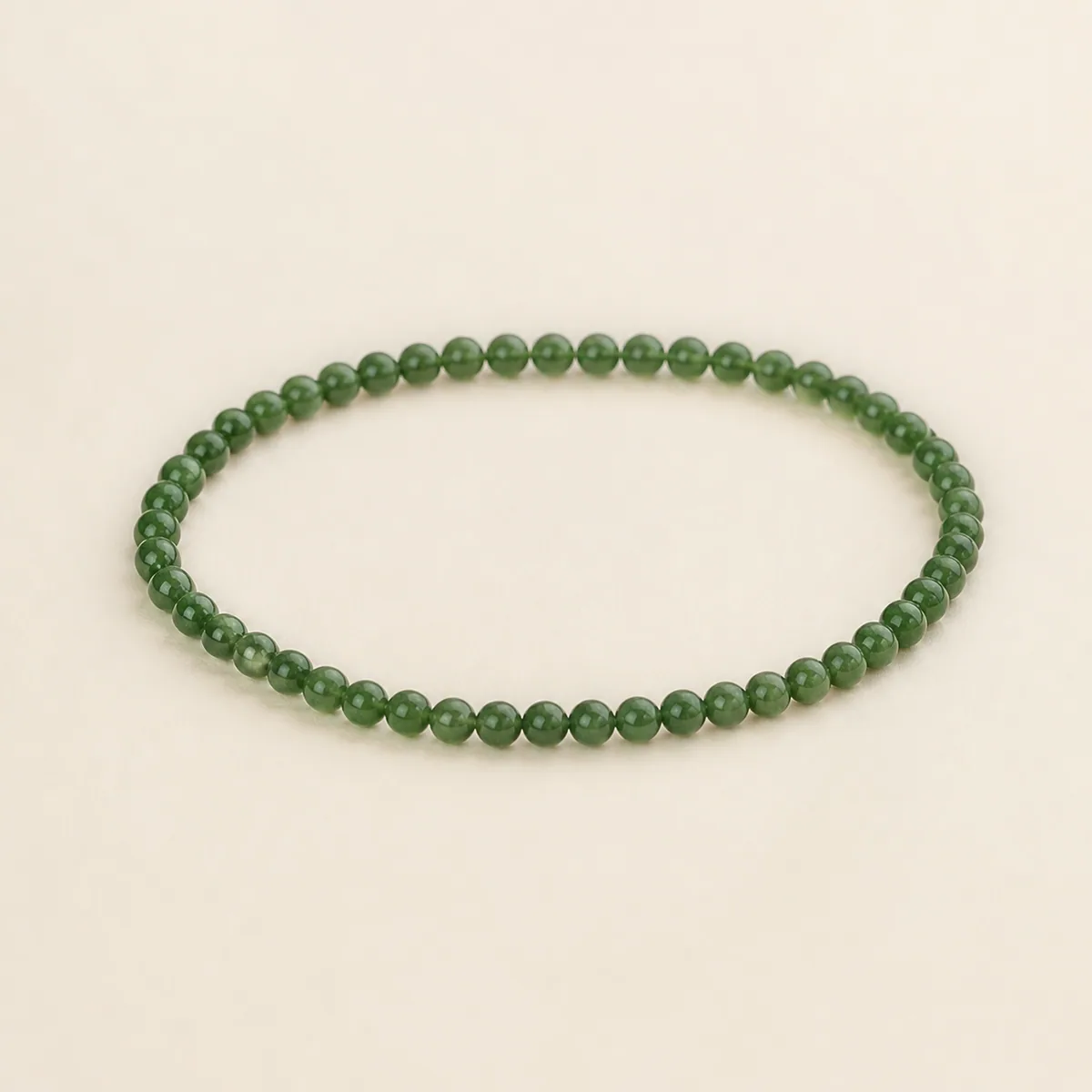
This process is a 4-step sequence, from “Ask the mineral” to “See the exact piece”. First follow step 1, then work down the 4 steps of “How do you check a real jade bracelet before you pay?” in order.
- 1
Step 1: Ask the mineral
Jadeite or nephrite.
- 2
Step 2: Ask the grade
A, B or C, in writing.
- 3
Step 3: Ask for a report
From an independent gem laboratory.
- 4
Step 4: See the exact piece
A video of the bracelet you will receive.
Checking a real jade bracelet before payment is a four-step routine. In step 1, ask the mineral: jadeite or nephrite. In step 2, ask for the grade, A, B or C, in writing. Next, ask for a report from an independent gem laboratory, which GIA suggests for a significant purchase.(GIA 2016) Finally, ask for a close-up video of the exact bracelet you will receive, so the colour, the surface and any cracks show.
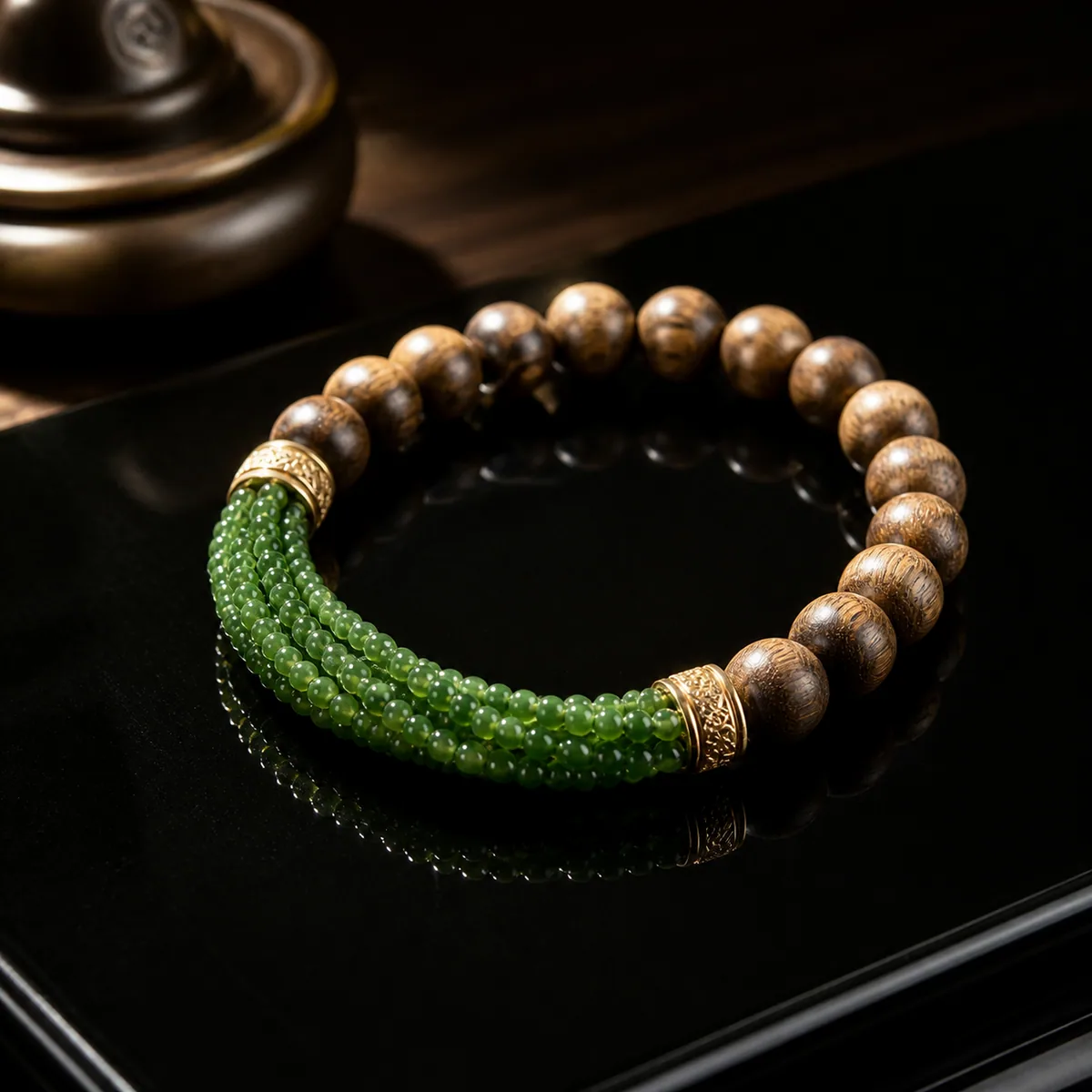
Stone and wood, on film
More strands from our studio, on film
Finally: how do you know a real jade bracelet is the real thing?
A real jade bracelet is jadeite or nephrite, and the best one is also untreated. First, ask for the mineral and the grade. Second, ask about a lab report, and see the exact piece before you pay.(GIA 2016) Home checks such as weight, colour in cracks and a waxy surface can raise doubts, but only a laboratory can confirm A-grade jadeite. For example, a bangle that feels heavy and looks even can still carry a resin fill.
Browse our jade bracelets, and read about the meaning in our guide to jade bracelet meaning. We film every piece first.
Frequently asked questions
This FAQ is a set of 8 short answers about real jade bracelet. First find your question below. For example, many facts in these answers about real jade bracelet come from the 3 published sources in References, which we checked in September 2026.
How can I tell if a jade bracelet is real?
Simple checks help: jadeite feels heavy for its size, and dyed stone often shows colour gathered in cracks. However, none of these is proof. For a significant purchase, a report from an independent gem laboratory is the only reliable way to confirm the mineral and the treatment.
What is A-grade jade?
A-grade describes jadeite with natural colour and no treatment. B-grade has gone through acid bleaching and a polymer resin fill, and C-grade carries dye as well as the resin. When people ask for a real jade bracelet, they usually mean A-grade jadeite.
Is B-grade jade fake?
Not fake, but treated. B-grade is real jadeite that a maker bleached and filled with resin to improve its look. The resin can yellow or weaken over time, so B-grade is worth far less than A-grade. A seller should always tell you the grade.
Does the tap test show if jade is real?
Not reliably. Tapping, scratching and burning are popular home tests, but results vary with the shape and the setting, and some tests damage the stone. Treat them as rough warning signs at most, and rely on a lab report for an expensive piece.
Is Hetian jade real jade?
Yes. Hetian jade is nephrite, one of the two minerals sold as jade. It usually has an oily lustre and ranges from white to green. Most nephrite reaches the market untreated, though some carries dye or wax, so ask the seller about any treatment.
Why is real jade so expensive?
Fine, untreated jadeite with even, vivid colour is rare, and demand for it is high. Colour, transparency, texture and size all push the value up. That is why a very cheap bracelet offered as fine jade usually turns out treated, dyed or an imitation.
Should I buy a real jade bracelet online?
You can, with care. Ask for the mineral and the grade in writing, ask whether a lab report is available, and ask for a video of the exact piece rather than a sample photo. Keep the listing and the video as a record of what you bought.
How do you sell your jade bracelets?
We film the exact piece you will receive, close up, and send you the video before you pay. Our jade bracelets collection contains no agarwood; we say so on every page. Ask us any question about a piece before you approve the quote.
References
This reference list is the source record for “Real Jade Bracelet: How to Tell A-Grade From Treated Jade”, with 3 published sources. According to the citations in “Real Jade Bracelet: How to Tell A-Grade From Treated Jade”, such as (GIA), each one links to one entry below. Finally, we checked all 3 links behind “Real Jade Bracelet: How to Tell A-Grade From Treated Jade” in September 2026.
- 1Gemological Institute of America. Jade — Gem Encyclopedia. GIA, current.View source
- 2Gemological Institute of America. How to Travel Hong Kong: Gemstone Edition. GIA 4Cs blog, 2016.View source
- 3Gemological Institute of America. Jade Description. GIA, current.View source
References are listed for transparency. We summarise them for general reading; nothing here is medical advice, and no health effect is claimed.
In this article
Styles mentioned
Related articles
Weighed before you pay
Choose a style, get your strand weighed
Pick a bead and size, send your request, and we reply with a video of your piece on the scale — its exact weight and price. Nothing is charged until you approve.