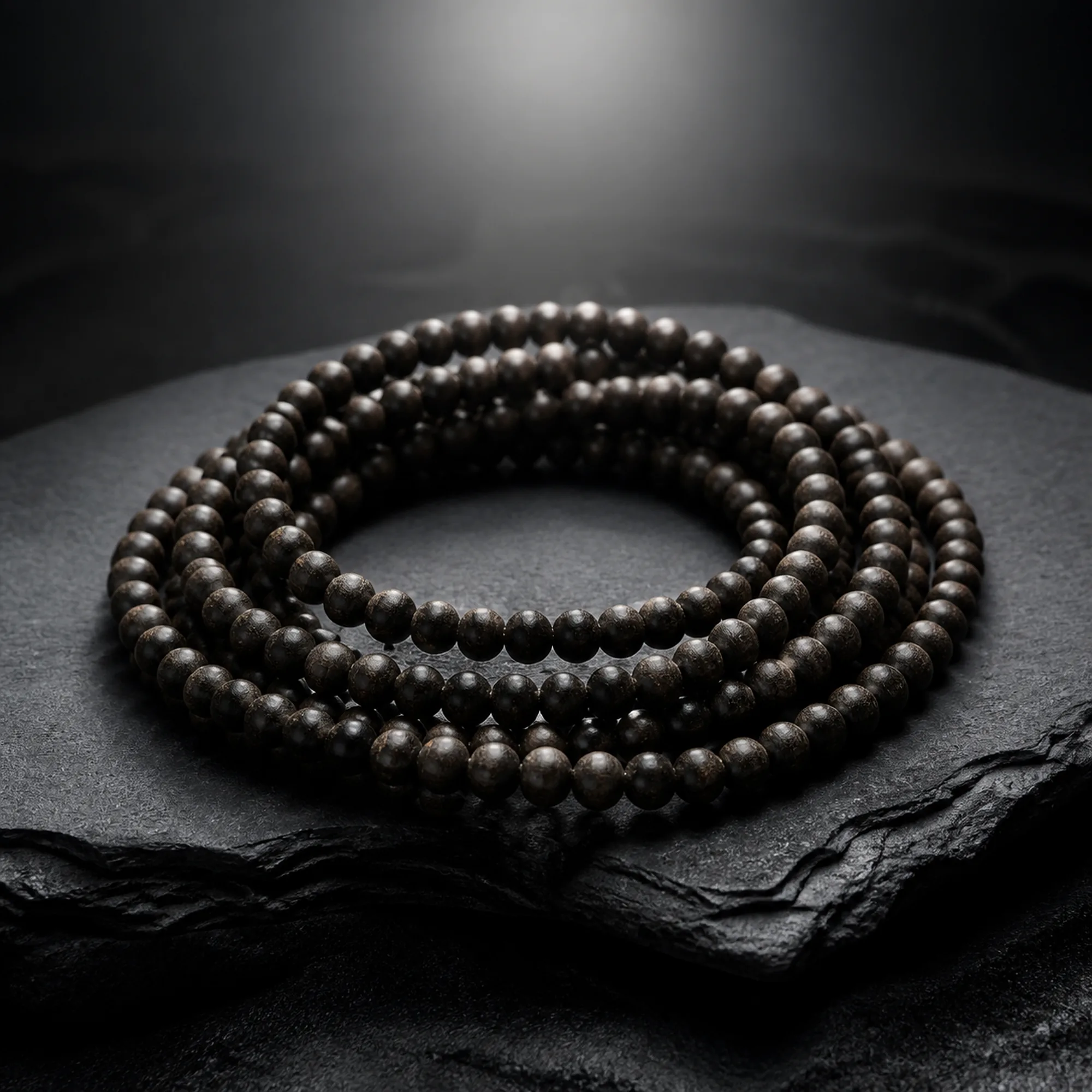
Matching Bracelets: How to Choose a Pair That Belongs Together
Matching bracelets are two or more bracelets chosen to go together. This guide explains identical and echoing pairs, how to size two different wrists, and how to match natural wood in tone, for couples, friends and family.

Written by
Founder & Chief Sourcing Officer, AgarwoodTown
Wang Jianyu is the founder of AgarwoodTown, the agarwood business behind Oudbracelet, trading since 2014. 15+ years grading plantation agarwood and advising buyers on grade selection and CITES paperwork. These guides draw on the same bead geometry our wrist fitter uses and on the questions buyers ask before they approve a weighing video.
In this article
- What makes matching bracelets match?
- How do matching bracelets fit two different wrists?
- Part 1 — Which matching bracelets suit couples?
- Part 2 — Which matching bracelets suit friends and family?
- Identical or echoing matching bracelets?
- How do you order matching bracelets from us?
- Matching bracelets in agarwood, on film
- More styles from our studio, on film
- Which matching bracelets will you both keep on?
- Frequently asked questions
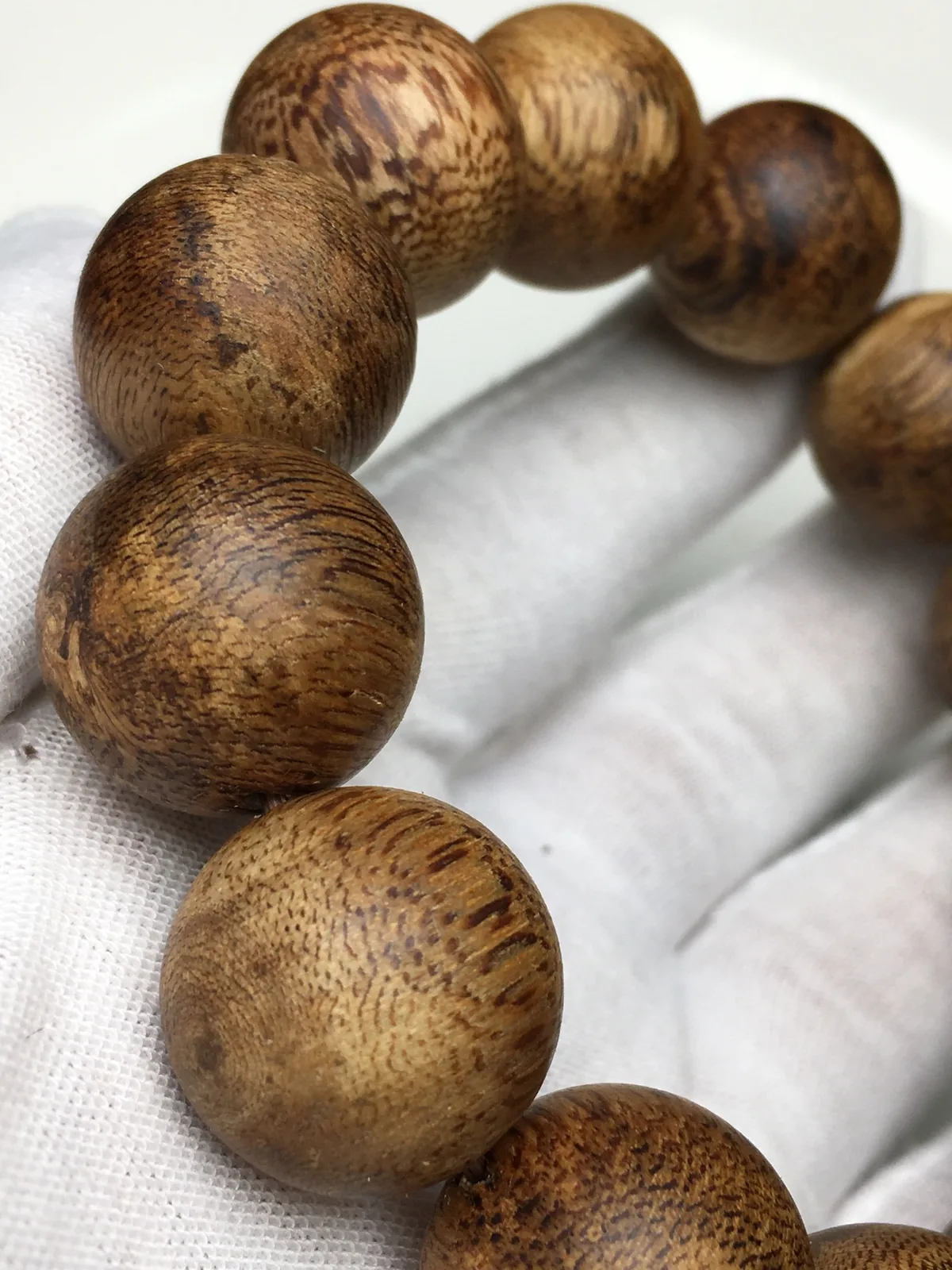 Strand one
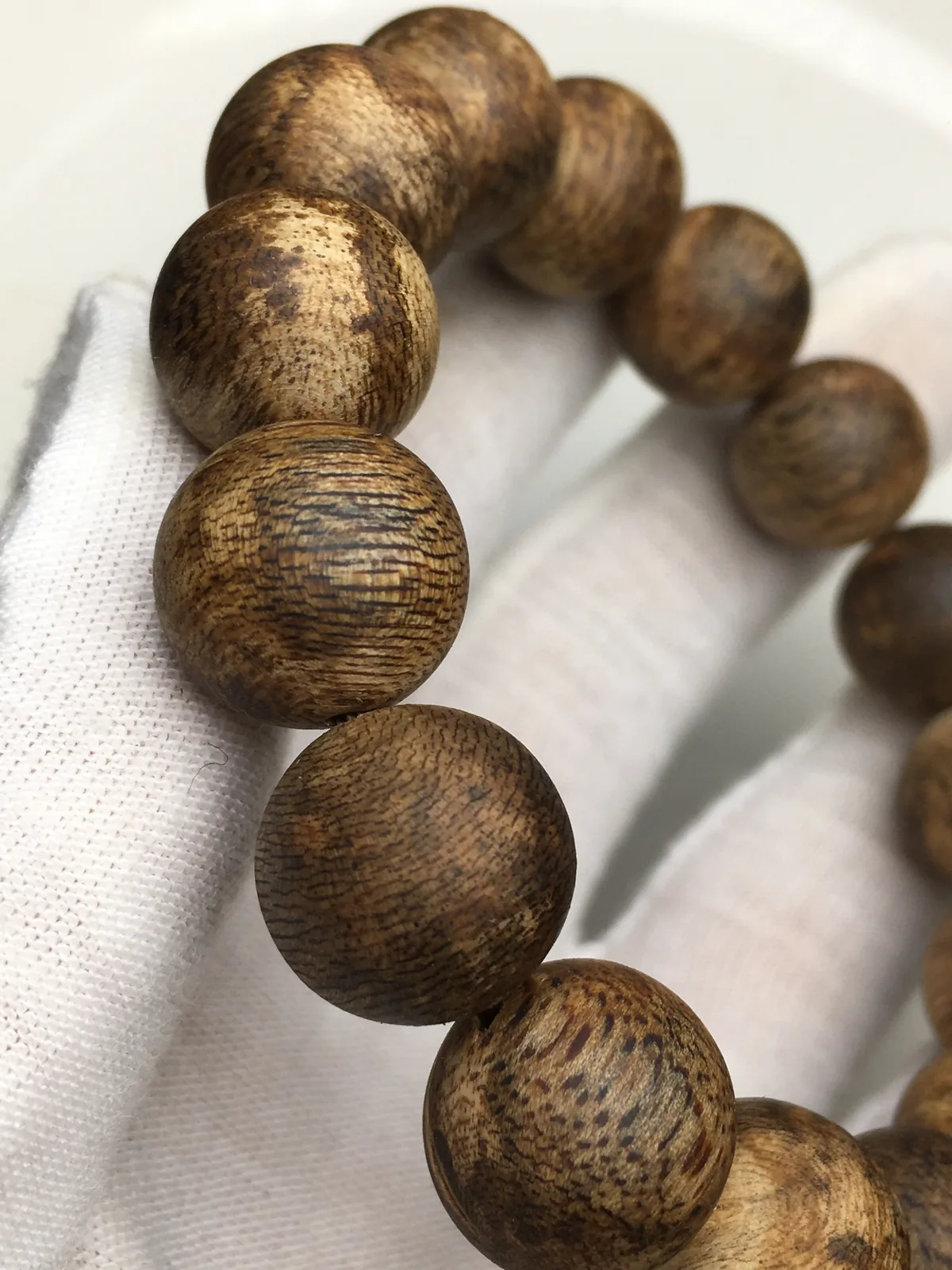 Strand two
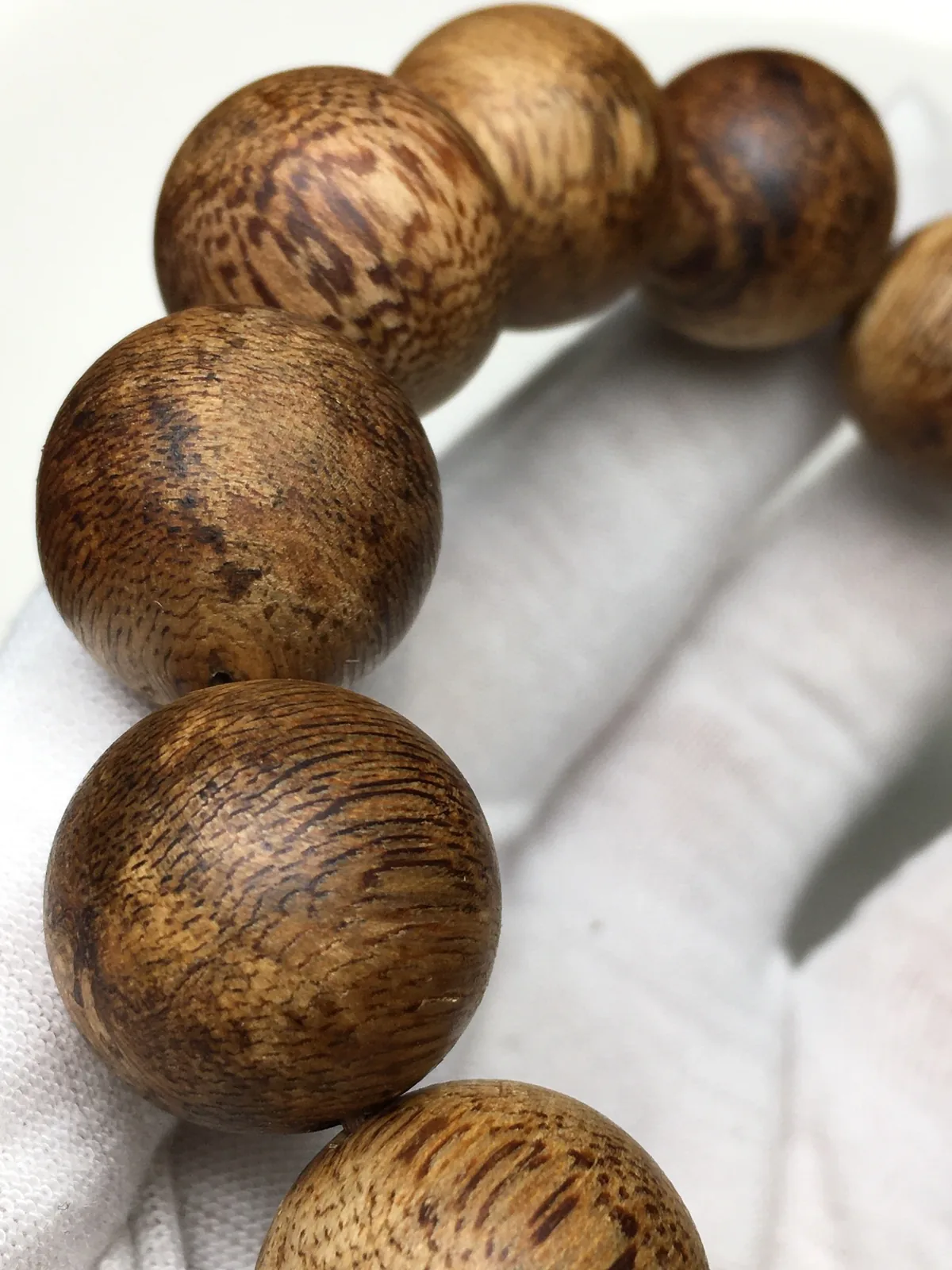
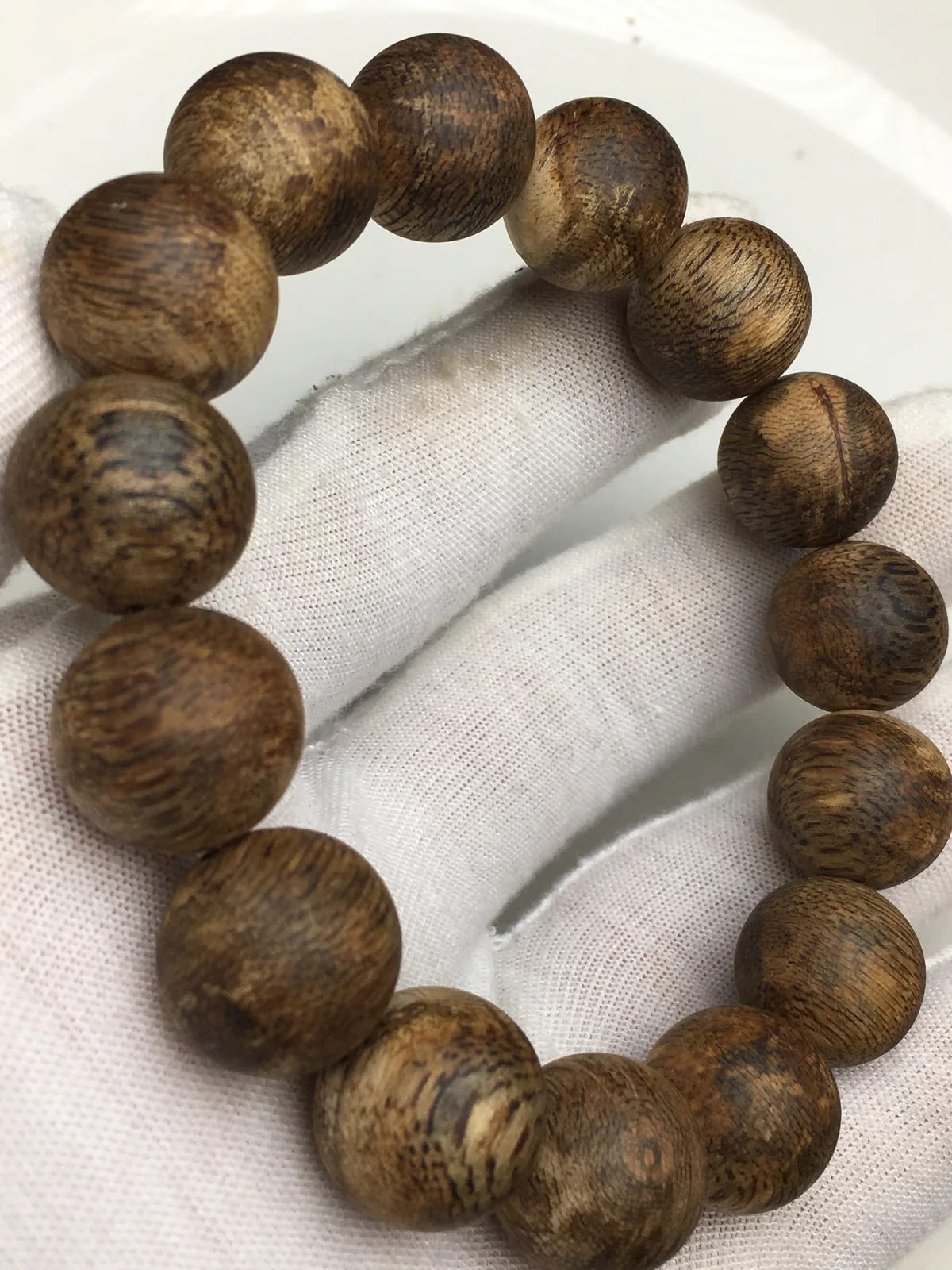
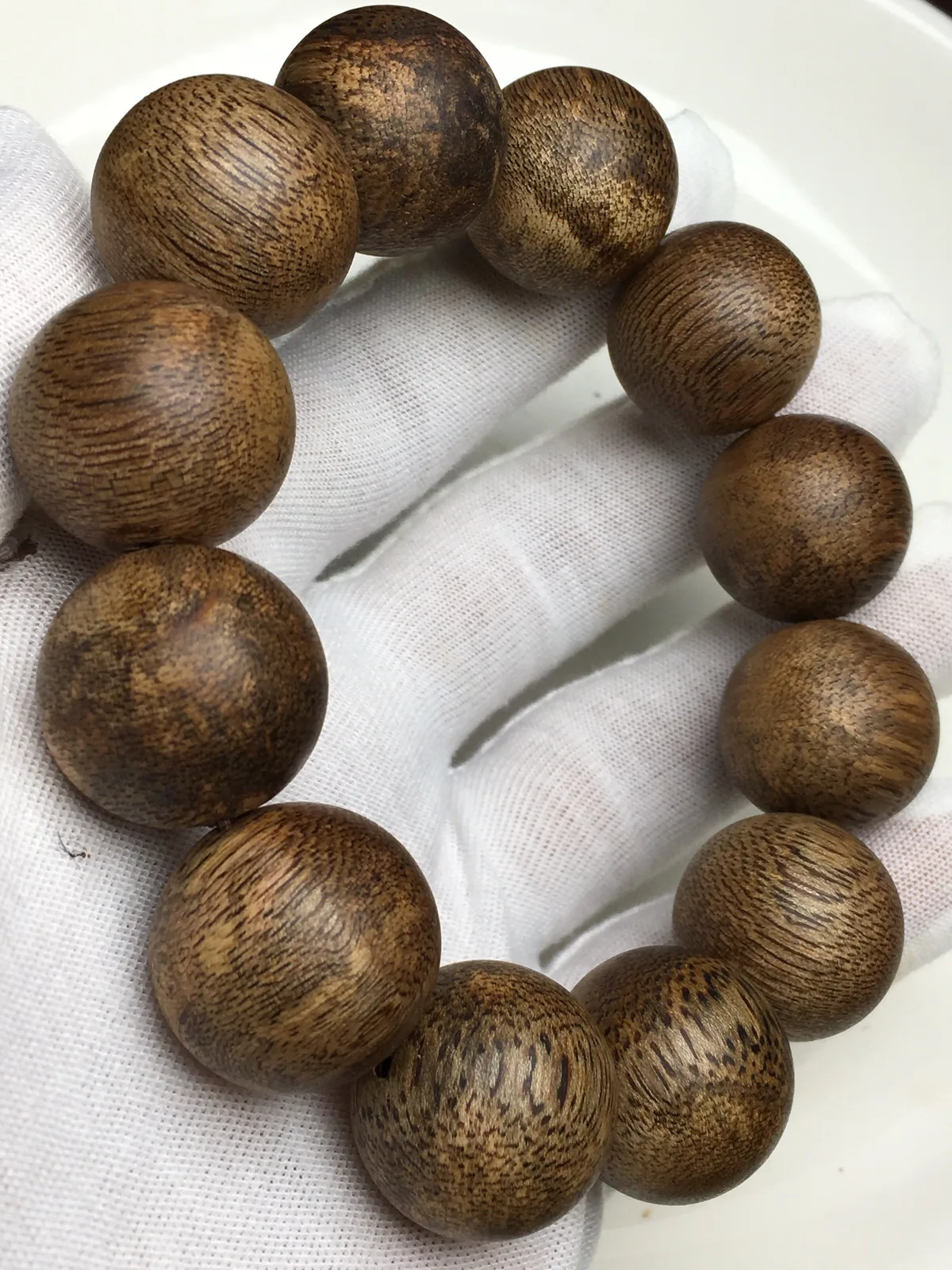
Two strands of one style. The wood differs bead by bead, so we choose two strands close in tone for a pair.
What makes matching bracelets match?
Matching bracelets are two or more bracelets chosen to go together, one for each person. Usually a pair shares a style, a colour or a small detail. So a pair can be identical, or simply two pieces that clearly belong together.
Natural materials make matching bracelets more personal. No two pieces of wood share a grain, so each strand is a little different, while the style stays the same. Wood density also varies widely between species and even within one species, according to Forest Products Laboratory data in the 2010 Wood Handbook.(USDA 2010)
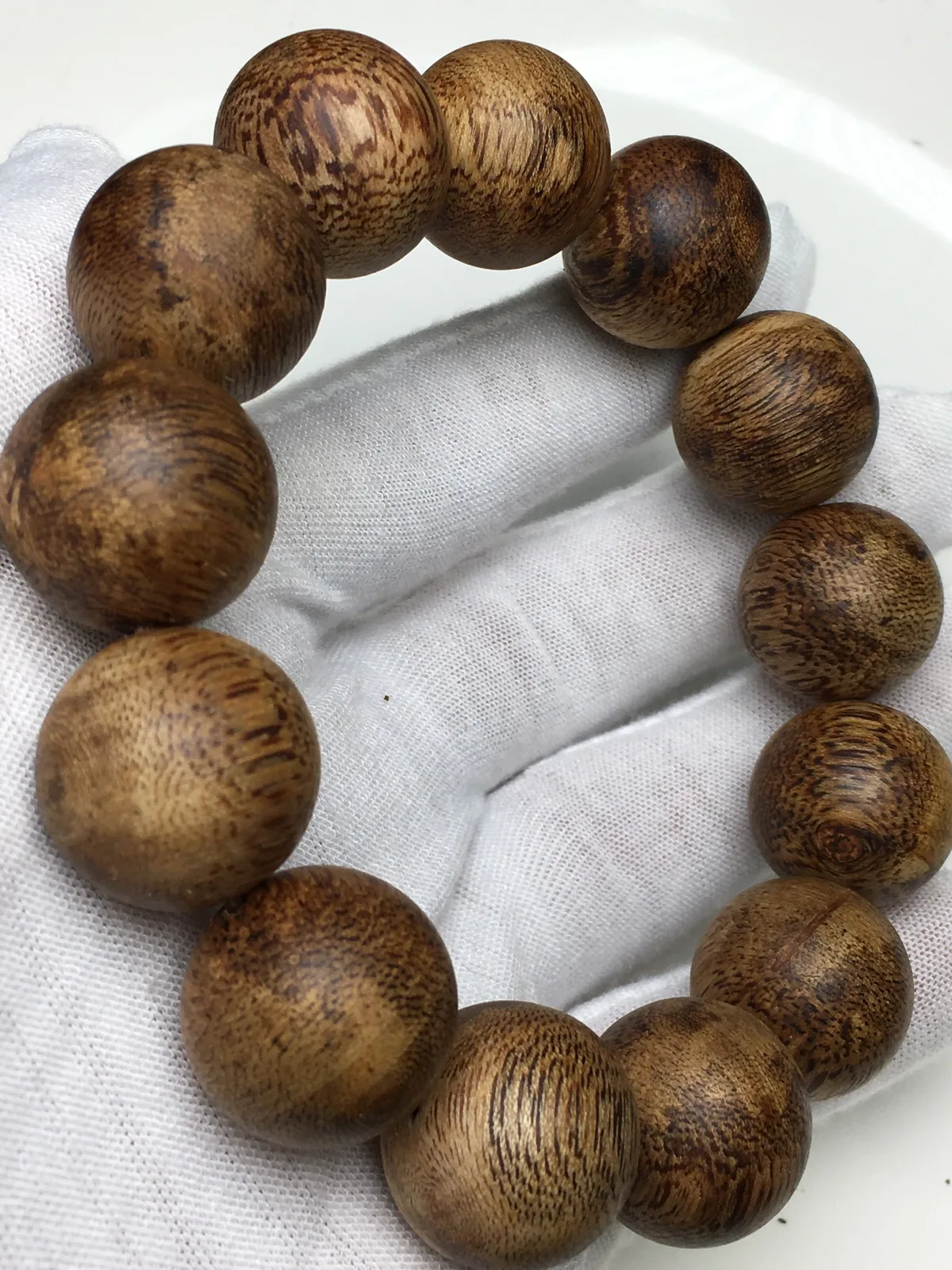
First, two wooden strands rarely match exactly. Second, we choose two strands close in grain and tone. Finally, we film the matching bracelets side by side before you pay. For example, two round agarwood strands of the same style can differ in how dark the resin lines run, and the video shows the difference.
How do matching bracelets fit two different wrists?
This table is a 4-row summary. First read the wrists column, then compare the bead size, beads in each strand across each row. For example, the first row covers “15 cm and 18 cm”.
| Wrists | Bead size | Beads in each strand |
|---|---|---|
| 15 cm and 18 cm | 8 mm | 23 and 27 |
| 15 cm and 18 cm | 10 mm | 19 and 22 |
| 16 cm and 19 cm | 10 mm | 20 and 23 |
| 16 cm and 19 cm | 12 mm | 17 and 20 |
Matching bracelets rarely need the same bead count, because wrists differ. Counts use our wrist-fit geometry at a standard fit.
Matching bracelets share a style, not a bead count. For example, at 10 mm a 15 cm wrist and an 18 cm wrist need different counts, as the table shows. A larger bead on the larger wrist keeps the pair balanced, so many couples choose 8 mm and 10 mm. Additionally, each count comes from our wrist-fit geometry at a standard fit, about 1 cm of room. In practice, send both wrist sizes, and we set each strand separately.
Part 1 — Which matching bracelets suit couples?
Matching bracelets for couples read best in one style and one bead cut. Then size each strand to its own wrist. For example, many couples choose 8 mm beads for the smaller wrist and 10 mm for the larger wrist, so both strands look balanced.
Also, think about daily wear. Wood is light, according to Forest Products Laboratory data,(USDA 2010) so a wooden strand sits well beside a watch or a ring. Additionally, a pair in the same wood ages together, and both strands darken slowly with wear.
However, if one partner dislikes sizing, choose red string bracelets, which close with a sliding knot. A sliding knot adjusts to most wrists, so a red string pair needs no measurement at all. See our couple bracelets for pairs we string together.
Part 2 — Which matching bracelets suit friends and family?
Matching bracelets for friends can be looser: the same wood in two cuts, or the same cut with one stone accent each. For example, one friend wears plain round beads, and the other wears round beads with a single jade bead. Jade is a sound choice for an accent, because jadeite and nephrite are both very tough, according to GIA.(GIA)
With a parent and child, keep the style and change the scale. So a mother might wear 10 mm beads, and a daughter 6 or 8 mm, and the pair still reads as a set. Additionally, a father and child can share the same idea in large and small beads. Finally, choose something easy to wear every day, because matching bracelets mean most when both strands stay on.
Identical or echoing matching bracelets?
This comparison is a 4-point check of Identical pair against Echoing pair. For example, the first row compares style. Finally, pick the column that matches what you need.
| Feature | Identical pair | Echoing pair |
|---|---|---|
| Style | Same cut and bead size | Same wood, different cut or size |
| Reads as | Clearly a set | Related, more personal |
| Best for | Couples | Friends and family |
| Sizing | Each strand to its own wrist | Each strand to its own wrist |
An identical pair is the clearer statement: same cut, same bead size, and clearly a set. An echoing pair is the more personal option, with the same wood but a different cut or size. For example, a couple might choose two identical round strands, while two friends might pair a round strand with a cube strand. Additionally, both options size each strand to its own wrist, so neither pair needs equal bead counts. In practice, couples lean towards identical pairs, and friends and family lean towards echoing pairs.
How do you order matching bracelets from us?
This process is a 4-step sequence, from “Pick one style” to “Approve the pair”. First follow step 1, then work down the 4 steps of “How do you order matching bracelets from us?” in order.

- 1
Step 1: Pick one style
The same cut reads best for a pair.
- 2
Step 2: Send both wrist sizes
We set each bead count separately.
- 3
Step 3: We match the tone
We choose two strands close in colour and grain.
- 4
Step 4: Approve the pair
Check both strands on video, then pay.
Ordering a pair takes four steps, and step 2 matters most. First, pick one style, because the same cut reads best for a pair. Second, send both wrist sizes, and we set each bead count separately. Third, we choose two strands close in colour and grain and weigh both. Finally, check both strands on video, side by side, and pay only after you approve. For example, if one strand looks darker than you hoped, ask for a different strand before paying.

Matching bracelets in agarwood, on film
More styles from our studio, on film
Which matching bracelets will you both keep on?
The best matching bracelets are the ones both people keep on. First, choose one style. Second, size each strand to its own wrist. Finally, check the pair together on video before you pay. For example, a round agarwood pair at 8 mm and 10 mm is a common choice for couples, and a red string pair suits anyone who would rather skip measuring.
Matching bracelets also need simple care: keep both strands dry, wipe the beads with a soft cloth, and restring every year or two with daily wear. Our agarwood is plantation-grown and ships under CITES rules.(CITES) Start with our couple bracelets, and we film both strands side by side.
Frequently asked questions
This FAQ is a set of 8 short answers about matching bracelets. First find your question below. For example, many facts in these answers about matching bracelets come from the 3 published sources in References, which we checked in September 2026.
Do matching bracelets have to be identical?
No. An identical pair shares the cut and bead size, while an echoing pair shares the wood or one detail but changes the cut or scale. Couples often choose identical pairs, and friends or family often prefer echoing ones that feel more personal.
Should matching bracelets be the same size?
The style should match, but the bead count rarely does, because wrists differ. We size each strand to its own wrist. Many couples also choose a slightly larger bead for the larger wrist, so both strands look balanced when worn side by side.
How do I get a wrist size for a surprise?
Measure a bracelet the person already wears, laid flat from inside edge to inside edge, then add about one centimetre. Or choose red string bracelets, which close with a sliding knot and adjust to most wrists without any measurement at all.
Are wooden matching bracelets a good gift?
Yes. Wood is light, comfortable and easy to wear every day, and each strand has its own grain, so the pair is unique. We choose two strands close in tone and film them side by side, so you see exactly what arrives.
What are good matching bracelets for friends?
Something easy to wear daily, in the same wood but not always the same cut. For example, one friend wears plain round beads and the other has a single jade or agate bead added. The shared wood still ties the pair together.
Which bead size suits matching bracelets?
For couples, 8 mm for the smaller wrist and 10 mm for the larger is a common choice. For a parent and child, keep the style and scale the beads down for the smaller wrist. Tell us both wrist sizes, and we suggest a balanced pair.
Can you match the colour of two wooden bracelets?
We can match closely, not perfectly. Every piece of agarwood differs in tone and grain, so we choose two strands as close as we can and film them together. If the pair does not look right to you, ask us for a different strand.
How do we look after matching bracelets?
Keep them dry, wipe them with a soft cloth, and take them off for showers, swimming and the gym. Store them flat and out of direct sun. With daily wear, have the cord restrung every year or two so both strands stay even.
References
This reference list is the source record for “Matching Bracelets: How to Choose a Pair That Belongs Together”, with 3 published sources. According to the citations in “Matching Bracelets: How to Choose a Pair That Belongs Together”, such as (USDA 2010), each one links to one entry below. Finally, we checked all 3 links behind “Matching Bracelets: How to Choose a Pair That Belongs Together” in September 2026.
- 1Forest Products Laboratory. Wood Handbook — Wood as an Engineering Material (General Technical Report FPL-GTR-190). USDA Forest Service, 2010.View source
- 2Gemological Institute of America. Jade — Gem Encyclopedia. GIA, current.View source
- 3CITES Secretariat. Appendices I, II and III. Convention on International Trade in Endangered Species of Wild Fauna and Flora, current.View source
References are listed for transparency. We summarise them for general reading; nothing here is medical advice, and no health effect is claimed.
In this article
Styles mentioned

Related articles
Weighed before you pay
Choose a style, get your strand weighed
Pick a bead and size, send your request, and we reply with a video of your piece on the scale — its exact weight and price. Nothing is charged until you approve.