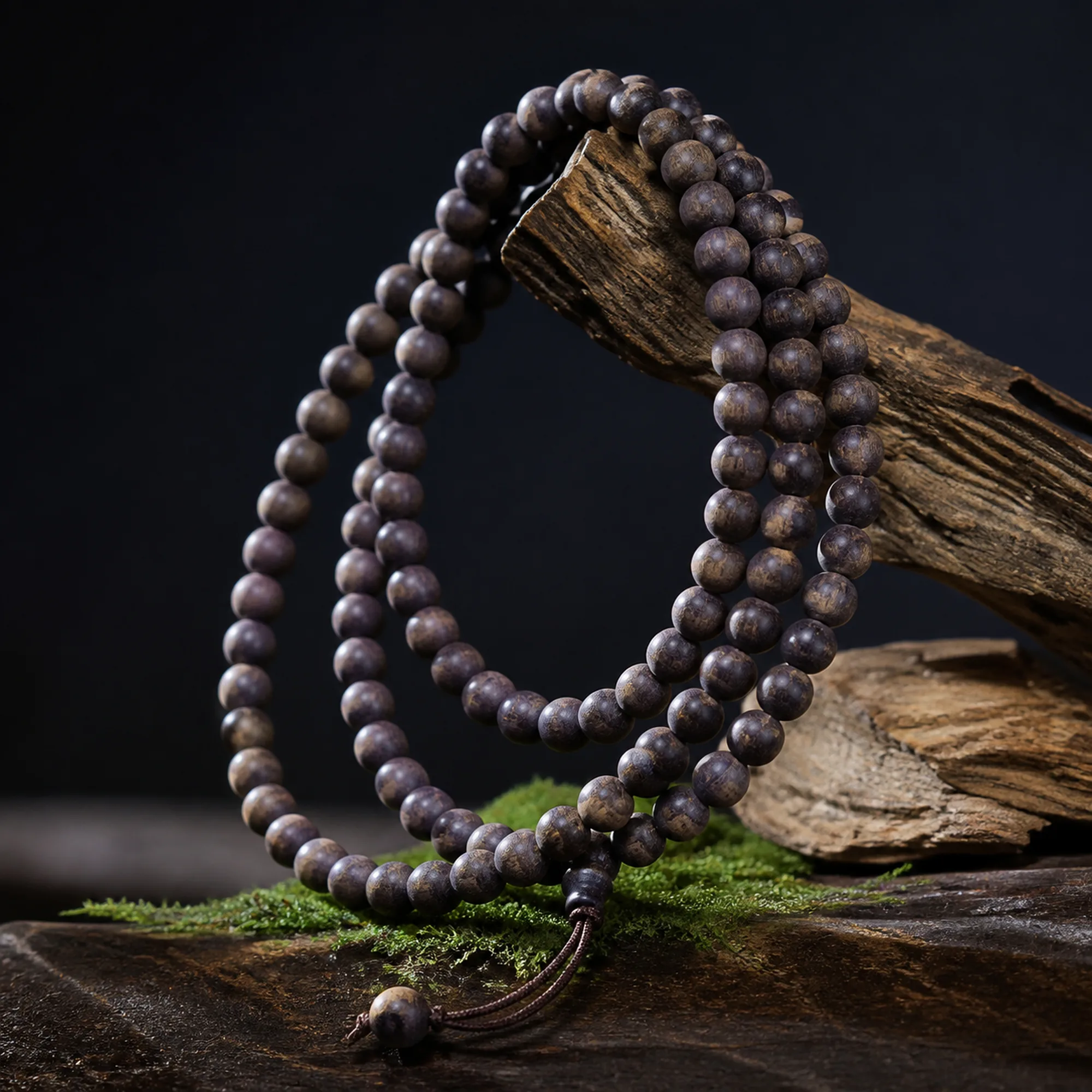
Bracelet Stack Ideas with Agarwood: Rules, Recipes and Care
A bracelet stack looks deliberate when sizes and textures vary around one anchor piece. This guide gives three rules, five recipes including a men’s stack, and the care that wood needs next to metal and stone.

Written by
Founder & Chief Sourcing Officer, AgarwoodTown
Wang Jianyu is the founder of AgarwoodTown, the agarwood business behind Oudbracelet, trading since 2014. 15+ years grading plantation agarwood and advising buyers on grade selection and CITES paperwork. These guides draw on the same bead geometry our wrist fitter uses and on the questions buyers ask before they approve a weighing video.
In this article
- What is a bracelet stack, and how do you build one?
- Five bracelet stack recipes with agarwood
- Part 1 — What are the three rules for a bracelet stack that works?
- Part 2 — What should you keep apart from wood in a bracelet stack?
- Wood or metal as the base of a bracelet stack?
- Part 3 — What makes a good bracelet stack for men?
- How do you build a bracelet stack, step by step?
- Wood grain in motion
- Finally: what should a bracelet stack be built around?
- Frequently asked questions
 One strand
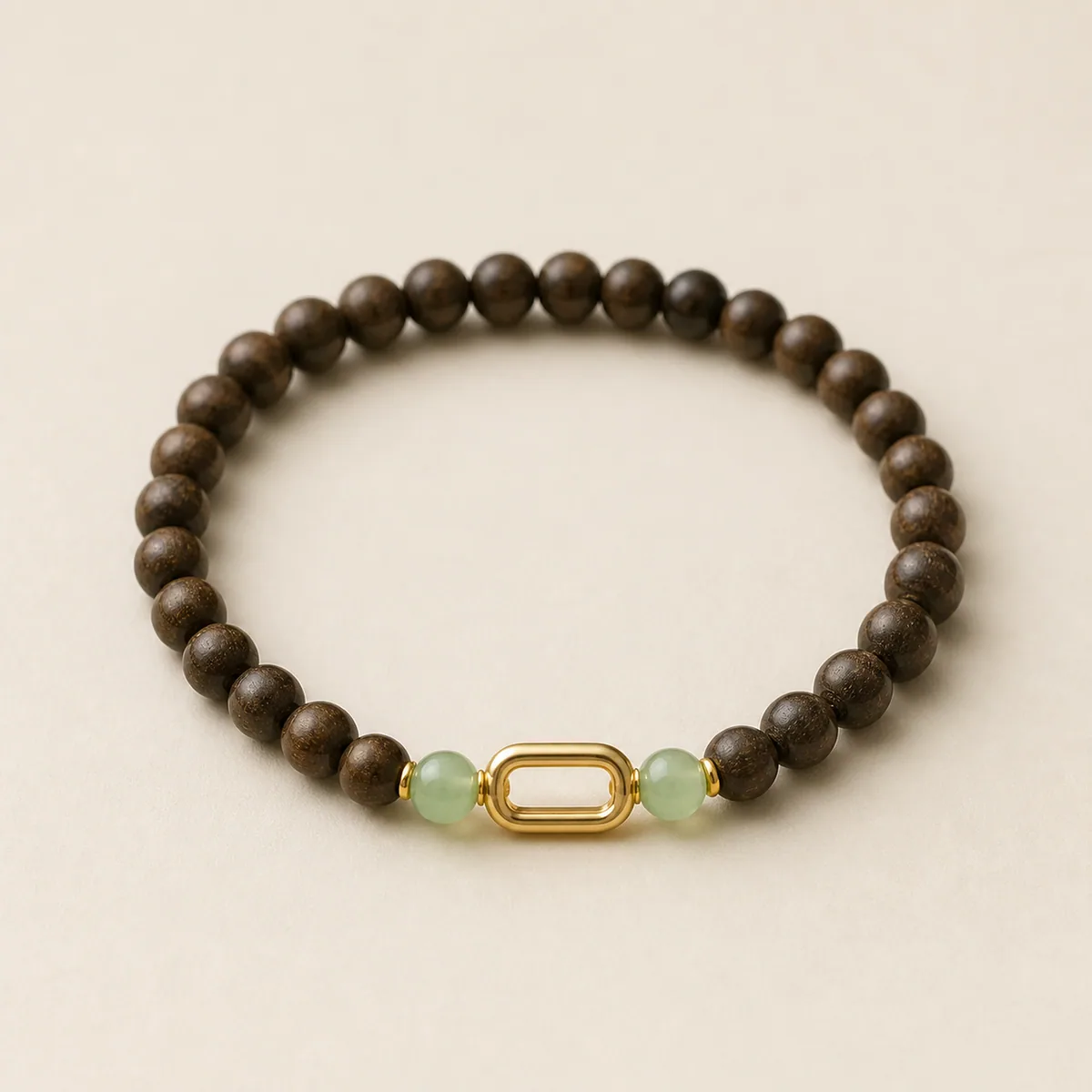 Anchor piece
A multi-wrap strand is a stack on its own; a strand with jade and gold makes a strong centre for a mixed stack.
What is a bracelet stack, and how do you build one?
A bracelet stack is several bracelets worn together on one wrist, chosen so they look like a set. The simplest recipe is three to five pieces: one anchor, one or two supporting strands in a different size or texture, and one thin piece for contrast.
Wood makes an easy base for a bracelet stack, because it is light and neutral in colour. For example, our all-wood recipe below, three strands on a 16 cm wrist, comes to only about 13–20 g of wood. However, it is also soft, so it needs a little thought next to metal and stone. In our data, 34% of the 182 styles here are double- or multi-wrap strands. Each one forms a bracelet stack on its own.
According to GIA, jade is extremely tough, which is why a jade bead can sit in a bracelet stack beside wood and metal.(GIA) First, choose an anchor strand. Then add one contrast piece. Finally, keep the stack to 3 or 4 strands, so each bracelet still reads on its own.
Five bracelet stack recipes with agarwood
This table is a 5-row summary. First read the stack column, then compare the pieces, why it works across each row. For example, the first row covers “All wood”.
| Stack | Pieces | Why it works |
|---|---|---|
| All wood | 10 mm round + 8 mm cube + 6 mm double wrap | Same wood, three textures and sizes |
| Wood and jade | Agarwood with jadeite accents + a plain 8 mm round | One colour note, repeated once |
| Wood and gold | Agarwood with 18K gold fittings + a thin gold chain on the other side | Warm tones; the chain stays off the wood |
| Men’s stack | 12 mm round + 8 mm round + red string | Bold, then quiet, then a line of colour |
| Watch stack | Watch, then one 6–8 mm strand beside it | Small beads sit flat against the case |
Treat these as starting points. First, wear each strand at its own proper fit; a stack looks tidiest when every piece sits at a similar height on the wrist. In our data, Nanhong agate or amber accents appear on 13% of agarwood styles. Gold or silver fittings appear on 13% of all styles, enough for a wood-and-gold bracelet stack.
Part 1 — What are the three rules for a bracelet stack that works?
The three rules for a bracelet stack are simple: vary the size, vary the texture, and keep one anchor. First, vary the size. A bracelet stack of three identical strands looks like a mistake, while 10, 8 and 6 mm beads look deliberate. Second, vary the texture: round beside cube, wood beside a single line of stone or metal. For example, an 8 mm cube strand next to a 10 mm round strand shows flat faces against curves. Our data makes that pairing easy: round beads cover 35% of plain styles, cube beads 29%.
Third, keep one anchor. One piece should be the loudest, whether the anchor is the largest beads, a jade accent or a gold fitting. Everything else supports the anchor. When we suggest stacks to buyers, we usually start from a 10 mm strand, because a 10 mm strand is bold enough to lead without crowding. So start from one favourite strand, and build the rest of the bracelet stack around that strand.

Part 2 — What should you keep apart from wood in a bracelet stack?
Wood is far softer than metal or stone. Jade, for example, sits around 6 to 7 on the Mohs scale,(GIA) and even dense woods are much softer than that.(USDA 2010) So a hard bead grinding against a wooden one will mark the wood over time. Our data shows how often a bracelet stack meets the problem. Jadeite accents appear on 19% of agarwood styles, and Hetian jade on 14%.
Three habits prevent most of that. Keep heavy metal cuffs and chains on the other wrist, or at least not rubbing directly on wood. Put a strand with stone accents at the edge of the bracelet stack rather than in the middle. Finally, take the whole stack off for the gym, where knocks are hardest.
Wood or metal as the base of a bracelet stack?
This comparison is a 5-point check of Wood base against Metal base. For example, the first row compares weight. Finally, pick the column that matches what you need.
| Feature | Wood base | Metal base |
|---|---|---|
| Weight | Light; our all-wood recipe weighs about 13–20 g in total | Adds up quickly |
| Sound | Quiet | Clinks against desks and each other |
| Wear | Softer; can be marked by hard pieces | Scratches but rarely dents |
| Scent | Agarwood adds a quiet woody scent | None |
| Water | Keep dry | Usually fine |
A wood base is the lighter, quieter choice for a bracelet stack, while a metal base is the tougher choice around water. Our data puts the all-wood recipe of three Agarwood strands on a 16 cm wrist at about 13–20 g of wood, so the stack stays comfortable all day. Metal pieces add weight quickly and clink against a desk. Even so, 13% of our styles mix wood with 18K gold or 925 silver.
The trade-off is wear. Wood is far softer than metal or stone, according to the USDA Wood Handbook and GIA, so hard pieces can mark the beads.(USDA 2010) In practice, the simplest fix is to split the two: wood on one wrist, metal and a watch on the other. Agarwood also brings a quiet woody scent that metal cannot add.(Naef 2011)
Part 3 — What makes a good bracelet stack for men?
A men’s bracelet stack usually works best with fewer pieces and bigger beads. Two or three strands are plenty. First, we usually suggest one bold strand of 12 to 14 mm beads. Second, add one quieter strand of 8 mm. Finally, add a red string for a line of colour, if you like. For example, a 12 mm round strand, an 8 mm round strand and a red string make the men’s recipe in the table above. In our data, 24 styles pass our test for men’s bracelets, 32% of single agarwood strands. Beads of 12 to 14 mm appear in 30% of styles that list sizes.
Additionally, keep the palette narrow, because too many colours is the most common reason a stack feels wrong. Dark agarwood, one stone colour at most, and one metal tone look intentional. See our agarwood bracelets for men for bolder strands, and red string bracelets for the accent.
How do you build a bracelet stack, step by step?
This process is a 4-step sequence, from “Choose the anchor” to “Check the fit”. First follow step 1, then work down the 4 steps of “How do you build a bracelet stack, step by step?” in order.
- 1
Step 1: Choose the anchor
The strand you would wear alone. Usually the largest beads or the one with stone.
- 2
Step 2: Add a contrast
A different bead size or cut, in the same wood or a quiet stone.
- 3
Step 3: Add a thin line
A small-bead strand, a red string or a fine chain on the other side.
- 4
Step 4: Check the fit
Each strand at its own proper fit, so they sit at a similar height.
Building a bracelet stack is a four-step job that starts from the piece you love most. In step 1, choose the anchor, usually the strand with the largest beads or a stone accent. In step 2, add a contrast in bead size or cut. Next, add a thin line, such as a small-bead strand or a red string. Finally, check that every strand sits at a proper fit. For example, our data gives a 16 cm wrist 20 beads of 10 mm but 24 of 8 mm.
Wood grain in motion
Finally: what should a bracelet stack be built around?
A bracelet stack is best built around one strand you would happily wear alone. Then add contrast in size and texture, keep hard pieces off the wood, and stop before the wrist feels busy. Three or four strands are usually enough, and two or three suit a men’s stack. In our data, single-turn bracelets make up 41% of the 182 styles, the usual anchor of a bracelet stack. For example, a 10 mm Agarwood anchor, an 8 mm cube strand and a 6 mm double wrap make a complete all-wood stack.
So pick your anchor first, then put the stack on after perfume and cream have dried.(Naef 2011) Browse agarwood bracelets for the base, or agarwood with gold and silver for a piece that ties wood and metal together.
Frequently asked questions
This FAQ is a set of 8 short answers about bracelet stack ideas with agarwood. First find your question below. For example, many facts in these answers about bracelet stack ideas with agarwood come from the 3 published sources in References, which we checked in September 2026.
How many bracelets should be in a stack?
Three to five is the usual range for one wrist, and two or three often looks best for men. Beyond five, strands crowd each other. A double-wrap or multi-wrap strand counts as two or more on its own; in our data, 34% of styles are wraps.
Can I stack wooden bracelets with metal ones?
Yes, but keep heavy metal from rubbing on the wood. Metal and stone are much harder than wood and slowly mark it. Put a fine chain on the other wrist, or at the far edge of the stack, and keep chunky cuffs away from wooden beads altogether.
Should the bracelets in a stack match?
They should relate, not match. Repeat one element, such as the wood, a stone colour or a metal tone, and vary the rest. Three identical strands tend to look like an accident, while three sizes of the same wood look chosen on purpose. In a beaded bracelet stack, that usually means one bead size per strand.
How do I wear a bracelet stack with a watch?
Keep the strand nearest the watch small, around 6 to 8 mm, so it sits flat against the case. Many people wear the watch on one wrist and the stack on the other. If you combine them, mind the desk edge.
What is a good men’s bracelet stack?
Two or three strands: one bold strand of 12 to 14 mm beads, one quieter strand around 8 mm, and perhaps a red string for colour. Keep to one stone colour and one metal tone. Beads of 12 to 14 mm appear in 30% of our sized styles.
Do stacked bracelets need a looser fit?
Each strand should keep its own normal fit. A stack looks tidiest when every strand sits at a similar height on the wrist. If one is much looser, it slides over the others. So order strands for a stack at the same fit and, ideally, in one request.
Can I order several strands as a set?
Yes. Ask for them in one request. We choose strands whose tones suit each other, film them side by side, and weigh them together, so you approve the whole set before paying. Each strand is still strung to your wrist size.
Will stacking damage agarwood?
Only if hard pieces grind against it. Wood is softer than stone and metal, so keep jade, steel and gold away from direct rubbing, and take the stack off for sport. Normal wear between wooden strands just polishes them, which many owners enjoy.
References
This reference list is the source record for “Bracelet Stack Ideas with Agarwood: Rules, Recipes and Care”, with 3 published sources. According to the citations in “Bracelet Stack Ideas with Agarwood: Rules, Recipes and Care”, such as (GIA), each one links to one entry below. Finally, we checked all 3 links behind “Bracelet Stack Ideas with Agarwood: Rules, Recipes and Care” in September 2026.
- 1Gemological Institute of America. Jade — Gem Encyclopedia. GIA, current.View source
- 2Forest Products Laboratory. Wood Handbook — Wood as an Engineering Material (General Technical Report FPL-GTR-190). USDA Forest Service, 2010.View source
- 3Naef R.. The volatile and semi-volatile constituents of agarwood, the infected heartwood of Aquilaria species: a review. Flavour and Fragrance Journal 26(2): 73–87, 2011.doi:10.1002/ffj.2034
References are listed for transparency. We summarise them for general reading; nothing here is medical advice, and no health effect is claimed.
In this article
Styles mentioned



Related articles
Weighed before you pay
Choose a style, get your strand weighed
Pick a bead and size, send your request, and we reply with a video of your piece on the scale — its exact weight and price. Nothing is charged until you approve.