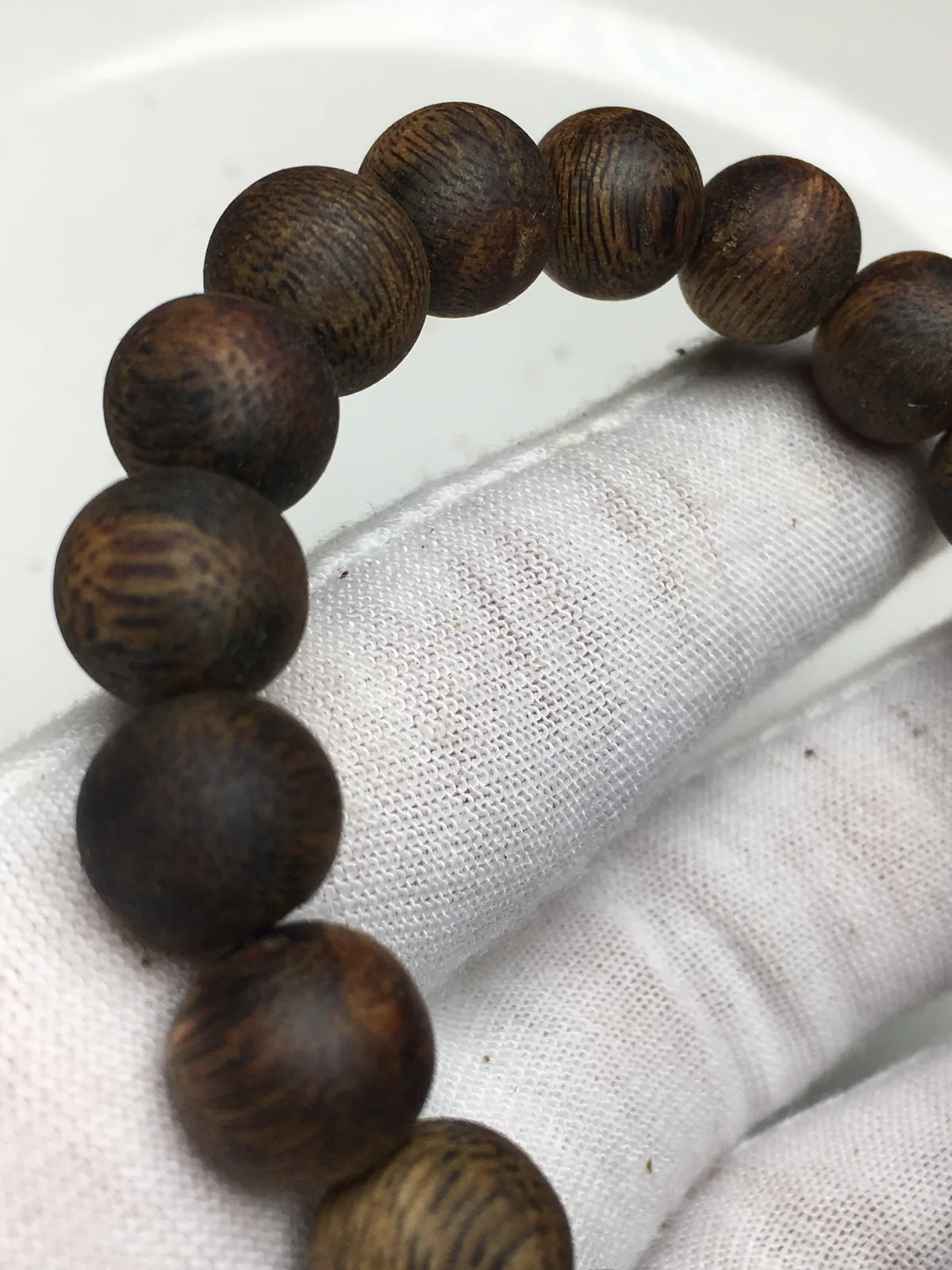
How to Measure Your Wrist for a Bead Bracelet: Methods, Fits and Bead Counts
A bead bracelet is a ring of beads with no clasp to adjust, so its size is its bead count. This guide shows how to measure your wrist properly, with a tape, a strip of paper or a bracelet that already fits. It also explains snug, standard and relaxed fits, and how many beads each means. Finally, it shows how to size a gift when you cannot measure the wrist.

Written by
Founder & Chief Sourcing Officer, AgarwoodTown
Wang Jianyu is the founder of AgarwoodTown, the agarwood business behind Oudbracelet, trading since 2014. 15+ years grading plantation agarwood and advising buyers on grade selection and CITES paperwork. These guides draw on the same bead geometry our wrist fitter uses and on the questions buyers ask before they approve a weighing video.
In this article
- How do you measure your wrist for a bead bracelet?
- Which way should you measure your wrist?
- Where should you start when you measure your wrist?
- Part 1 — Where and when should you measure your wrist?
- Part 2 — What are three ways to measure your wrist at home?
- The paper-strip method: measure your wrist in four steps
- Paper strip or existing bracelet?
- Part 3 — Which fit should you choose after you measure your wrist?
- The three fits on a 16 cm wrist
- Why do bigger beads feel tighter?
- Part 4 — How does your wrist measure become a bead count?
- How many beads does your wrist size need?
- Part 5 — How do you size a gift when you cannot measure the wrist?
- Four ways to size a gift
- Part 6 — How do you measure for a ring?
- Part 7 — How does the fitter use your wrist measure?
- What you check on the video
- After you measure your wrist
- Finally: how hard is it to measure your wrist?
- Frequently asked questions
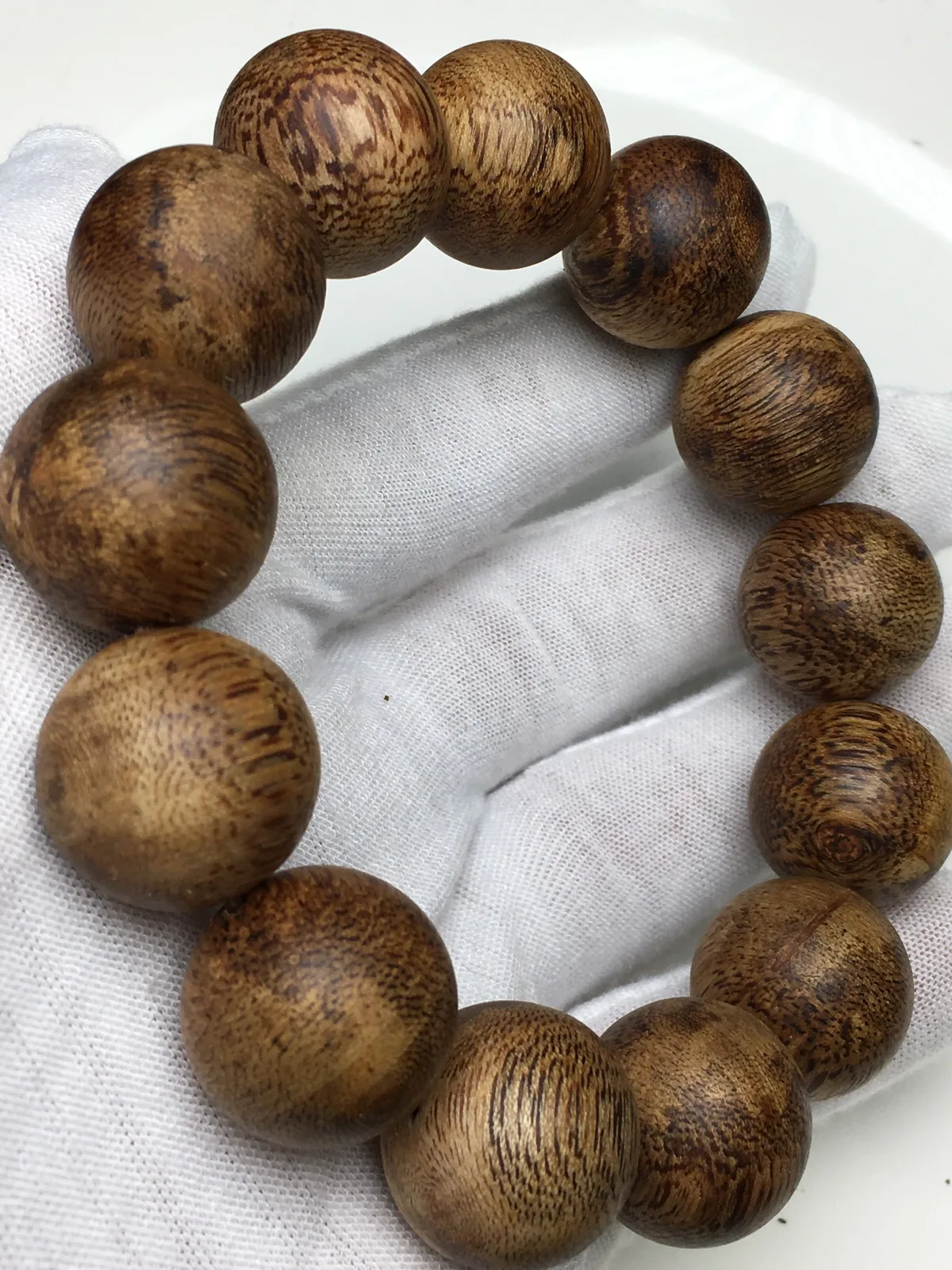 Strand A
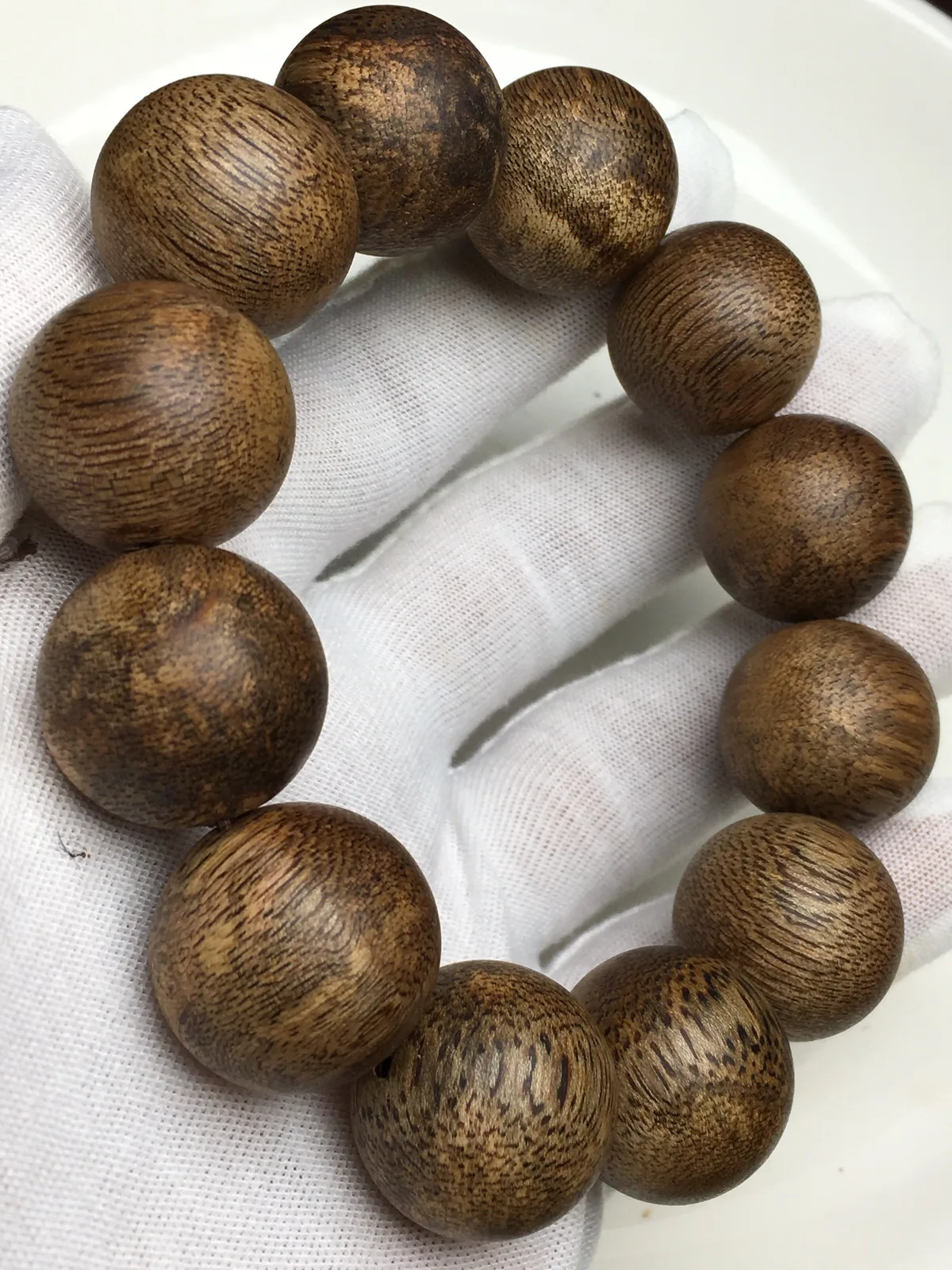 Strand B
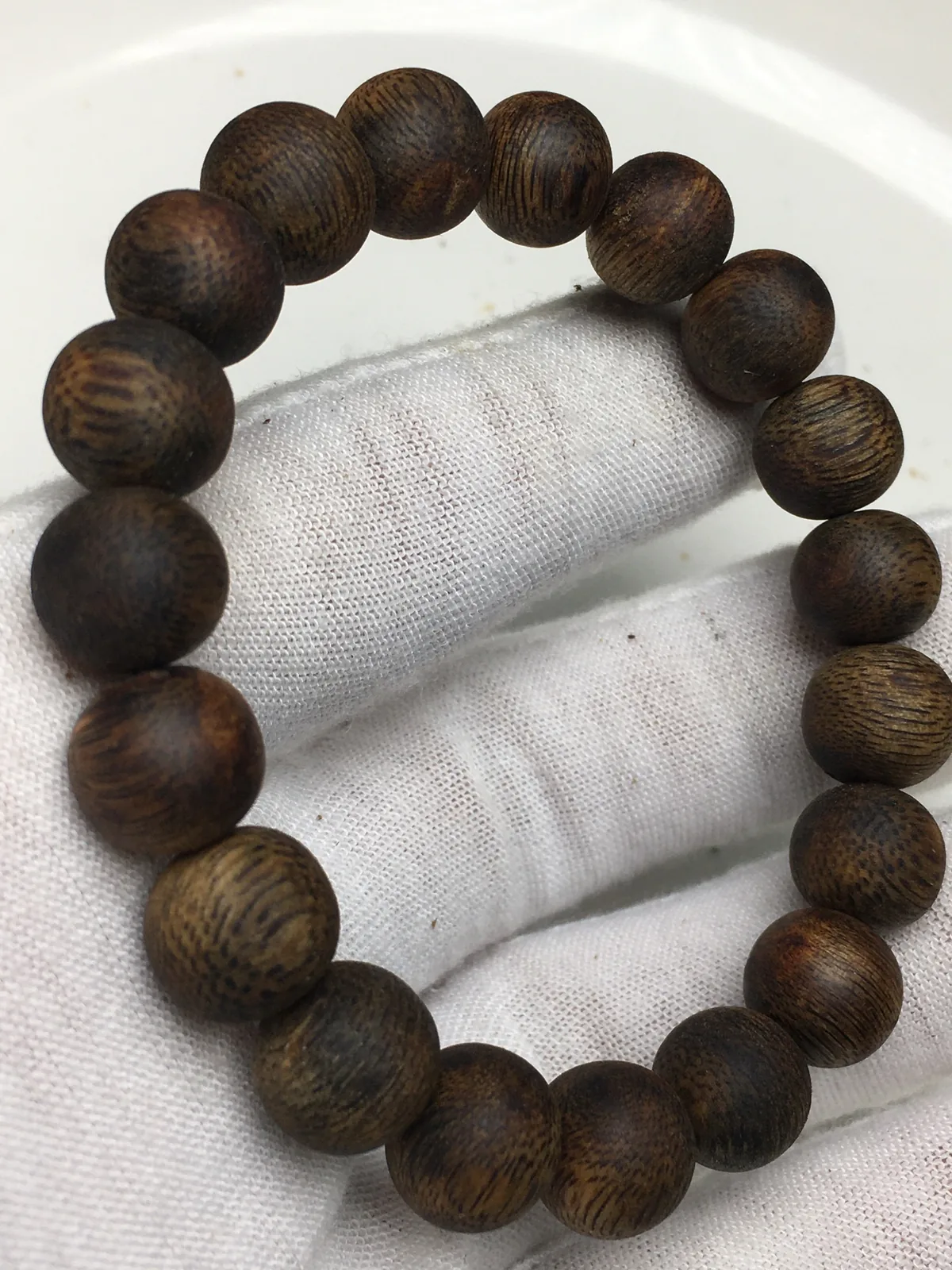
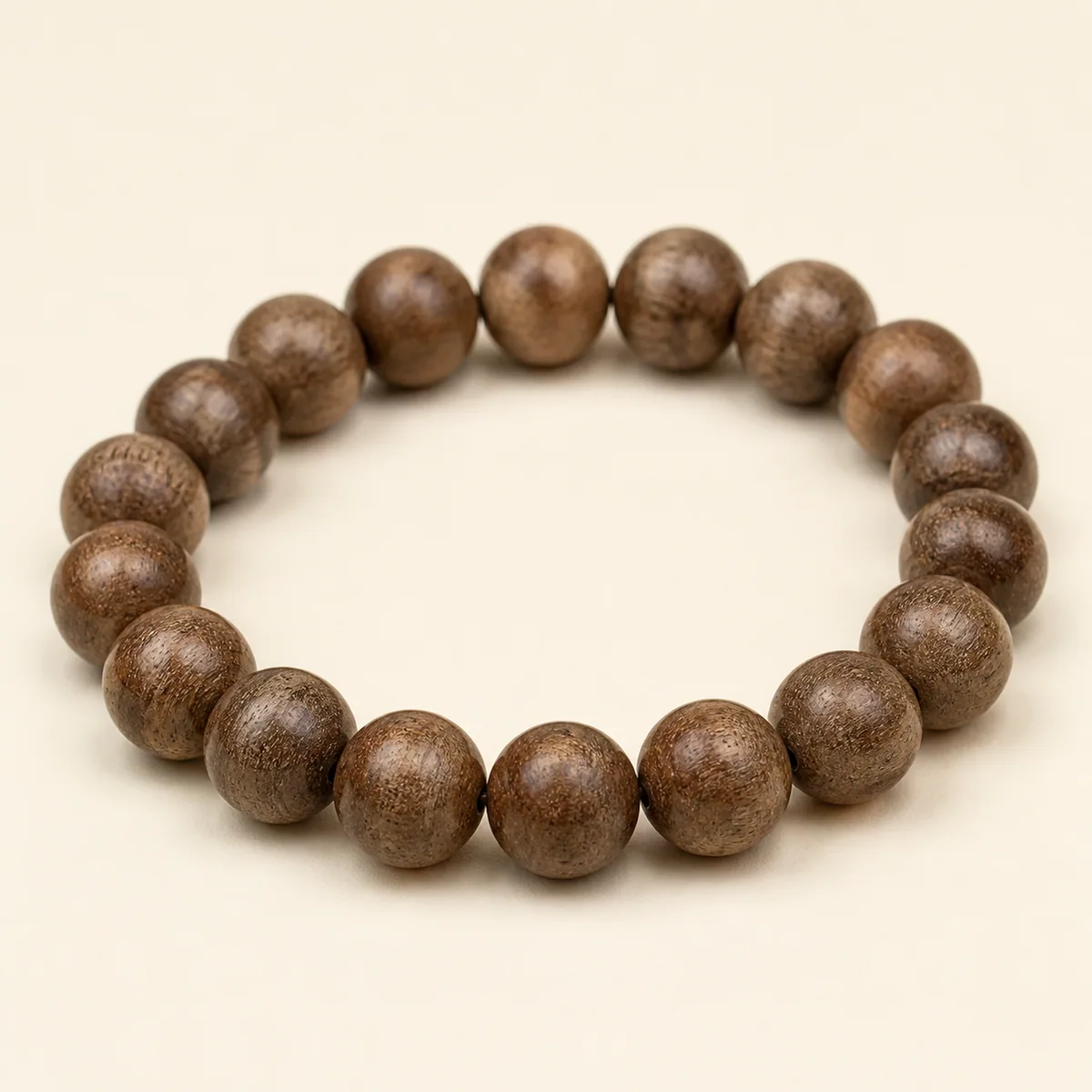
Two round-bead bracelets from our stock. We did not string either to a fixed bead count. Instead, we strung each one to a wrist. So how many beads would yours need? The answer starts with a strip of paper and two minutes. Our data from Oudbracelet’s 2026 catalogue shows bead-size options on 54% of the 182 styles. So the count depends on your bead choice as much as on your wrist, as with Strand A and Strand B.
How do you measure your wrist for a bead bracelet?
A bead bracelet has no clasp and no spare holes. Its size is simply the number of beads on the cord. Each bead is a step you cannot split. So if you measure your wrist well, the rest is arithmetic. If you get it wrong, however, the strand either pinches or slides over your hand.
At Oudbracelet, the retail shop of AgarwoodTown (in agarwood since 2014), we string to measurements, not stock sizes. In our analysis, 20 beads of 10 mm leave a 16 cm wrist 5.9% of extra room. For this reason, we ask every buyer the same two things: how big is your wrist, and how much room do you like?
This guide shows how to measure your wrist and answer both questions. Then the guide turns your numbers into a bead count. Finally, the guide covers what to do for a gift. First, the table below compares the usual ways to measure your wrist. Pick one you can do today, and then read the parts that apply to you.
According to the USDA Wood Handbook, wood changes size slightly with moisture, so a strand should never be strung too tight.(USDA 2010) First, measure your wrist just below the bone. Then add about 1 cm for a standard fit. Finally, a 16 cm wrist usually takes 20 beads at 10 mm.
Which way should you measure your wrist?
This table is a 5-row summary. First read the method column, then compare the what you need, accuracy, ease, best for across each row. For example, the first row covers “Soft tailor’s tape”.
| Method | What you need | Accuracy | Ease | Best for |
|---|---|---|---|---|
| Soft tailor’s tape | A cloth or plastic sewing tape | ★★★★★ | ★★★★★ | Anyone who has one to hand |
| Paper strip | Paper about 1 cm wide, a pen, a ruler | ★★★★★ | ★★★★★ | The usual home method |
| Non-stretch string | Thread or cord, a pen, a ruler | ★★★★★ | ★★★★★ | When paper tears or will not lie flat |
| A bracelet that fits | The bracelet, a ruler; bead size and count | ★★★★★ | ★★★★★ | Gifts, or matching a fit you already like |
| An estimate | A range, such as “about 15–16 cm” | ★★★★★ | ★★★★★ | Gifts when nothing can be measured |
The star ratings reflect our view from sizing strands; use them for comparison only. Any method works if it gives the bare wrist size, flat and snug.
A soft tailor’s tape is the first choice, and a paper strip is a close second. Finally, keep an estimate for gifts, when nobody can reach the wrist. In our analysis, a 5 mm misreading equals 3.1% of a 16 cm wrist, the whole room of a snug fit. A 1 cm misreading, at 6.3%, swallows a standard fit, so measure your wrist with care.
Where should you start when you measure your wrist?
This chooser is a 2-question guide with 8 possible answers. First answer “Who are you measuring for?”, then pick the option that fits, such as “Yourself”.
The right starting point depends on who will wear the bracelet. For yourself, measure the wrist and enter the number in the fitter. A gift with a known size suits classic round beads. For a gift with an unknown size, a multi-wrap strand forgives more. In practice, bead size is the second question: under 8 mm suits multi-wrap strands, 8 to 12 mm suits a single turn, and 14 mm and up reads as large. Finally, a ring needs a ring size rather than a wrist measure. Our data backs the bead-size split: 41% of the 182 styles offer beads under 8 mm, and 10% offer beads of 14 mm or more.
Part 1 — Where and when should you measure your wrist?
The right place is just below the wrist bone, on the hand side, so always measure your wrist there. For example, a watch sits at the same spot. A bead bracelet has no strap to hold the strand higher, so sooner or later, gravity takes the beads to the narrow point. If you measure your wrist further up the forearm, you get a bigger number. The bracelet then slides down and feels loose.
Second, timing matters a little too. Wrists often run slightly fuller late in the day or in warm weather. For that reason, measure your wrist in the evening, at rest. An evening number will not surprise you on a hot afternoon. Do you land between two readings? Then send both, because a range beats a rounded guess. A misplaced tape costs a whole bead at the common sizes. In our data, 37% of the 182 styles come in 8 mm beads and 34% in 10 mm, where a reading 1 cm too high adds at least one bead.
Part 2 — What are three ways to measure your wrist at home?
A soft tape is the simplest way to measure your wrist. Wrap the tape once, flat and snug, and read where the end overlaps. Metal tapes, by contrast, are too stiff to measure a wrist.
A paper strip works almost as well. Cut the strip about 1 cm wide and 25 cm long, then start at step 1 below. Non-stretch string is the fallback. Avoid yarn, elastic and hair ties, though. Stretchy materials give as you pull, and every millimetre of stretch adds a millimetre of error to your wrist measure.
Finally, an existing bracelet helps when you cannot reach the wrist, which mostly means gifts. First, lay the bracelet flat in a circle without stretching the cord. Next, measure straight across the inside, from bead to bead. Then multiply by π. For example, an inside diameter of 5.3 cm gives about 16.7 cm around. If you know the bead size and count, the geometry is even simpler. 18 beads of 10 mm, touching, leave about 15.0 cm inside. Remember, though, that a bracelet gives a bracelet size, not a wrist size. The number already includes the room the owner likes.
Accuracy matters most for single and double wraps, which make up 52% of the 182 styles in our data. Multi-wraps, at 29%, forgive a rougher wrist measure.
The paper-strip method: measure your wrist in four steps
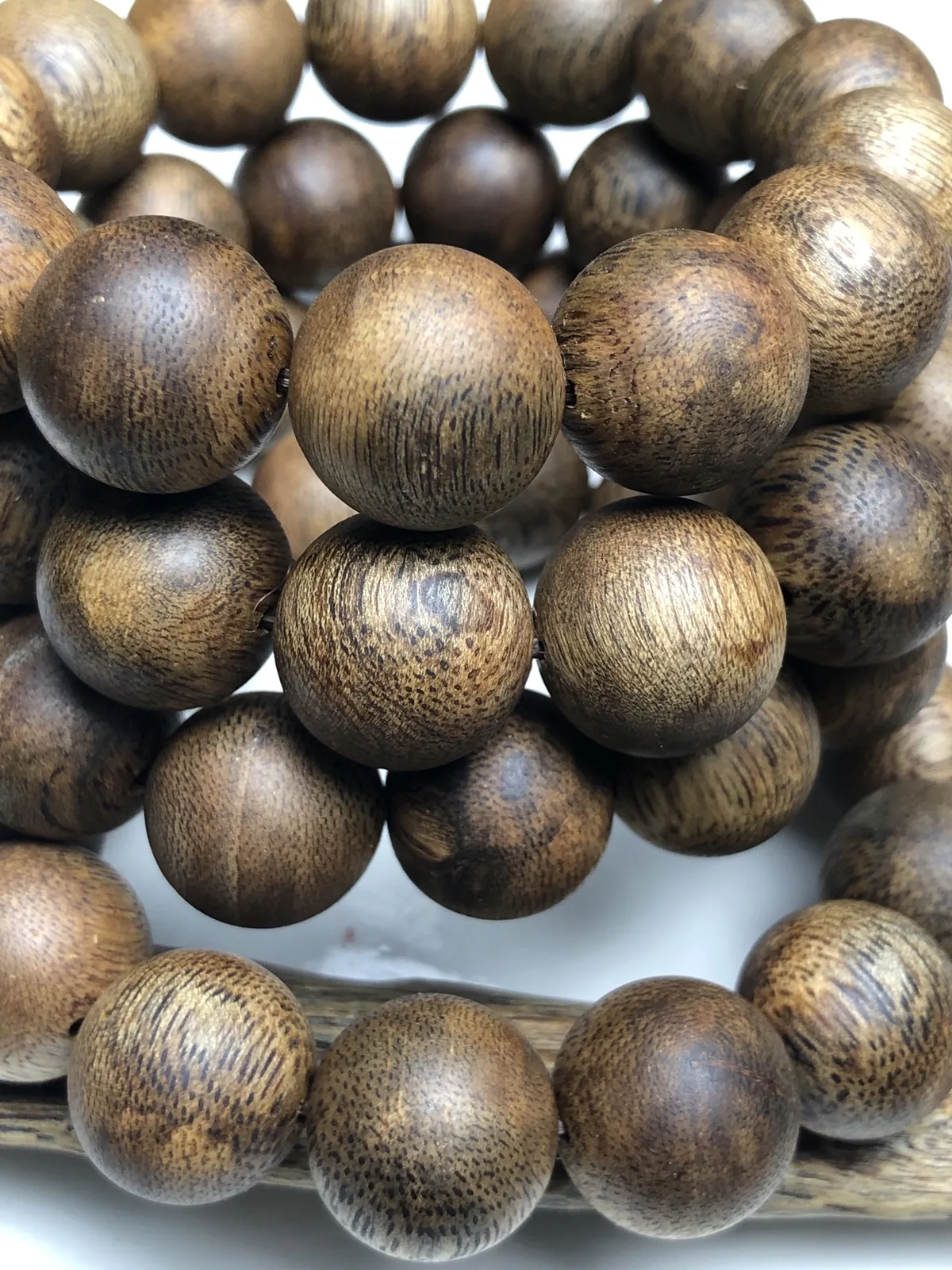
This process is a 4-step sequence, from “Wrap” to “Measure flat”. First follow step 1, then work down the 4 steps of “The paper-strip method: measure your wrist in four steps” in order.
- 1
Step 1: Wrap
Wrap the strip around your wrist just below the wrist bone, where a watch would sit, to measure your wrist.
- 2
Step 2: Keep the strip flat
Keep the strip flat against the skin, snug but not tight. Do not pull the paper in. A strip cut from A4 printer paper works well.
- 3
Step 3: Mark
Next, mark the point where the end of the strip overlaps, with a fine pen line.
- 4
Step 4: Measure flat
Finally, lay the strip on a table and measure from the end to your mark. The result is your bare wrist size. In our analysis, every 2 mm of pull hides 1.3% of a 16 cm wrist, and 5 mm hides 3.1%.
Paper strip or existing bracelet?
This comparison is a 4-point check of Paper strip against Existing bracelet. For example, the first row compares what it measures. Finally, pick the column that matches what you need.
| Feature | Paper strip | Existing bracelet |
|---|---|---|
| What it measures | The bare wrist | The wrist plus its owner’s room |
| Needs the wearer | Yes, for a minute | No — good for surprises |
| Main error | Pulling too tight or measuring too high | A stretched cord or unknown bead size |
| What to send us | The number and the fit you like | Inside length, bead size and count |
A paper strip is the better tool when the wearer is at hand, because the strip measures the bare wrist. An existing bracelet is the better tool for a surprise. However, a bracelet measures the wrist plus the room the owner likes. For example, 18 beads of 10 mm, touching, leave about 15.0 cm inside. In practice, send the inside length, bead size and count, and we match the fit rather than guess a wrist. With Strand A or any 10 mm strand, our analysis shows one bead moves the inside by 10.0 mm, or 6.2% of a 16 cm wrist.
Part 3 — Which fit should you choose after you measure your wrist?
A bead bracelet must sit a little larger than your wrist on the inside. Otherwise, the strand presses when you bend your hand. How much larger is a matter of taste. So once you measure your wrist, our wrist fitter offers three settings:
- Snug adds about half a centimetre and sits close.
- Standard adds about one centimetre. The strand moves a little but stays put.
- Relaxed adds about two centimetres. The strand drifts towards the hand like a loose bangle.
Measure your wrist at 16 cm, and snug and standard often land on the same count. After all, you cannot add part of a bead. So targets within one bead of each other round to the same strand. Finally, the fitter refuses any count whose inside length sits less than 2 mm over the wrist. Such a strand would not roll on comfortably.
In our analysis, snug adds 3.1% to a 16 cm wrist, standard adds 6.3%, and relaxed adds 12.5%.
The three fits on a 16 cm wrist
This table is a 3-row summary. First read the fit column, then compare the room added, 8 mm beads, 10 mm beads, 12 mm beads across each row. For example, the first row covers “Snug”.
| Fit | Room added | 8 mm beads | 10 mm beads | 12 mm beads |
|---|---|---|---|---|
| Snug | +0.5 cm | 24 beads · 16.7 cm | 20 beads · 16.9 cm | 17 beads · 16.7 cm |
| Standard | +1.0 cm | 24 beads · 16.7 cm | 20 beads · 16.9 cm | 17 beads · 16.7 cm |
| Relaxed | +2.0 cm | 26 beads · 18.3 cm | 21 beads · 17.9 cm | 18 beads · 17.9 cm |
We worked these out; we did not measure them. They assume round beads touching on the cord, with the inside length at the wrist. Our wrist fitter uses the same geometry once you measure your wrist. We also count your real strand and show it on video before you pay. In our analysis, the 8 mm column lands closest to each target, because one 8 mm bead is 5.0% of the wrist against 7.5% for 12 mm.
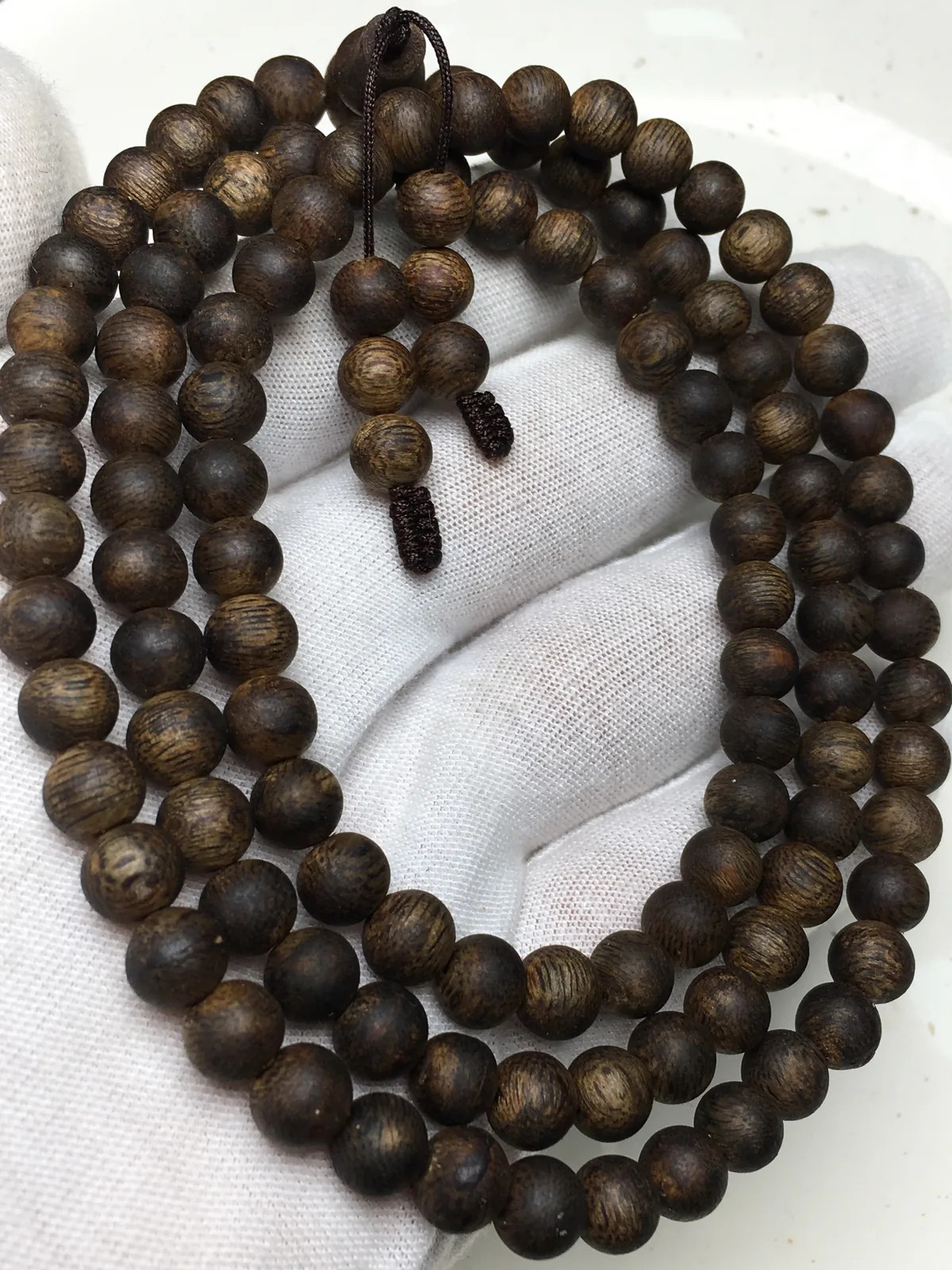 Small beads
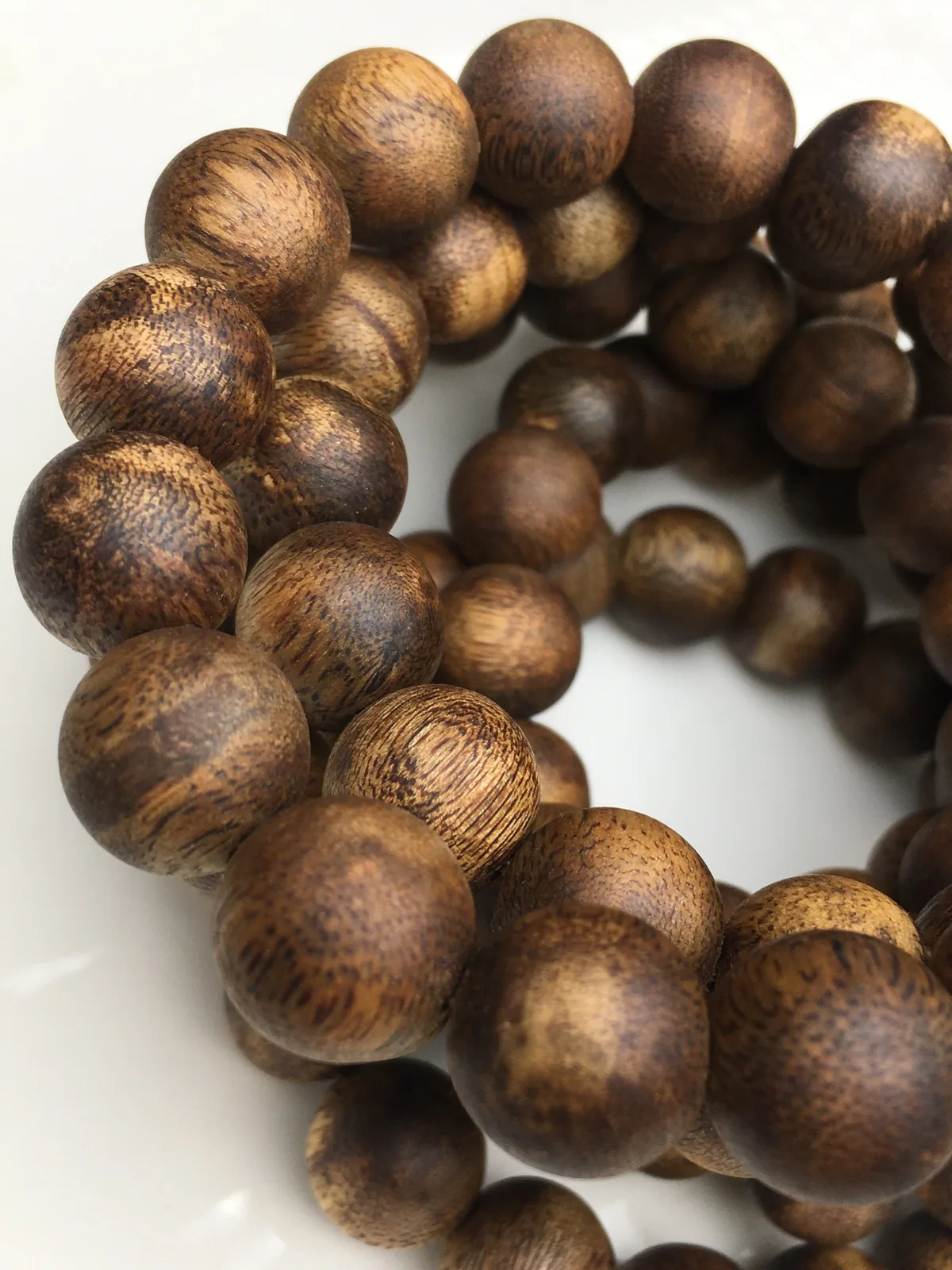 Large beads
The smaller the bead, the closer we get to your exact target. With large beads, however, decide in advance whether you would rather err snug or loose.
Why do bigger beads feel tighter?
The reason is a matter of shape and contact points. A wrist is closer to a flattened oval than a circle. Large beads also touch the wrist at fewer, harder points.
So 16 mm and 8 mm strands with the same inside length do not feel the same. For example, a 16 cm wrist takes 24 beads at 8 mm at a standard fit, but only 17 at 12 mm. For that reason, our fitter draws the strand around an oval wrist, so you can see where the beads rest. Finally, if you like large beads but dislike pressure on the wrist, choose standard or relaxed. In our analysis, the 8 mm strand has 41% more beads, yet the 12 mm strand can weigh about 2.5 times as much.
Part 4 — How does your wrist measure become a bead count?
A bead count is a simple piece of geometry. When round beads touch in a ring, the bead centres sit on a circle. Each extra bead therefore adds roughly its own diameter. On a 16 cm wrist, one more 8 mm bead lengthens the inside by about 8.0 mm. By contrast, one more 12 mm bead adds about 11.9 mm. So small beads match your wrist measure more precisely.
Wood does swell and shrink with moisture, according to the USDA Wood Handbook.(USDA 2010) Still, in everyday use the change stays tiny next to one bead’s step. Instead, the cord changes: the cord relaxes with wear. A relaxed cord calls for restringing, not resizing, so you will not need to measure your wrist again.
Bead count also drives weight, and we sell agarwood by weight. Growers wound plantation trees on purpose so that the trees form resin. Tan and colleagues review the process in detail.(Tan 2019) Resin also forms unevenly from tree to tree.(Liu 2013) As a result, two strands of the same size and count rarely weigh the same. In our analysis, 20 beads of 10 mm weigh 5.9 to 9.4 g, so the heaviest sits 58% above the lightest. For this reason, we count and weigh your strand on camera rather than quote from a table.
How many beads does your wrist size need?
This table is a 6-row summary. First read the wrist column, then compare the 8 mm, 10 mm, 12 mm, 14 mm across each row. For example, the first row covers “14 cm”.
| Wrist | 8 mm | 10 mm | 12 mm | 14 mm |
|---|---|---|---|---|
| 14 cm | 22 (15.1 cm) | 18 (15.0 cm) | 16 (15.6 cm) | 14 (15.4 cm) |
| 15 cm | 23 (15.9 cm) | 19 (15.9 cm) | 16 (15.6 cm) | 14 (15.4 cm) |
| 16 cm | 24 (16.7 cm) | 20 (16.9 cm) | 17 (16.7 cm) | 15 (16.8 cm) |
| 17 cm | 26 (18.3 cm) | 21 (17.9 cm) | 18 (17.9 cm) | 16 (18.1 cm) |
| 18 cm | 27 (19.1 cm) | 22 (18.9 cm) | 19 (19.1 cm) | 17 (19.5 cm) |
| 19 cm | 28 (19.9 cm) | 23 (19.9 cm) | 20 (20.3 cm) | 17 (19.5 cm) |
We worked these out with the same geometry as our wrist fitter. Each cell shows the count whose inside length comes closest to wrist + 1 cm, never less than wrist + 2 mm; the inside length sits in brackets. Under 8 mm, we usually string multi-wrap strands instead. Use these estimates for planning only.
The table is a planning tool, and we count the real strand on camera. For example, a 15 cm wrist takes 19 beads at 10 mm, while a 19 cm wrist takes 23. In practice, the count changes faster with small wrists and large beads. Our analysis shows 10 mm counts rising 28% from a 14 cm to a 19 cm wrist, so measure your wrist before you pick a row.
Part 5 — How do you size a gift when you cannot measure the wrist?
Gifts are hard, because the one person who could hold the tape must not know. First, a bracelet the recipient already wears gives the best clue. Second best is a range from someone close. Failing both, a forgiving style is safest. A multi-wrap strand, for instance, forgives far more than a single turn of large beads.
If all you have is a range, we aim for the middle. For example, for “about 15–16 cm” in 10 mm beads, the two ends need 19 and 20 beads. So we would usually string 20, which gives about 16.9 cm inside. Finally, either way, we tell you exactly what we chose before you approve. In our data, multi-wraps make up 29% of the 182 styles, so a forgiving gift is easy to find.
Four ways to size a gift
This section is a set of 4 short notes, from “Borrow a bracelet” to “Avoid large beads blind”. First scan the 4 titles under “Four ways to size a gift”, then read the note that matches your case.
Borrow a bracelet
Measure a bead bracelet they wear often, flat and relaxed. Then send its inside length, bead size and count, and we match its fit.
Send a range
Ask someone close to them to measure the wrist, or to guess. For example, a range such as 15–16 cm helps; we pick the middle and tell you the count. In our analysis, that 1 cm range equals 6.7% of a 15 cm wrist.
Choose a forgiving style
A multi-wrap strand wound several times forgives far more than a single turn of large beads. So does a pendant.
Avoid large beads blind
With 14 mm beads and up, one bead adds more than a centimetre of length. So if you cannot measure the wrist, choose a smaller bead. That way, a near miss stays a small one. In our data, only 10% of styles offer beads that large.
Part 6 — How do you measure for a ring?
We size our agarwood rings from your ring size in US, UK or EU terms. Don’t know yours? Then measure straight across the inside of a ring that fits that finger, in millimetres. Here are two common conversions:
- US ring size to inside diameter: about 11.6 mm + 0.81 mm × the US size. A US 7 is roughly 17.3 mm.
- EU ring sizes give the inside circumference in millimetres. So an EU 54 is about 17.2 mm across.
As with a wrist, measure at the end of the day, and check the ring passes the knuckle. For example, a finger that sits between a US 7 and a US 8 suits the US 8. Finally, beads touch the finger at points rather than all round, so between sizes, choose the larger. In our analysis, each US size adds about 4.7% to the inside of a US 7. Our data lists 9 rings among the 182 styles, about 5%.
Part 7 — How does the fitter use your wrist measure?
The wrist fitter is a tool on every product page that turns your number into a strand. Once you measure your wrist, enter the bare size and choose snug, standard or relaxed.
The fitter shows the bead count, inside length and estimated weight, drawn to scale around an oval wrist. For example, a 16 cm wrist at a standard fit gives 20 beads at 10 mm. Then, when you request a quote, the fitter adds your wrist size and fit to the message for you. Finally, the weighing video shows the real count, so you can compare the strand with the fitter before you approve. In our analysis, the 2 mm minimum equals 1.3% of a 16 cm wrist, and the weight estimate spans 58% from low to high.
What you check on the video
After you measure your wrist
This timeline is a 5-stage sequence, from “Measure the bare wrist” to “Watch the gaps”. First read “After you measure your wrist” from top to bottom, since each stage follows the one before.
- TodayMeasure the bare wristUse a paper strip or soft tape, just below the wrist bone, snug and flat. Note both wrists if you can.
- ChoosingPick a fitChoose snug, standard or relaxed; if unsure, standard. The fitter then turns your number into a bead count. In our analysis, standard adds 6.3% to a 16 cm wrist.
- The videoCheck the countCount the beads on your film and compare the count with the fitter. In practice, ask us to add or remove one before you approve.
- On arrivalRoll the strand onRoll the strand over your hand rather than stretching the cord wide. Rolling keeps the cord tight for longer.
- Months laterWatch the gapsGaps between beads mean the cord has relaxed. Have the strand restrung; the count stays the same.
Finally: how hard is it to measure your wrist?
Sizing a bead bracelet is not difficult, but the process punishes shortcuts. In short, the bare wrist measure is the one number that matters. First, measure your wrist bare and in the right place. Then choose how much room you like, and let the geometry do the rest. The bead count follows, and so does the weight. For example, a 16 cm wrist at a standard fit takes 20 beads at 10 mm. Our analysis puts the stakes plainly: at 10 mm, a 1 cm slip when you measure your wrist is one bead, or 5% of the strand.
Still unsure? Send what you have: a number, a range, or an old bracelet beside a ruler. We would rather discuss one bead before stringing than after shipping. After that, the buying guide covers the wood itself. Likewise, the care guide covers keeping the cord and beads in good shape.
Frequently asked questions
This FAQ is a set of 8 short answers about how to measure your wrist for a bead bracelet. First find your question below. For example, many facts in these answers about how to measure your wrist for a bead bracelet come from the 4 published sources in References, which we checked in September 2026.
Where exactly should I measure my wrist?
Measure your wrist just below the wrist bone, on the hand side, where you would normally wear a watch. A bead bracelet settles there once you move. If you measure higher up the forearm, or right over the bone, you get a larger number. The bracelet then slides down and feels loose once you wear it.
What if I only have a metal tape measure?
A rigid tape will not follow the curve of a wrist, so use it only as a ruler. Instead, wrap a strip of paper or non-stretch thread around the wrist and mark where it overlaps. Then lay it flat on the table and read the length against the metal tape. That way you still measure your wrist accurately.
Which fit should I choose if I am not sure?
Choose standard, which adds about one centimetre of room, or 6.3% of a 16 cm wrist in our analysis. The bracelet moves a little but stays in place, and it suits most people. On the other hand, choose snug if you dislike any movement. Choose relaxed if you like a strand that hangs loosely towards the hand. With large beads, standard or relaxed usually feels kinder.
Why do snug and standard sometimes give the same bead count?
Because you cannot add part of a bead. Each extra bead lengthens the inside by roughly its own diameter. So with 10 or 12 mm beads, two targets half a centimetre apart often round to the same count. With smaller beads, however, the steps get finer, and the three fits separate more clearly.
Can I just tell you my old bracelet’s bead count?
Yes, as long as you also give the bead size, because a count means nothing without it. For example, eighteen beads of 8 mm and eighteen of 12 mm make very different bracelets. Also tell us it came from an existing piece. Then we match that fit instead of adding room on top of it.
Does a bead bracelet stretch to fit?
Our cord gives a little, so the bracelets roll on over the hand. Do not rely on stretch for fit, though. Pulling a strand wide on and off stretches the cord over time and opens gaps. Rolling it on, by contrast, is kinder to both the cord and the beads, and it keeps your original fit.
Is the fit different for double-wrap and multi-wrap strands?
Yes. A multi-wrap strand is one long strand wound several times, so it sits looser and forgives much more than a single turn. For a long mala-style strand, the wrist size matters less. For a double-wrap or a set number of turns, however, measure your wrist and send us the number. Then we set the length.
What wrist sizes can you make?
Any adult size. Our tables cover 14 to 19 centimetres, because most adult wrists fall there. Still, the fitter uses the same geometry for any number. So if you measure your wrist and it falls outside that range, just send the measurement. We will work out the count the same way. In our analysis, 10 mm counts rise 28% across that span.
References
This reference list is the source record for “How to Measure Your Wrist for a Bead Bracelet: Methods, Fits and Bead Counts”, with 4 published sources. According to the citations in “How to Measure Your Wrist for a Bead Bracelet: Methods, Fits and Bead Counts”, such as (USDA 2010), each one links to one entry below. Finally, we checked all 4 links behind “How to Measure Your Wrist for a Bead Bracelet: Methods, Fits and Bead Counts” in September 2026.
- 1Forest Products Laboratory. Wood Handbook — Wood as an Engineering Material (General Technical Report FPL-GTR-190). USDA Forest Service, 2010.View source
- 2Tan C.S., Isa N.M., Ismail I., Zainal Z.. Agarwood induction: current developments and future perspectives. Frontiers in Plant Science 10: 122, 2019.doi:10.3389/fpls.2019.00122
- 3Liu Y., Chen H., Yang Y., et al.. Whole-tree agarwood-inducing technique: an efficient novel technique for producing high-quality agarwood in cultivated Aquilaria sinensis trees. Molecules 18(3): 3086–3106, 2013.doi:10.3390/molecules18033086
- 4CITES Secretariat. Appendices I, II and III. Convention on International Trade in Endangered Species of Wild Fauna and Flora, current.View source
References are listed for transparency. We summarise them for general reading; nothing here is medical advice, and no health effect is claimed.
In this article
Styles mentioned
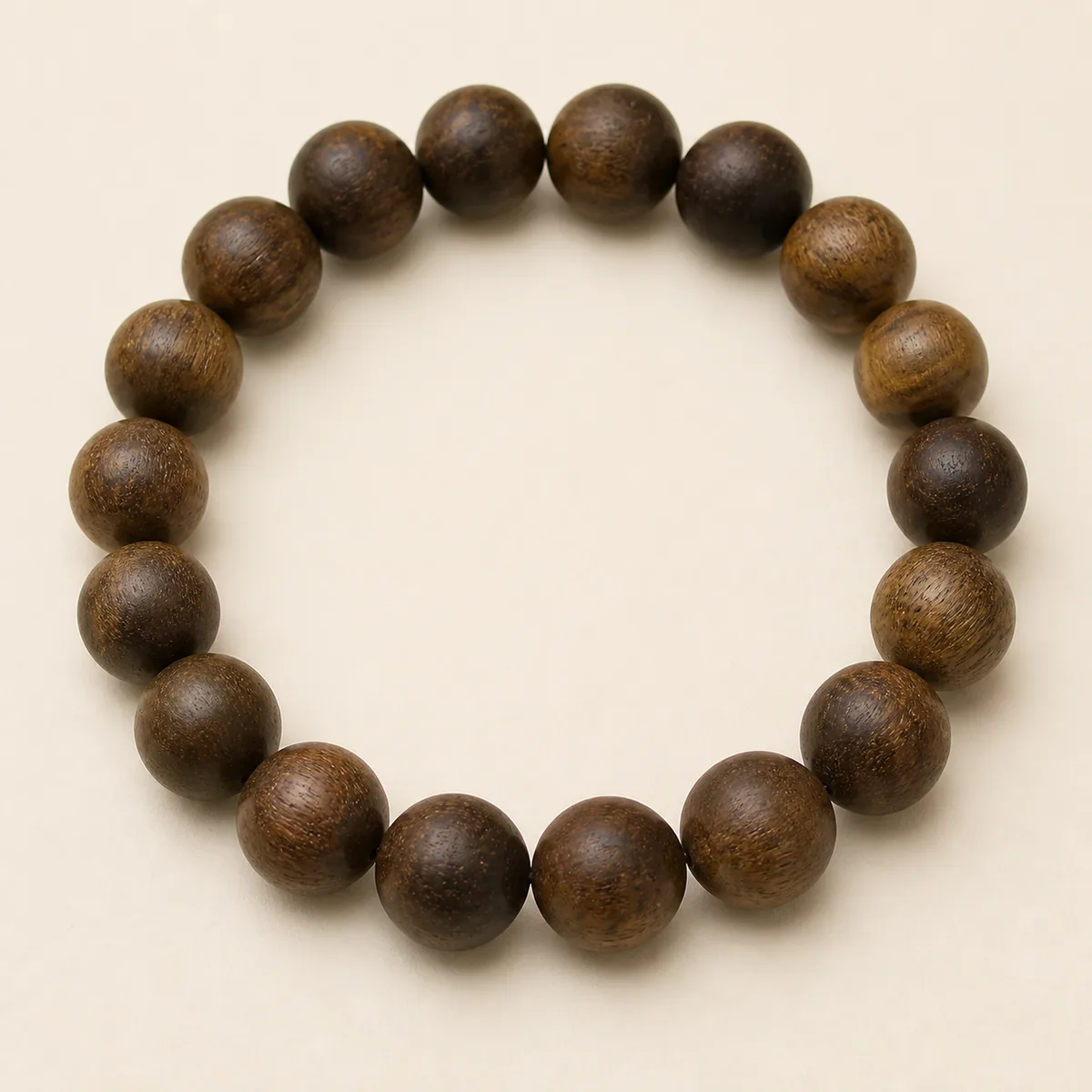

Browse more: Agarwood Bracelets · Agarwood Multi-Wrap & Malas
Related articles
Weighed before you pay
Choose a style, get your strand weighed
Pick a bead and size, send your request, and we reply with a video of your piece on the scale — its exact weight and price. Nothing is charged until you approve.